Bénin: Romuald Wadagni inaugurated with 94% mandate as opposition faces exclusion
On Sunday, May 24, Romuald Wadagni took the oath of office in Cotonou, succeeding Patrice Talon after a landslide victory marked by opposition disqualifications. The new president inherits a tightly controlled political landscape and vows economic continuity while signaling a cautious shift in regional diplomacy.

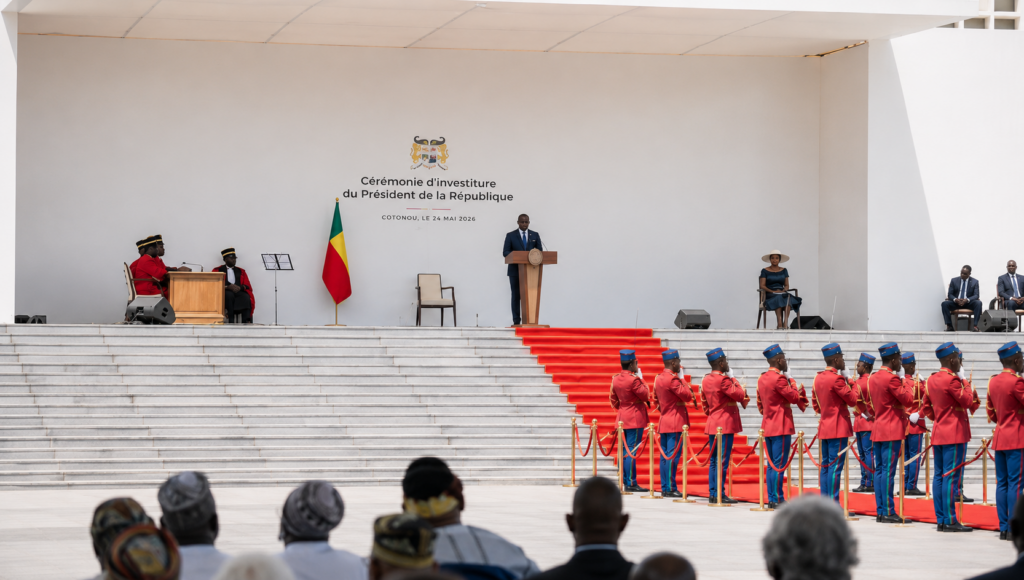
Romuald Wadagni’s inauguration on May 24, 2026, capped a presidential race where he claimed 94% of the vote—an outcome shaped by the exclusion of the main opposition party. The ceremony, held at the Palais des Congrès in Cotonou, marked the formal transfer of power after a decade under Patrice Talon, whose constitutional term limits prevented a third bid. At 49, Wadagni becomes the youngest president in Bénin’s democratic history, inheriting an economy praised for fiscal discipline but now facing fresh security threats in the north.
From finance minister to head of state: a seamless transition
Wadagni’s rise reflects continuity with Talon’s legacy. A former Deloitte consultant, he joined the government in 2016 as Finance Minister, overseeing landmark bond issuances and maintaining Bénin’s investment-grade credit rating. His electoral victory on April 12, 2026, was secured against a single opponent, Paul Hounkpè of the FCBE, with the constitutional court validating the results after no credible challenge materialized. The new seven-year term—extended under a 2025 constitutional revision—reshapes the electoral calendar, decoupling presidential from legislative polls for the first time.
A tightly scripted inauguration amid political narrowing
The two-and-a-half-hour ceremony unfolded with military precision. Talon handed over presidential insignia in a private meeting at the Palais de la Marina before the constitutional court convened the solemn oath-taking. By 11:10 a.m., Wadagni received the Grand Collar of the National Order and the command flag from the chief of staff. Over 6,000 guests attended, including former presidents Nicéphore Soglo and Thomas Boni Yayi, both singled out in Wadagni’s address. Observers noted the flawless logistics, yet the event unfolded against a backdrop of shrinking political space, where the leading opposition party, Les Démocrates, was barred from participating.
The opposition’s exclusion: legal maneuvers and lasting consequences
Les Démocrates’ disqualification stemmed from a technicality: a missing parliamentary signature on its candidate list. Despite submitting 28 required endorsements, one deputy withdrew support, and the electoral commission invalidated the bid in October 2025. The constitutional court upheld the decision, crippling the party’s electoral prospects. The case echoes broader trends—Reckya Madougou’s 20-year prison sentence for “terrorism” in 2021 and Joël Aïvo’s decade-long term for “conspiracy” remain emblematic of what critics call a judiciary weaponized against dissent. High registration fees, restrictive certification processes, and a 20% vote threshold per constituency introduced in 2025 further marginalized opposition representation. In January 2026, Les Démocrates failed to win a single seat in legislative elections.
Security and diplomacy: new priorities in a shifting Sahel
Wadagni’s inaugural address outlined two pillars: inclusive growth and regional security. Domestically, he pledged to translate economic gains into tangible benefits for youth, women, rural communities, and the middle class. Externally, his remarks signaled a cautious re-engagement with the Alliance of Sahel States (AES), represented by Mali, Burkina Faso, and Niger’s foreign ministers, alongside Nigeria’s vice president. The presence of Niger’s Prime Minister Ali Mahaman Lamine Zeine drew sustained applause—a stark contrast to the frosty Bénin-Niger relations since Niamey’s 2023 coup. Wadagni’s tone broke from his predecessor’s firm stance, hinting at potential détente, particularly on energy transit disputes involving the Niger-Bénin oil pipeline.
The address also resonated with marginalized groups, from the diaspora to descendants of the Atlantic slave trade, whom Wadagni called to “return home.” A dedicated segment on women’s empowerment reflected the prominence of Vice President Mariam Chabi Talata, a historic first in Bénin’s executive branch.
What to watch in the coming months
The composition of Wadagni’s government, expected within days, will reveal whether he broadens his inner circle beyond Talon’s loyalists. The fate of imprisoned opposition figures—amid calls for clemency—could signal his commitment to political pluralism. Diplomatically, concrete steps toward rapprochement with AES capitals, including official visits, may redefine Bénin’s regional posture. Yet the inauguration’s underlying question lingers: Can a system lauded for economic stability sustain meaningful political diversity?
One thing is clear: the Bénin of 2026 begins a seven-year journey under rules rewritten by its outgoing leadership, where the absence of opposition is as defining as the mandate’s breadth.