- Bénin
- Politique
Bénin’s president Wadagni launches Sahel diplomacy with three key visits
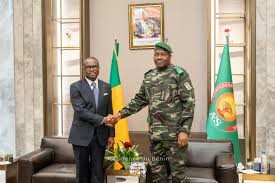
The President of the Bénin, Romuald Wadagni, has just completed an intensive diplomatic tour of three Sahelian capitals in a single week. The agenda? Rebuilding frayed regional cooperation severely tested by persistent security crises and political tensions since 2023.
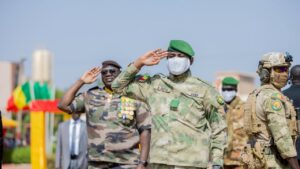
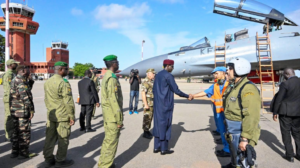
Security and trade dominated discussions during Wadagni’s visit to Abuja, Niamey and Ouagadougou. The primary focus was restoring direct dialogue with Nigeria, Niger and Burkina Faso, all key partners despite recent diplomatic strains. With Abuja, the emphasis was placed on both economic and security cooperation, particularly the critical Lagos-Cotonou trade corridor, whose disruptions have increasingly burdened both economies.
In Niamey and Ouagadougou, the conversation centered on cross-border coordination. Rising jihadist activities in northern Bénin’s Atacora and Alibori regions have made localized responses ineffective. Concrete measures discussed included renewed intelligence-sharing efforts and the partial reopening of commercial exchanges to stabilize border communities.
Wadagni deliberately avoided framing discussions around political alliances, instead prioritizing shared challenges and practical solutions. This pragmatic approach contrasts sharply with previous diplomatic engagements that were often overshadowed by debates over ECOWAS membership and military transitions in the region.
The challenges of navigating a fragmented regional landscape
The task ahead is far from straightforward. The three countries visited are not aligned in their regional commitments. While Nigeria remains an active ECOWAS member, Niger and Burkina Faso have withdrawn and formed the Alliance of Sahel States. Balancing engagement with both blocs without assuming the role of official mediator requires delicate diplomatic maneuvering.
Security presents another major hurdle. Any bilateral agreement risks failure without clear legal frameworks and adequate logistical support for joint patrol units. Border communities are particularly eager for restored market access and safer rural routes, hoping for tangible improvements rather than empty promises.
A pragmatic path forward?
Wadagni appears to be adopting a project-based diplomacy strategy. Rather than attempting to resolve political divisions upfront, he is focusing on technical agreements in water management, energy and cross-border mobility. The long-term goal is to create shared interests that make disengagement too costly for any party involved.
Should visible progress materialize by the end of 2027, this approach could restore Bénin’s role as a regional facilitator. The alternative—a series of protracted negotiations yielding little on-the-ground change while insecurity spreads—would severely undermine the country’s diplomatic credibility.
The immediate test will be the implementation of commitments made in Niamey and Ouagadougou regarding the northern corridor’s security. Without measurable progress before year-end, Wadagni’s pragmatic discourse risks losing its credibility.