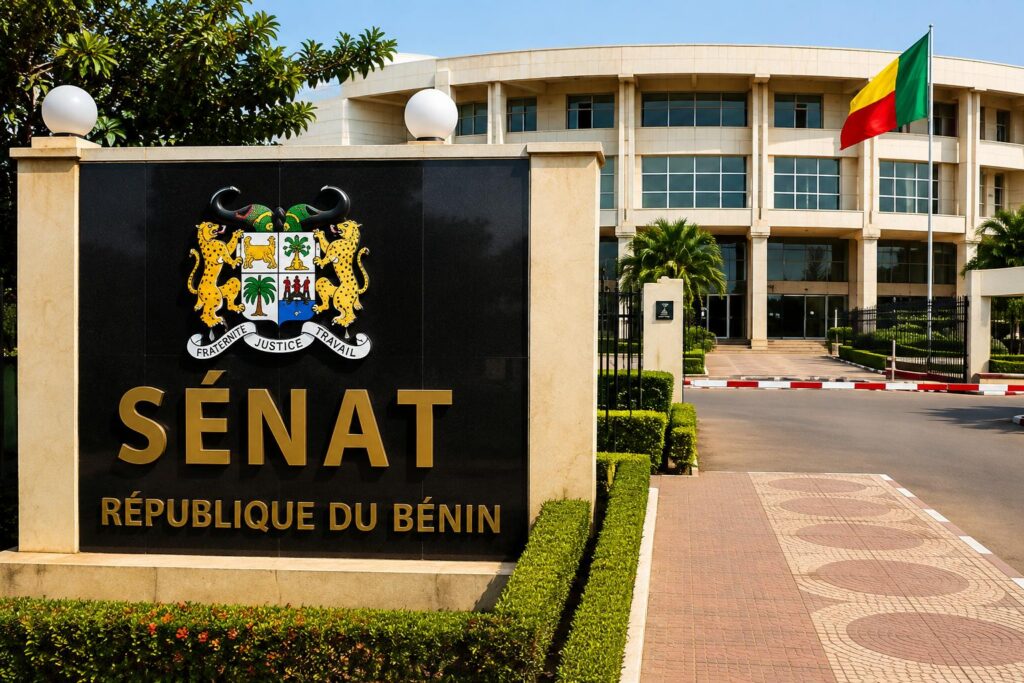
The digital sphere in Bénin has been abuzz since the former president Patrice Talon took office as head of the Senate, the upper chamber of Parliament. Amid the swirl of social media buzz and circulating rumors, a closer look at the nation’s constitutional framework reveals a different narrative: one of a strict separation of powers, where the Executive retains full authority while the Legislature gains enhanced oversight.
Executive succession: the undisputed role of the presidency
The most striking reality is the full and effective transfer of executive authority. Under the Constitution, the elected head of state now holds exclusive responsibility for national policy, government appointments, and public administration. Patrice Talon’s transition from the presidency to the Senate does not imply any continuation of executive functions. The sitting president remains commander-in-chief, chairs the Council of Ministers, and oversees major public projects. The executive mandate is exercised solely by the current president of the Republic.
Speculation suggesting otherwise stems from a misunderstanding of institutional roles. The president’s constitutional duties—including military command, decree issuance, and budget execution—remain strictly vested in the head of state, not in the Senate leadership.
The Senate: a legislative chamber, not a second government
A common misconception is that the Senate president shares executive responsibilities. In fact, the Senate functions exclusively as a legislative body. Its role includes reviewing draft laws, overseeing government action, and representing local authorities—never engaging in policy implementation or public spending decisions.
The Senate president does not participate in cabinet meetings, does not draft executive decrees, and has no authority over national budget execution. The institution’s purpose is to refine legislation, ensure constitutional compliance, and provide a platform for national reflection, distinct from the day-to-day governance led by the Executive.
Bénin’s presidential system vs others in the region
Comparisons to neighboring political systems—particularly those in countries where constitutional reforms have shifted power toward parliamentary majorities—are misleading. In Bénin, the 1990 Constitution enshrines a presidential system. The head of state is directly elected and retains all executive powers. The creation of the Senate introduces bicameralism, strengthening legislative review, but it does not alter the fundamental separation of powers or dilute presidential authority.
Unlike systems where the Prime Minister becomes the real executive, Bénin’s president remains the sole decision-maker on defense, foreign policy, and national security. The Senate’s role is advisory and deliberative, not operational.
A chamber of wisdom and political stability
The Senate is composed of former senior civil servants, experienced politicians, and qualified citizens. This composition fosters moderation and constitutional wisdom. In a political landscape often driven by electoral fervor, the Senate serves as an institutional forum for reflection, ensuring laws are scrutinized with care and national unity is preserved.
Patrice Talon’s leadership of the Senate reflects a commitment to institutional continuity and collective memory. His role is one of guidance and oversight—not daily governance. By stepping back from active executive power, he contributes to the long-term stability of the Republic.
Institutional maturity: a step forward for Bénin
The establishment of the Senate marks a significant milestone in Bénin’s democratic consolidation. Far from blurring lines of authority, the constitutional framework ensures clarity: the President leads the Executive, the Senate strengthens the Legislature. This clarity fosters a more informed and serene public debate.
Rumors suggesting a disguised retention of power are unfounded. The legal architecture of Bénin’s government remains intact, robust, and transparent. The nation moves forward not through ambiguity, but through the deliberate and respected separation of powers—each institution fulfilling its constitutional role with precision.