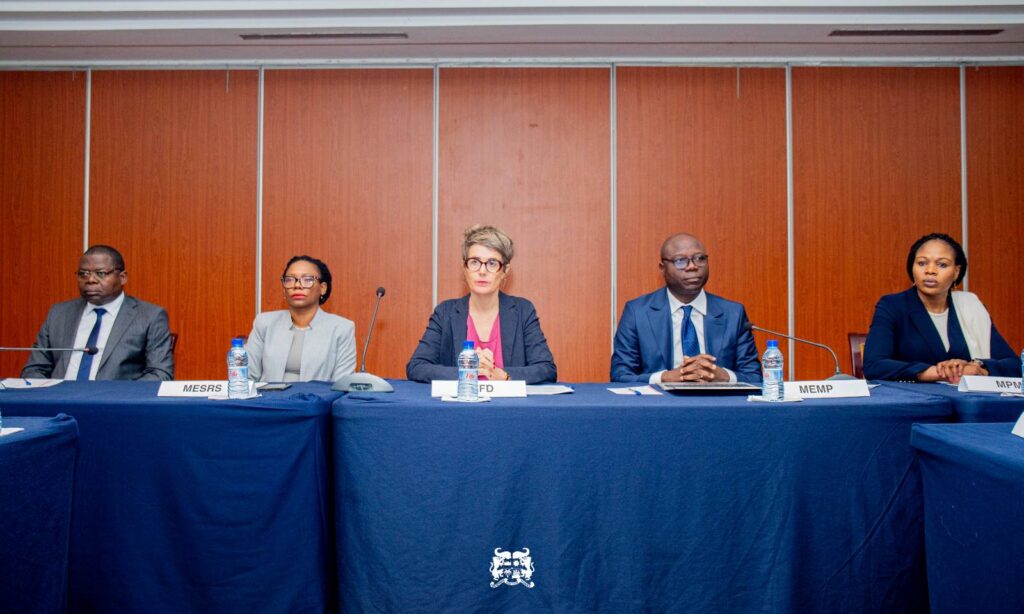
This week, Cotonou has become the epicenter of Benin’s most ambitious educational transformation yet. From June 22 to 26, a pivotal workshop is underway at the Azalaï Hotel, bringing together leaders to draft a groundbreaking National Curriculum Framework. Spearheaded by Minister Armand Kuyema Natta, the initiative seeks to overhaul the entire education system—from early childhood to higher education—ensuring alignment with the country’s socio-economic realities and equipping the next generation with the skills they need to thrive.
Unprecedented collaboration to reshape Benin’s future
The opening ceremony on June 22 set a historic tone, drawing an exceptional assembly of decision-makers. Nearly all ministers responsible for Benin’s education sectors gathered to underscore the reform’s cross-cutting significance. Representatives from preschool, primary, secondary, higher education, technical and vocational training (TVET), and scientific research were present, alongside officials from the National Council for Education (CNE) and international partners.
A notable presence was Madame Laure Weisgerber, Director of the French Development Agency (AFD), who reinforced the commitment of technical and financial partners. This collective mobilization signals a bold departure from isolated reforms, replacing them with a unified, inclusive approach that transcends traditional bureaucratic silos.
Curriculum reform as a reflection of national aspirations
During the opening session, Wilfried Guezodjè, Permanent Technical Secretary of the Sectoral Education Plan (PSE), delivered a keynote address that framed the curriculum as more than just an academic document—it is a social contract for the nation’s future. “The curriculum is not merely a pedagogical tool; it embodies the values and priorities we choose for our children,” he stated. “It shapes not only what they learn but the kind of citizens they will become.”
Guezodjè emphasized the dual challenge ahead: balancing global educational standards with locally relevant learning that prepares students for real-world challenges. The goal is clear—empower every Beninese child with the competencies needed for personal growth and future employability.
From fragmented reforms to a cohesive vision
Minister Armand Kuyema Natta took the podium to highlight the shortcomings of past piecemeal reforms. While past efforts successfully reopened and updated programs in primary and secondary education, these initiatives lacked continuity. “Isolated reforms, no matter how thorough, fall short,” he asserted. “A student transitioning from primary to secondary should do so seamlessly, and a high school graduate should arrive at university fully prepared for their chosen field. That is the gap this National Curriculum Framework will bridge.”
The framework will serve as a guiding compass, ensuring coherence across all levels of education—from preschool to higher learning. It represents a decisive step toward eliminating gaps that have long hindered Benin’s educational progress.
International backing for a transformative project
The success of such a sweeping reform hinges on robust, long-term partnerships. Madame Weisgerber of the AFD reaffirmed her institution’s unwavering support, framing the initiative as a structural game-changer with the potential to maximize the impact of investments in education.
By aligning curricula with labor market demands—particularly in technical and vocational training—the project aims to curb youth unemployment and catalyze economic growth. The international community recognizes this as a catalyst for sustainable development in Benin.
A defining moment for Benin’s education system
The Cotonou workshop, concluding on June 26, marks a turning point in Benin’s educational journey. It’s not just about revising textbooks; it’s about redefining the very essence of learning in the country. The National Curriculum Framework will serve as the foundation for a more unified, inclusive, and forward-thinking education system.
While the road to full implementation remains challenging, the political will demonstrated this week—coupled with international support—paints a hopeful picture for Benin’s schools. The vision is clear: an education system that is cohesive, responsive, and primed for the future.