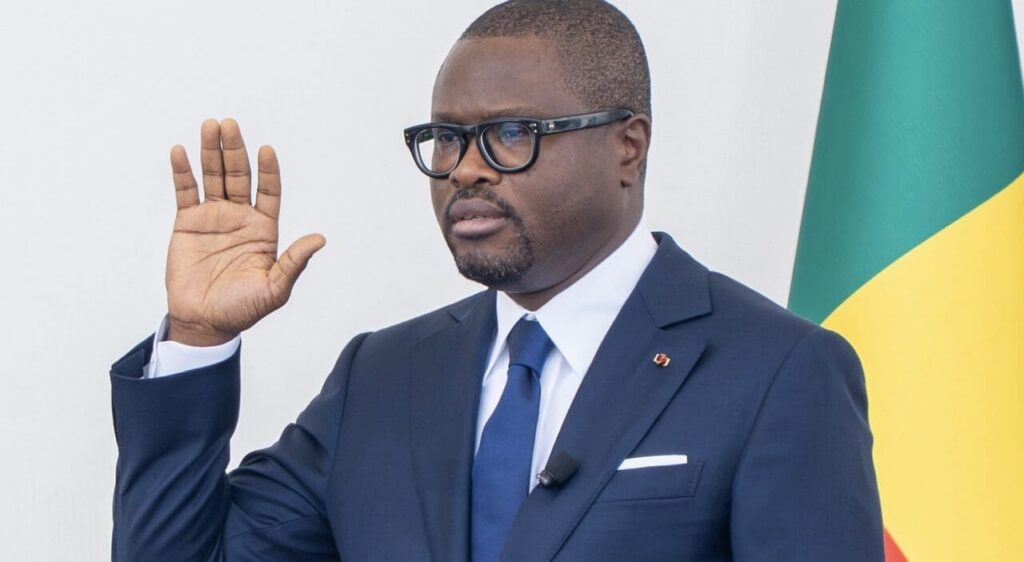
The historic inauguration of Romuald Wadagni in Cotonou on May 24 drew an unprecedented gathering of political and business leaders from across Africa and beyond. The expansive grounds of the Palais des Congrès transformed into a symbol of West African unity, welcoming delegations from over 16 nations alongside Africa’s most influential entrepreneurs.
high-profile diplomatic engagements mark new era
The ceremony underscored the growing international credibility of the newly sworn-in president, whose tenure as Finance Minister had already positioned him as a key regional player. While official protocol typically restricts sitting heads of state from attending oath ceremonies, the presence of senior officials—including the Vice Presidents of Nigeria and Côte d’Ivoire—highlighted the Beninese government’s deepening ties with West Africa’s economic powerhouses.
The most resounding ovation came when the Prime Minister of Niger, Ali Mahamane Lamine Zeine, and foreign affairs ministers from Burkina Faso and Mali were announced. This spontaneous outburst of joy reflected the Beninese people’s hope for a new chapter of regional cooperation and stability. The warm reception was widely interpreted as a tribute to Wadagni’s pre-inauguration diplomacy, which had already fostered renewed trust among neighboring nations.
The Nigerien envoy captured the moment perfectly: “This marks the opening of a new path forward,” he remarked, signaling a shared commitment to addressing shared challenges—particularly the menace of terrorism—through collective action. Wadagni, in his address, echoed this sentiment, stating that the nations of the subregion are “bound by destiny to collaborate closely.”
economic summit mirrors president’s business acumen
Beyond politics, the inauguration took on the character of an exclusive economic forum, reflecting the president’s decade-long stewardship of Benin’s finances. The guest list read like a who’s who of African industry: billionaire industrialist Aliko Dangote, Franco-Malagasy entrepreneur Hassanein Hiridjee of the Axian Group, and Adama Bictogo, CEO of Côte d’Ivoire’s Snedai Group, among others.
The attendance of Makhtar Diop, CEO of the International Finance Corporation (IFC), was particularly telling. It reflected recognition of Benin’s impressive economic performance under Wadagni’s leadership—a period that saw the country emerge as one of Africa’s fastest-growing economies, with a projected 6.5% growth rate in 2026. His tenure as Finance Minister also delivered measurable results: domestic revenue surpassed 1,000 billion FCFA, while public debt remained below 55% of GDP, reinforcing investor confidence.
These achievements have unlocked substantial financing for large-scale industrial projects, most notably the Glo-Djigbé Industrial Zone (GDIZ). Developed in partnership with Arise IIP, the GDIZ has already created over 25,000 jobs and initiated clothing exports to Europe and the United States. With ambitions to expand, it stands as a testament to Benin’s evolving industrial strategy and its ambition to become a hub for value-added manufacturing on the continent.
The international turnout in Cotonou was not merely ceremonial—it was a vote of confidence in Romuald Wadagni’s vision. Having already proven himself as a transformational finance leader, he now steps into the presidency with the expectation of steering Benin—and the wider region—toward greater prosperity and stability.