West Africa has recently grappled with significant political turbulence, experiencing numerous coups d’état across the Sahel region, Guinea, and Guinea-Bissau since the start of the current decade. This wave of instability has seen some military juntas, notably in Burkina Faso, Niger, and Mali, publicly declare a departure from policies associated with France, their former colonial power, upon seizing control.
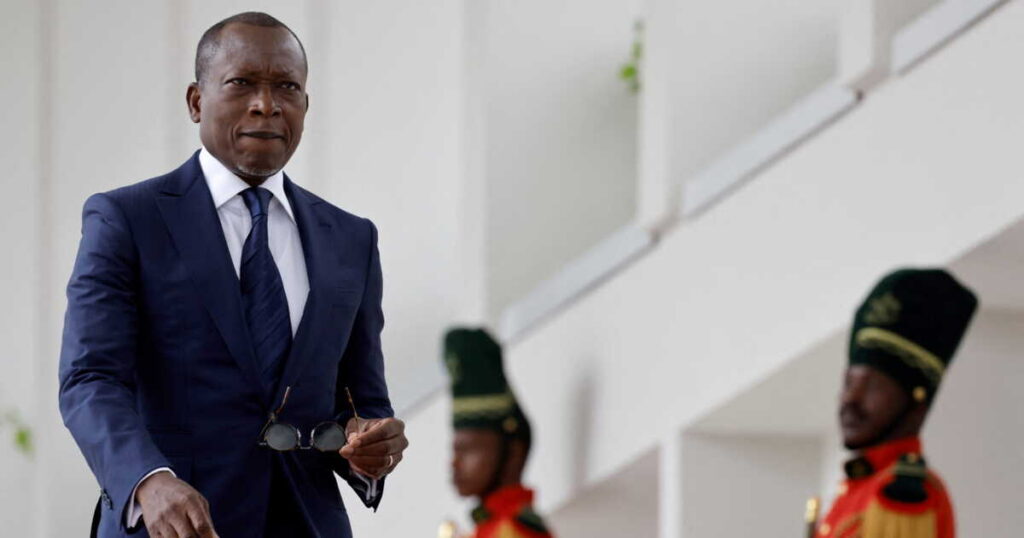
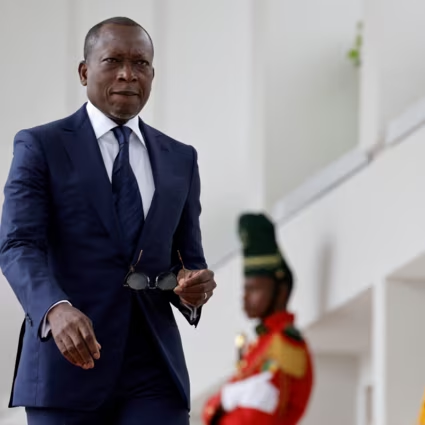
Amidst this regional unrest, France extended its full support to the Béninese army. The Élysée Palace confirmed that President Emmanuel Macron undertook a concerted effort to coordinate and share information with leaders across the region. Macron engaged in discussions with his Béninese counterpart, Patrice Talon, whom the coup plotters sought to depose, as well as with the presidents of Nigeria and Sierra Leone, the latter currently holding the presidency of ECOWAS (Economic Community of West African States).
A presidential advisor to Macron informed journalists that France provided its unwavering political backing to ECOWAS, which played a pivotal role in addressing the crisis over the weekend.
On Sunday morning, eight military officers appeared on Béninese national television, declaring the ousting of President Patrice Talon. Following a day marked by uncertainty in the economic capital, Cotonou, President Talon asserted that the situation was “totally under control.” Béninese authorities subsequently reported “several victims” resulting from clashes between loyalist forces and the mutineers.
To regain command, Bénin received crucial assistance from neighboring Nigeria. On Sunday, Nigerian forces launched air strikes against the Togbin base in Cotonou, where the mutineers had entrenched themselves after their television broadcast. Abuja further deployed ground troops, who were instrumental in recapturing the base during the night from Sunday to Monday.