West and Central Africa faces urgent humanitarian funding shortfall
The United Nations and its partners are seeking $5.1 billion in emergency funding for 2026 to address the growing humanitarian crisis in West and Central Africa. This appeal is part of a broader $33 billion global humanitarian funding request aimed at supporting 24 million of the region’s most vulnerable individuals.
Regional instability driving displacement and hunger
In 2026, over 42 million people across Burkina Faso, Cameroon, the Central African Republic, Chad, the Democratic Republic of the Congo, Mali, Niger, and Nigeria will require urgent assistance to survive and remain safe. Conflicts, climate disasters, and economic instability continue to push families into extreme poverty, with women and children disproportionately affected.
Charles Bernimolin, Head of the UN Office for the Coordination of Humanitarian Affairs (OCHA) for West and Central Africa, warns: « Without immediate funding, more families will face worsening hunger, displacement, and protection risks across the region. »
Sahel instability spreads across borders
Violence in the Central Sahel—particularly in Burkina Faso, Mali, and Niger—has spilled over into neighboring countries, including Benin, Côte d’Ivoire, Ghana, Togo, and Mauritania. Meanwhile, ongoing conflicts in the Lake Chad Basin and Sudan further exacerbate displacement, leaving 12.7 million internally displaced persons (IDPs) and 3.7 million refugees and asylum seekers in need of urgent support.
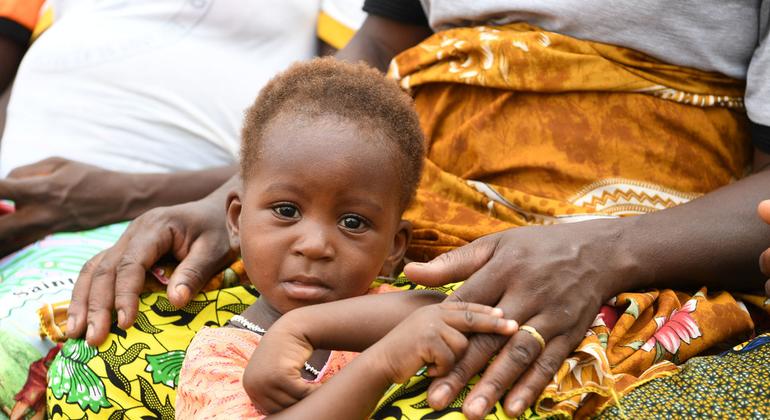
Women and children make up the majority of displaced populations, facing heightened risks such as gender-based violence and exploitation. Reports highlight cases of sexual violence and survival sex, adding to the crisis’s humanitarian toll.
Climate change intensifies vulnerabilities
In 2025, record rainfall and flooding affected over 2 million people across 12 countries, destroying crops, damaging homes, and disrupting access to schools and healthcare. The Democratic Republic of the Congo was particularly hard-hit, with more than 830,000 people impacted by these disasters.
Funding gaps force difficult humanitarian choices
Despite donor generosity in 2025, the region’s humanitarian response has suffered from severe underfunding. Out of the $7.8 billion requested, only $1.8 billion—just 24%—was received, leaving critical gaps in aid delivery.
These shortfalls have forced humanitarian agencies to scale back operations, prioritizing only the most urgent needs. In the Central African Republic, the number of people receiving cash assistance dropped by 75%, while in the DRC, 85% of those targeted for shelter support received no assistance at all.
By the end of 2025, humanitarian workers had provided some form of aid to 19 million people in West and Central Africa. However, millions more remain without support due to insufficient funding.
Call to action: breaking the cycle of indifference
Humanitarian agencies stress that without sustained funding, the situation will continue to deteriorate. « The lack of resources is preventing us from reaching millions who desperately need help, » they emphasize. The UN and its partners urge the international community to act swiftly to prevent further suffering and displacement in the region.