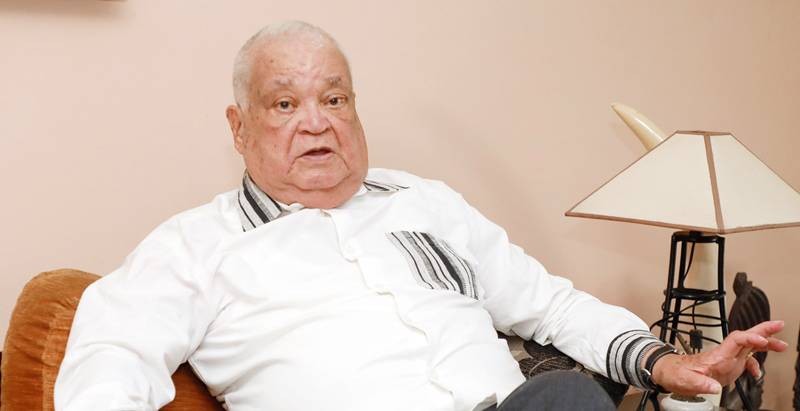
In a revealing conversation following the release of his biography, Auguste Miremont, former Ivorian minister of Communication and longtime director of Fraternité Matin, shares deep insights into the nation’s political trajectory. At 85, the seasoned statesman and journalist reflects on decades of service, leadership transitions, and the enduring legacy of key figures who shaped modern Côte d’Ivoire.
From Houphouët-Boigny to Ouattara: A political journey under scrutiny
The biography « Auguste Miremont, d’Houphouët à Ouattara, en toute liberté… »—a meticulous account of his life and times—has finally persuaded the former minister to break his silence. Miremont, who served during the administrations of Félix Houphouët-Boigny, Henri Konan Bédié, Alassane Ouattara, and Laurent Gbagbo, offers a rare firsthand perspective on the country’s pivotal moments.
Why now? The weight of history and national duty
“For years, I chose to step back,” Miremont admits. “But those who’ve witnessed the nation’s evolution urged me to document my experiences. They believe my journey offers lessons for future generations.” The book, he clarifies, isn’t an exercise in self-glorification but a testament to service. The author, Michel Koffi, spent 18 months refining the project, with Miremont dedicating over 30 hours to interviews—though he insists the process felt more like conversation than labor.
A nation’s stability and its fractures
Miremont’s reflections traverse the highs and lows of Côte d’Ivoire’s post-independence era. Under Houphouët-Boigny, the country thrived as a regional anchor—stable, respected, and generous to those fleeing conflict. “His political genius lay in his ability to listen, delay action when needed, and act decisively,” Miremont notes. Yet even this golden age saw crises: mutinies, social unrest, and economic strains that tested the nation’s resilience.
The transition following Houphouët-Boigny’s death proved turbulent. The 1999 coup d’état against Bédié marked a turning point Miremont describes as “unthinkable.” The subsequent violence—from Robert Guéï’s era to Gbagbo’s presidency—left deep scars. “I wept at the airport when news broke of Guéï’s assassination,” he recalls. “The Côte d’Ivoire we built under Houphouët was collapsing. We went from being a model to a cautionary tale.”
Personal ties: Houphouët-Boigny, Bédié, and Gbagbo
Miremont’s relationships with these leaders reveal both professional respect and personal warmth. With Houphouët-Boigny, he served as minister and head of Fraternité Matin, earning a unique nickname—”De Miremont”—a title the elder statesman used with deliberate historical weight. “He saw the role I played in shaping the nation’s narrative,” Miremont muses.
His bond with Bédié was equally strong. As president of the parliamentary group, Miremont navigated tense negotiations, including efforts to form a unity government during Bédié’s tenure. “He was always accessible, even amid his busy schedule,” he says. Bédié’s sudden passing left Miremont grieving—a loss that underscored the fragility of leadership in turbulent times.
With Gbagbo, Miremont’s ties began in politics but evolved into friendship. He recalls collaborative efforts to stabilize the economy during Gbagbo’s presidency, including negotiations that nearly led to a national unity government. “He supported initiatives like the ‘billion-dollar rain’ fund and even aided me financially at a critical moment,” Miremont shares. “I owe him gratitude for that.”
Ouattara: The heir to Houphouët’s legacy?
When asked to compare these leaders, Miremont hesitates. “Each had their methods, their strengths.” Yet he singles out Ouattara as the one who most internalized Houphouët-Boigny’s strategic patience and adaptability. “As Prime Minister, he tolerated no errors. Today, he’s more measured—but that’s the mark of experience.” Miremont praises Ouattara’s tenacity in overcoming crises, his courteous demeanor (even calling secretaries to follow up on missed calls), and his commitment to correcting social imbalances through programs like vocational training and youth employment initiatives.
“He’s built hospitals, universities, and roads across Côte d’Ivoire,” Miremont notes, citing projects like the Daloa boulevard reminiscent of Paris’s Champs-Élysées. “Yet challenges remain—rising costs of living, persistent poverty. But the government’s social safety nets, such as the ‘second-chance schools’ and youth apprenticeship programs, show a willingness to address these issues.”
Looking ahead: Stability and succession
At 85, Ouattara shows no signs of stepping aside despite rumors of retirement. “He’s just begun a new term. Let him finish,” Miremont advises. “His vision of a united, prosperous Côte d’Ivoire is clear. The progress is undeniable.” Still, Miremont cautions against complacency. “Progress isn’t linear. The economy may be strong internationally, but at what cost to ordinary citizens? The government must keep correcting the balance.”
As for his own legacy, Miremont shrugs off the idea of grandeur. “I was never in Houphouët-Boigny’s inner circle,” he says. “But I spoke my mind when it mattered. That’s all one can ask.”