amnesty international urges respect for civilian safety amid Mali blockade
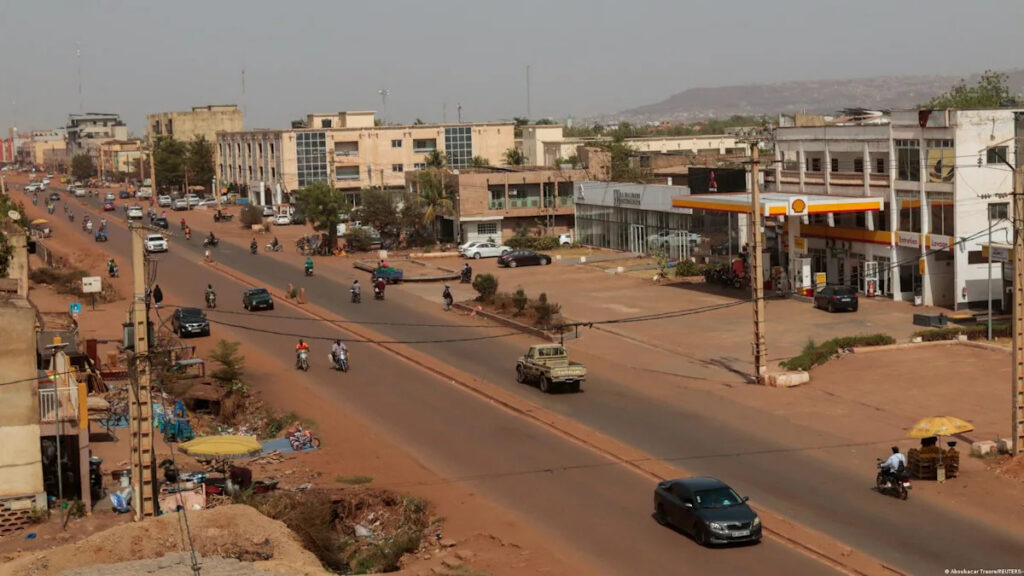
Amnesty International has issued a strong appeal to the jihadist group JNIM, urging them to uphold the safety and freedom of movement for civilians across Mali. This comes as civilians endure persistent attacks from insurgents who have maintained a two-week road blockade around the capital city, Bamako. Since April 30, critical supply routes leading into the capital have been obstructed by jihadist forces, severely impacting Bamako and the rest of this landlocked nation, which relies heavily on road-based imports.
In a recent statement, Amnesty International highlighted the unacceptable consequences of the current blockade. It emphasized that the restriction on civilian movement could lead to grave violations of fundamental rights, including access to food security, healthcare, and ultimately, life itself.
The human rights organization further called upon JNIM to adhere strictly to international humanitarian law. It specifically cited an incident on May 6, detailing an attack on a convoy of trucks transporting civilian goods, including fresh produce, between Bamako and Bougouni in southern Mali. Amnesty confirmed that these vehicles were not under military escort and carried no military personnel or equipment.
malian army vows intensified strikes
Meanwhile, the Malian army has announced its intention to intensify aerial strikes on the city of Kidal in the coming days. Kidal has been under the control of the Touareg rebels of the Front de libération de l’Azawad (FLA) and their JNIM jihadist allies, also known as the Group for the Support of Islam and Muslims, since late April. While the Malian military confirms multiple strikes on the city, Touareg separatists claim to be holding 200 Malian soldiers captured during attacks on April 25.
A resident originally from Kidal confirmed that the city is experiencing power outages, and telephone communication with Kidal and several other northern Malian towns remains challenging.
On the ground, conflicting reports leave residents uncertain whom to trust amidst the escalating crisis.
In Gao, despite the city being under Malian government control, a resident described a prevailing climate of mistrust. “We are told to rely on government communiqués,” she stated, adding that the prices of essential food items, such as onions, have doubled.
Hervé Lankoandé Wendyam, an independent analyst specializing in political and security dynamics in West Africa, suggests that the current situation reflects a deliberate effort to separate the North from the rest of Mali. He believes that the events unfolding in central Mali indicate JNIM’s ambition to escalate hostilities by seizing control of urban centers.
the escalating situation in central Mali
Sources familiar with the central region report significant areas under jihadist control, specifically mentioning the left bank of the Niger River in the Ségou region and parts of the Koulikoro region, where state administration is notably absent.
In these jihadist-controlled zones, the “zakat” tax is levied in hundreds of villages, and numerous schools remain closed. A report from late January indicated that over 2,300 schools were shut down across Mali, with the northern and central regions being the most severely affected.
Abdoulaye Sounaye, a researcher and specialist in jihadist groups in the Sahel, observes that the opposing forces are currently in a phase of strategic observation, reorganization, and rearmament, particularly on the side of the Malian army.
“I have the impression that the government and the military regime are preparing to retaliate,” Sounaye noted. “Meanwhile, JNIM and FLA forces are also observing and preparing for a potential resumption of hostilities from the Malian army. Caught between these factions, the civilian population will inevitably continue to suffer abuses from both sides.”
Experts on the region suggest that the most viable path to resolving the security crisis in northern and central Mali, and indeed nationwide, lies in establishing a comprehensive dialogue involving all parties.
Ahmed Ould Abdallah of the 4S center emphasized the widespread nature of the crisis affecting various social groups. “It is up to the government to determine how, in collaboration with the national elite and across all political opinions, they can come together to overcome this crisis through resolution and negotiation. There is a political problem that the Malian authorities must address. They can resolve it if they are open. If the Malian government wishes to avoid an eternal crisis, the current administration must declare its readiness for genuine dialogue with all components of the country.”
Abdoulaye Sounaye, research unit director at the Leibniz-Zentrum Moderner Orient in Berlin, Germany, predicts, “I believe that sooner or later, these present forces will be compelled to convene around a table and reach an agreement.”
However, Mali officially rejects any negotiations with the FLA and JNIM, labeling them as terrorist entities. Despite this stance, secret negotiations were reportedly conducted between Malian military authorities and JNIM jihadists to facilitate the supply of fuel to Mali, highlighting the complex realities on the ground.