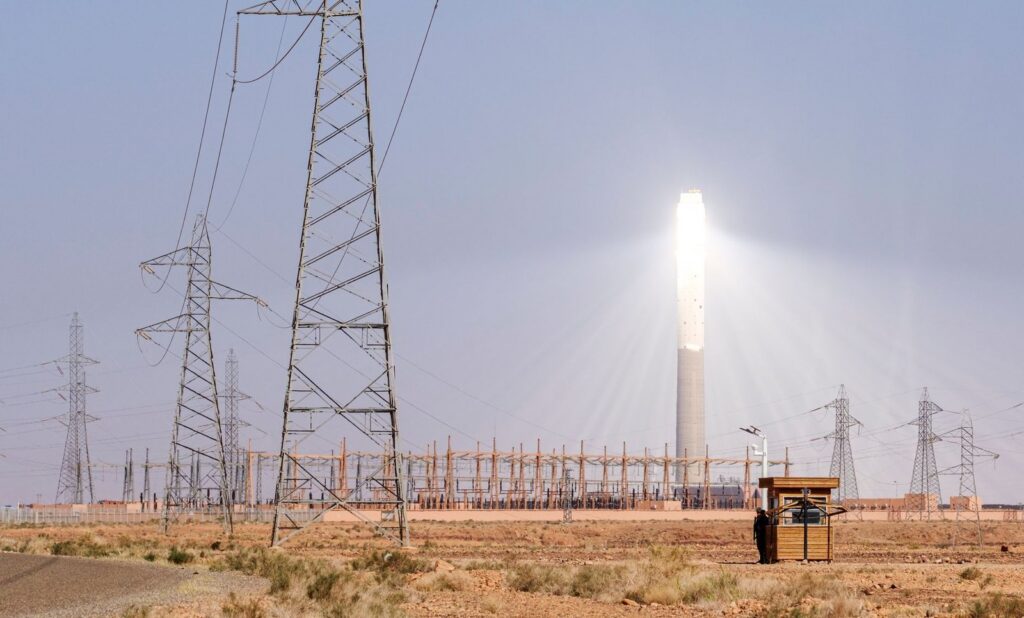
Algeria and Niger have inaugurated the first Algerian-Nigerien solidarity power plant in Gorou Banda, on the outskirts of Niamey. The ceremony was attended by Nigerien Prime Minister Ali Lamine Zeine and his Algerian counterpart Sifi Ghrieb. This project marks the first concrete delivery of energy commitments made between the two neighboring countries, at a time when regional partnerships in the Sahel are undergoing significant reshaping. Beyond its symbolic value, the initiative directly addresses Niger’s persistent electricity shortage, which has long constrained both the national economy and the daily lives of residents in the capital.
Energy cooperation takes shape in Gorou Banda
Gorou Banda, already home to critical electrical infrastructure south of Niamey, has become the focal point of a new diplomatic chapter between Algeria and Niger. The inauguration brought together both prime ministers, underscoring a project framed as a gesture of solidarity from Algiers toward Niamey. For Niger’s transitional government, which came to power in July 2023, the new plant offers a timely response to mounting pressure on the national power supply.
Niger has long relied on electricity imports, particularly from Nigeria, whose deliveries were disrupted following the Economic Community of West African States (ECOWAS) sanctions imposed after the regime change. Diversifying energy sources has become a strategic necessity for Niamey. The newly inaugurated plant aligns with this goal, serving as a complementary solution alongside ongoing efforts to boost domestic thermal and solar production.
Algeria expands its diplomatic footprint in the Sahel
For Algeria, this initiative reflects a broader strategy to enhance its presence in the southern Sahel. Over recent months, Algerian diplomacy has intensified engagement with Sahelian states, especially as traditional Western partners have scaled back their involvement in the region. Delivering a critical energy infrastructure serves a dual purpose: reinforcing Algeria’s regional influence and contributing to the stabilization of a neighboring country whose security is vital to Algeria’s own southern provinces.
The high-level meeting between Ali Lamine Zeine and Sifi Ghrieb extended far beyond energy matters. Security concerns dominated the discussions, given the sensitivity of the nearly 1,000-kilometer shared border—a corridor notorious for the movement of armed groups, illicit trafficking, and migration flows. Energy cooperation is thus emerging as one pillar of a broader dialogue that includes border stabilization and regional security.
A political signal beyond megawatts
The timing of the inauguration is significant. It coincides with the formal withdrawal of Niger, Mali, and Burkina Faso from ECOWAS and the establishment of the Alliance of Sahel States (AES). In this evolving regional landscape, Algeria has positioned itself as a key interlocutor, maintaining balanced relations with both AES members and countries still aligned with the ECOWAS framework. This strategic positioning allows Algerian diplomacy to engage constructively across the entire region.
The Gorou Banda plant embodies both practical and symbolic value. Technically, it boosts installed capacity near Niger’s most electricity-demanding area—the capital. Politically, it formalizes a bilateral partnership presented as foundational. The coming months will reveal the extent to which commitments on long-distance electrical interconnections materialize, a topic frequently raised in discussions between the two capitals.
The real challenge for Niamey will be transforming this inaugural infrastructure into a sustainable tool for reducing the energy deficit. Nigerien authorities have made energy sovereignty a cornerstone of their public agenda, and cooperation with Algeria is now a cornerstone of that vision. The successful integration of this plant into the national grid will be a critical test of the partnership’s long-term impact.