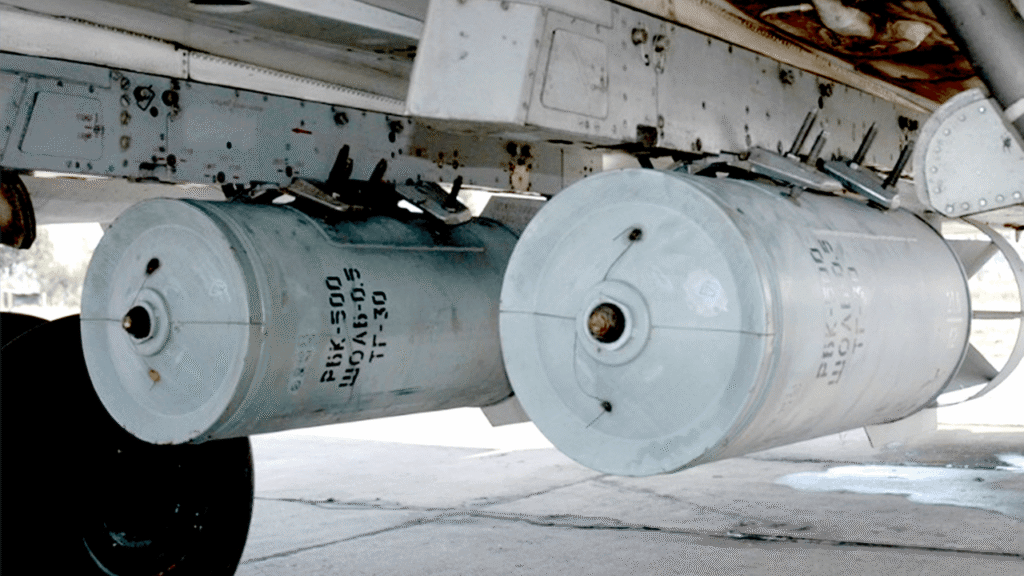

Recent aerial strikes in central Mali have left behind disturbing evidence of cluster munition deployment, according to investigative imagery examined by field specialists. The visual traces, captured during post-strike assessments, reveal unmistakable patterns characteristic of Soviet-era submunition dispersal systems.
What the imagery reveals about the attacks
The photographs show widespread scattering of unexploded ordnance across a previously secure area in the Mopti region. Experts note that each cluster munition casing typically releases dozens of smaller bomblets over a wide radius, creating a lethal footprint that endangers civilians long after the initial strike.
Key observations from the field analysis
- Pattern recognition: The distribution of bomblets follows the classic “footprint” shape associated with Soviet 240mm rocket-delivered cluster munitions, identifiable by their distinctive fragmentation patterns.
- Unexploded ordnance risk: Numerous bomblets remain inert but highly dangerous, particularly to children who might mistake them for toys.
- Environmental impact: The strikes have left craters and scattered debris across agricultural land, threatening food security in an already vulnerable region.
The use of such munitions contravenes international humanitarian law, which prohibits their deployment in populated areas due to the severe risk they pose to civilian populations. The discovery comes at a time when Mali‘s security situation remains particularly fragile, with ongoing counterterrorism operations raising concerns about collateral damage.
International implications of cluster munition use
These findings raise serious questions about the origin and authorization of the strikes. While the Malian armed forces have not officially commented on the incident, the presence of Soviet-era munitions suggests possible links to regional military support networks.
The discovery follows a pattern of similar incidents reported in neighboring countries, highlighting a concerning trend in Sahelian warfare. Humanitarian organizations have repeatedly warned about the long-term consequences of cluster munition contamination, which can render land unusable for decades.
Local authorities have begun emergency clearance operations, though the scale of contamination suggests this will be a prolonged and resource-intensive process. The situation remains under close international scrutiny as diplomats assess the potential impact on regional stability.