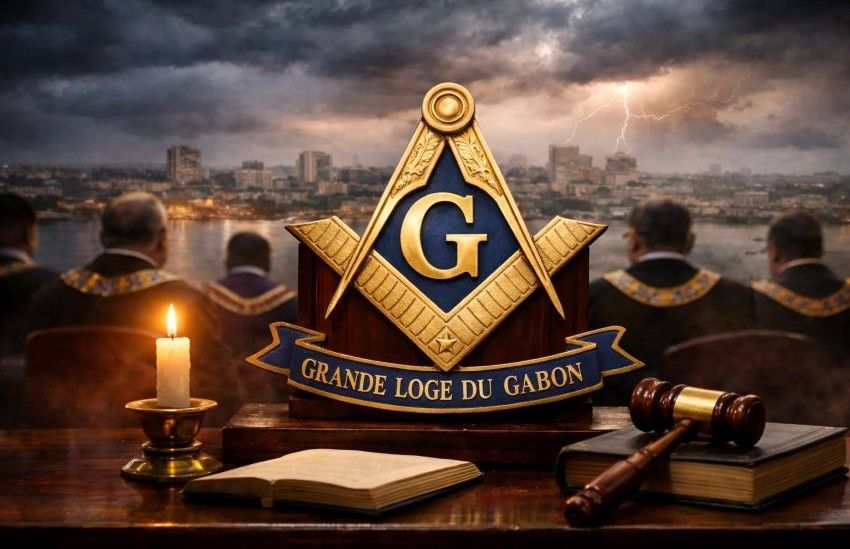
unrest shakes Gabon’s grand masonic lodge amid leadership vacuum
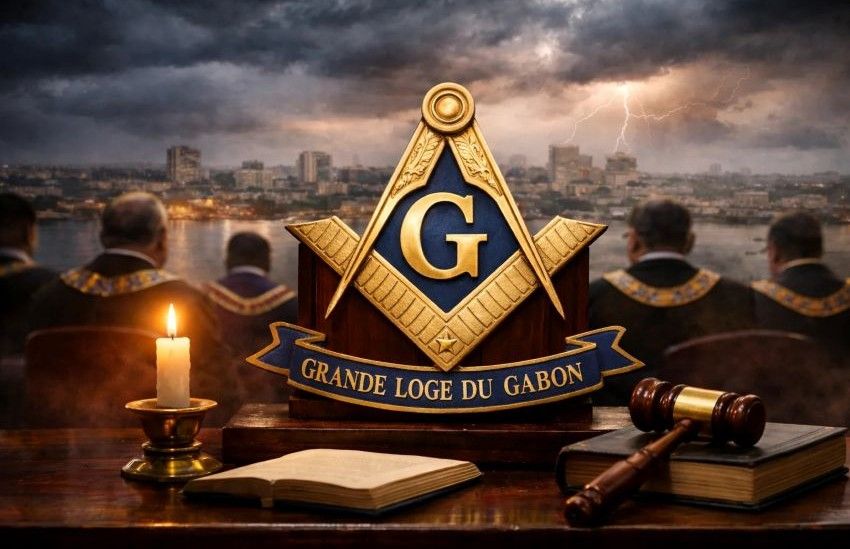
Libreville — For decades, the Grand Lodge of Gabon (GLG) operated as a bastion of discretion and unity, navigating political storms without ever exposing its internal fractures. That carefully constructed image now appears to be unraveling.
The influential Masonic institution finds itself embroiled in an unprecedented crisis. At its core lies a toxic mix of succession battles, challenges to leadership authority, financial irregularities, and clan-based power struggles. What began as surface-level disagreements has evolved into a fundamental restructuring of the organization’s long-standing power dynamics.
Longtime observers report an atmosphere of tension unlike anything seen in recent years. The same institution that once prided itself on fraternity and moral elevation now faces division that extends far beyond its temple walls.
The collapse of a long-standing system
To grasp the magnitude of the current crisis, one must examine Gabon’s evolving power structures. For years, political and Masonic authority converged around a single figure. When the nation’s president simultaneously held the position of Grand Master, individual ambitions existed but were constrained by an unassailable hierarchy.
That balance shattered after the August 30, 2023 events. While expectations ran high that incoming President Brice Clotaire Oligui Nguema would assume Masonic leadership, he chose instead to step aside. In February 2024, Jacques-Denis Tsanga was installed as the new Grand Master of the GLG.
This departure from tradition sent shockwaves through the organization. Some interpret it as an intentional move toward depoliticization. Others see it as the opening of a dangerous period of uncertainty, where the absence of a unifying figure has unleashed rivalries that had long remained dormant.
Succession battle exposes deep divisions
Three years into Jacques-Denis Tsanga’s tenure, criticism of his leadership has reached a fever pitch. Supporters point to reforms in provincial lodge organization, asset management, and international expansion. Detractors, however, accuse him of consolidating excessive power, practicing opaque governance, and mishandling sensitive matters.
The numbers tell a sobering story. Membership participation has plummeted—of approximately six hundred registered members, only two hundred remain actively engaged. A wave of expulsions, suspensions, and voluntary departures has fostered an atmosphere of unprecedented distrust.
In this charged environment, the upcoming general assembly takes on critical significance. Multiple candidates from diverse backgrounds—veteran figures, senior officials, and emerging leaders—are positioning themselves for the top position. This election is no longer about symbolism alone; it will determine the very future of the organization.
The search for a new center of gravity
The current turmoil offers a revealing glimpse into shifting power centers across Gabon. For years, the Grand Lodge’s proximity to state authority provided a protective shield. Today, that same independence has exposed fractures that were previously contained by centralized control.
The irony is palpable. Those who once criticized the blending of political and Masonic power now recognize that this relationship once ensured internal stability. Conversely, the GLG’s emancipation has revealed divisions that can no longer be ignored.
The stakes extend beyond the choice of the next Grand Master. The core challenge lies in the institution’s ability to forge an authority acceptable to all in an increasingly competitive and fragmented landscape. As in any organization, when the gravitational center weakens, ambitions shift from organizing around power to fighting for its control.
The current crisis represents a defining test for the Grand Lodge of Gabon. If it can channel this period of tension into an opportunity for renewal, it may emerge stronger. Failure to do so risks locking the institution into lasting fragmentation.
For an organization that long treated secrecy as its greatest strength, the public spectacle unfolding today carries profound symbolism. It reveals that even within ancient and influential structures, the fundamental question remains unchanged: how can unity be preserved when authority is no longer unchallenged?