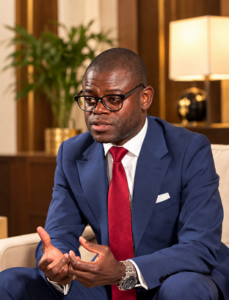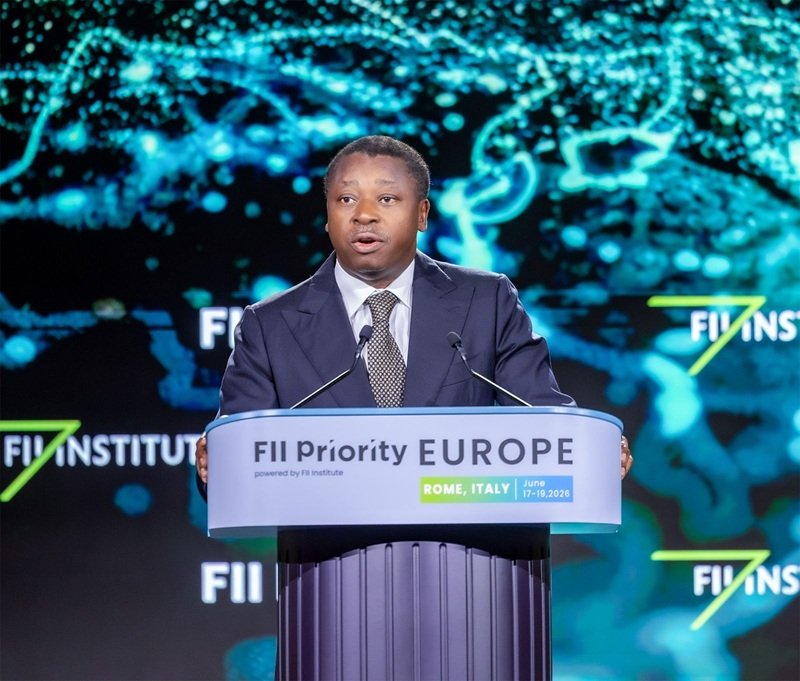
On June 18, 2026, Faure Essozimna Gnassingbé, President of the Togolese Council, addressed a high-profile audience at the FII PRIORITY Europe summit in Paris. The event gathered global leaders to discuss industrial financing, resilient supply chains, and the evolving nature of work in the AI era.
Standing before an elite assembly of policymakers, investors, and corporate executives, Gnassingbé called for a fundamental rethinking of Europe-Africa relations. He argued that the traditional frameworks of aid and one-sided cooperation no longer align with today’s geopolitical and economic realities.
Beyond aid: building a strategic Europe-Africa partnership
In his keynote address, Gnassingbé emphasized that both continents face shared challenges—from geopolitical instability to fierce global competition. He stressed that cooperation must evolve from dependency-based models toward mutually reinforcing economic partnerships grounded in shared interests and productive investment.
« The time for charity and outdated cooperation models is over. What Africa and Europe need now is a strategic, balanced partnership that drives economic sovereignty, energy resilience, and technological advancement, » he declared.
Interdependence, not isolation: a vision for strategic autonomy
Gnassingbé framed strategic autonomy not as withdrawal, but as intelligent interdependence. He pointed out that recent global crises—from supply chain disruptions to energy shortages—have revealed how deeply connected Europe and Africa are. However, he warned that these linkages must be safer, more predictable, and equitable to avoid vulnerabilities.
« True autonomy comes not from self-sufficiency, but from strong, well-managed partnerships where each side brings strengths to the table. Africa has resources and potential; Europe has capital and technology. Together, we can build something greater than either could achieve alone, » he said.
Africa’s rise: from raw materials to value creation
The Togolese leader underscored Africa’s ambition to move beyond its historical role as a provider of unprocessed commodities. He highlighted the continent’s push toward local production, industrial transformation, and innovation—a shift that he believes will benefit both Africa and its European partners.
« An Africa that produces, transforms, and innovates is an Africa that offers Europe stable supply chains, new markets, and shared prosperity. This is not a zero-sum game—it’s a win-win opportunity, » he added.
Togo’s role as a regional logistics and industrial hub
Gnassingbé also outlined Togo’s strategic vision to become a leading logistics and industrial platform in West Africa. He highlighted several key initiatives:
- Modernization of the Port of Lomé, enhancing its capacity as a gateway for regional trade.
- Development of regional corridors to improve connectivity across West Africa.
- Streamlining trade facilitation through digitalized customs and border procedures.
- Expanding digital infrastructure to support e-commerce and logistics efficiency.
These efforts, he noted, are not just for Togo’s benefit but are designed to strengthen the economic resilience of the entire subregion.
Attracting investment and positioning Togo on the global stage
Gnassingbé’s participation in the summit was more than symbolic—it was a deliberate move to enhance Togo’s visibility among international investors. By showcasing the country’s logistical, industrial, and financial advantages, Lomé aims to attract high-value investment, forge long-term partnerships, and solidify its position as a key economic hub in West Africa.
The summit brought together influential figures such as Yasir ben Othman Al-Rumayyan, Chairman of the Future Investment Initiative Institute, and Richard Attias, Executive Chairman of the initiative, alongside heads of state, investors, and global financial leaders. This gathering underscored the growing recognition of Africa as a pivotal player in the future of global trade and investment.