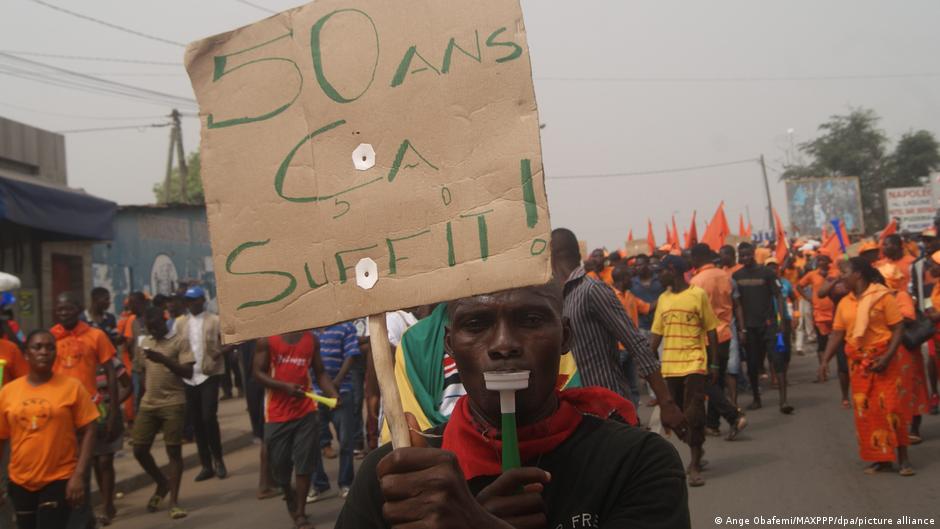

After years of restrictions and prohibitions on public demonstrations, Togo’s opposition successfully organized a rally in Lomé this past weekend. This authorized gathering by the authorities raises a crucial question: does this mark a genuine shift towards political openness in Togo, or is it merely a temporary reprieve?
CNCC coalition mobilizes in Lomé
Several hundred individuals participated in the inaugural public assembly of the new National Framework for Consultation for Change (CNCC) in Togo this Saturday. This significant coalition unites four distinct opposition political parties and various civil society organizations.
David Dosseh, a key organizer from the Front citoyen Togo debout, articulated the coalition’s objectives: “We are striving for a change in governance because Togo is plagued by systemic corruption, its fundamental social services are deteriorating, and ultimately, it is a nation struggling to progress.”
He further asserted that “for many years, spurious reasons have consistently been invoked to systematically prohibit peaceful public gatherings. However, we will never yield.”
A cautious view on political liberalization
The pivotal question remains: should this recent authorization be interpreted as a definitive indicator of political transformation? Paul Amégankpo, a respected political analyst and director of the Togolese Tamberma Institute for Governance, advises against premature conclusions regarding a permanent political opening.
“The Togolese government’s decision to permit the opposition’s peaceful march on May 9, 2026, in Lomé, is certainly commendable,” the researcher observed. “However, within the broader political landscape, this gesture of openness warrants careful consideration. It should be viewed cautiously as a potential willingness by the Togolese government to ease restrictions on peaceful assembly, association, and political activities within the country.”
Despite the approved meeting, Paul Amégankpo maintains a reserved stance: “It will be imperative to observe further demonstrations of political will and openness to confirm a clear trajectory towards enhanced political and associative freedoms nationwide.”
Attempts to obtain an official response from the government remained unsuccessful.
The events of the coming weeks will likely provide clarity on whether this demonstration signifies the dawn of a new democratic era or merely a brief interlude in an persistently tense political environment.