Tabaski pressure: how senegalese families drown in debt for a sheep
Every year, millions of Senegalese plunge into debt to purchase a sheep for Tabaski. From rotating savings clubs to microfinance loans and informal lenders, an entire ecosystem of borrowing has grown around a religious holiday that has become a social crisis. Meanwhile, Morocco has found a solution—Dakar is still waiting.
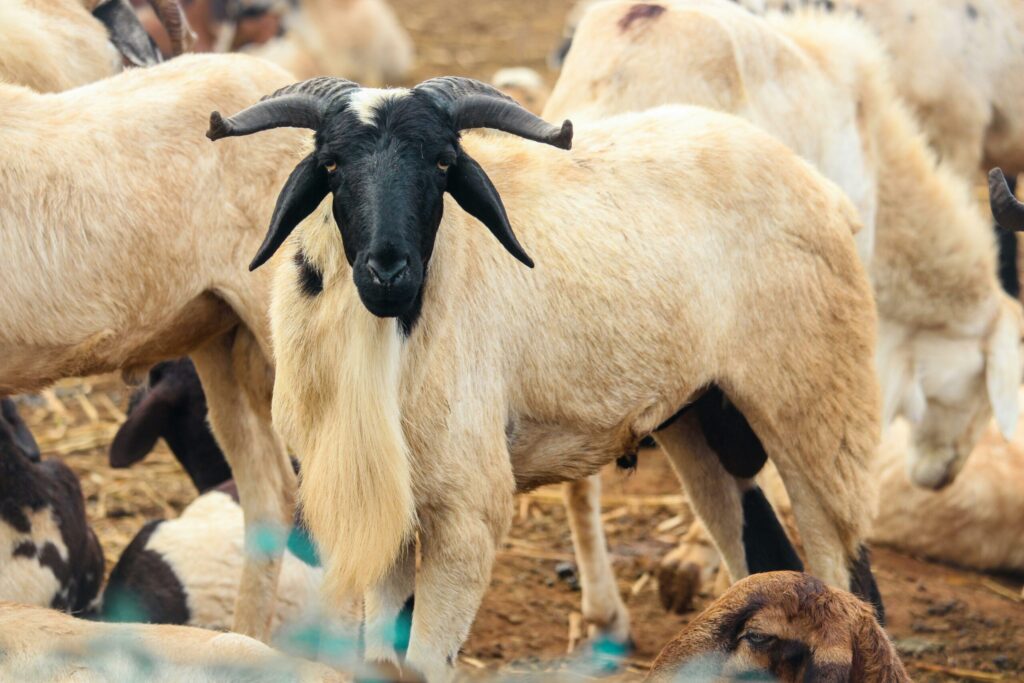
Two weeks before Tabaski, the same dread grips fathers across Dakar—from working-class neighborhoods to the Almadies district. The price of a sheep has skyrocketed. Yesterday, a decent animal cost 120,000 CFA francs. Today? It’s 150,000. Sometimes 200,000. And for those “prestige” sheep—the ones photographed and posted on WhatsApp—prices reach 300,000 CFA francs or more.
“How am I supposed to come up with this money?” the men ask themselves. It’s a question that returns every year like clockwork. There’s something twisted about modern Tabaski: a religious celebration that has morphed into a social status obligation.
The sheep is no longer a matter of faith—it’s a matter of money
Mamadou Sall lives in the Sacré-Cœur neighborhood and earns about 60,000 CFA francs per month. By May, his stress levels begin to rise. Two months later, he’ll need to come up with 150,000 francs—nearly two and a half months’ salary—just to buy a sheep. Not to feed his family for a week. No. To uphold tradition. To let his neighbors see him sacrifice an animal. To keep his family’s dignity intact.
Mamadou can’t borrow from a bank. No commercial lender would extend credit for a sheep. So he turns to his neighborhood’s rotating savings club. They’ll lend him 150,000 CFA francs—but at what cost? Interest rates in these clubs during Tabaski season can reach 30% to 50% annually. On a 150,000-franc loan, that means immediate fees of 3,750 to 6,250 francs, plus 12 months of repayments.
Mamadou isn’t alone. Between 35% and 45% of all microfinance loans granted in Senegal during Tabaski season go toward buying sheep. It’s a staggering figure—nearly one in two credit requests in a few short weeks is for an animal that will be eaten within the year.
The steep price hike since 2010
In 2010, a sheep cost 60,000 to 80,000 CFA francs. Today, prices range from 150,000 to 250,000 francs. That’s an 87% to 275% increase in less than 15 years. This inflation isn’t tied to general price growth in Senegal. It’s driven by speculation around concentrated demand over two months. During Tabaski, demand is inelastic—people will buy, no matter what. Breeders and middlemen know this. They raise prices without hesitation.
The minimum wage in Senegal is 60,239 CFA francs per month. To buy a 150,000-franc sheep, a minimum-wage worker must dedicate two and a half months of full salary. And that’s before factoring in other Tabaski expenses: clothing, food, gifts. For the 60% of Senegalese living below the poverty line, this is impossible without taking on debt.
Who borrows for the sheep?
For Tabaski 2024, microfinance institutions in Senegal saw a 62% surge in loan applications compared to off-season, with average requested amounts ranging from 120,000 to 200,000 CFA francs. It’s a flood of credit requests concentrated in just two months.
The web of informal debt
Faced with the inaccessibility of traditional bank loans, a complex system of borrowing has taken root. Rotating savings clubs, microfinance institutions, private informal lenders—this entire ecosystem thrives during Tabaski season.
| Credit source | Off-season | Tabaski season |
|---|---|---|
| Local rotating savings clubs | 15–30% annually | 30–50% annually |
| Formal microfinance | 24–36% annually | 36–48% (short-term loans) |
| Private informal lenders | 30–40% annually | 50–60%+ annually |
| Commercial banks | Nearly inaccessible | Nearly inaccessible |
Rotating savings clubs accelerate their payment cycles during Tabaski. Interest rates in these informal credit circles climb to 30%–50% annually, turning a 150,000-franc loan into a total debt of 172,500 to 225,000 francs after 12 months of repayments.
Microfinance institutions offer slightly better terms, but still charge effective annual rates of 24% to 36%—or up to 48% for the shortest-term loans (three to six months). A family borrowing in July for an August Tabaski faces immediate financing fees of 3,000 to 6,000 francs on a 150,000-franc loan.
Instagram and WhatsApp worsen the problem
But there’s an even darker side to this tradition. Over the past decade, Tabaski has migrated to social media. Before, only your neighbors could see your sheep. Now, 500 people on WhatsApp can—and not just see it, but admire it, comment on it, compare it.
A 2023 study by Cheikh Anta Diop University found that 67% of young people in Dakar feel social pressure to buy a sheep for Tabaski. Among them, 48% say this pressure comes primarily from what they see on social media. Senegalese influencers glorify prestige sheep. Tabaski videos showcase wealthy families buying expensive animals.
Meanwhile, poorer families feel they’re falling short. They borrow to keep up. This pressure hits men hardest. In Senegalese culture, it’s the man’s responsibility to buy the sheep. If a man can’t afford one for Tabaski, many believe he’s failed. That he lacks means. That he can’t provide for his family.
The hidden cost: reduced consumption
Households that borrowed for Tabaski cut their food and healthcare spending by 18% to 25% in the three months following the holiday. School fees for enrolled children drop. Essential medications go unpurchased. The real economic cost of keeping up appearances during Tabaski far exceeds the price of the sheep itself.
Worse still, some farmers divert agricultural loans—meant for seeds and fertilizer—into buying sheep. Between 8% and 12% of Senegalese agricultural loans are misused for Tabaski consumption. This means a farmer who could have boosted his harvest by 30% ends up spending his credit on social prestige. By the next planting season, he has no means left to invest.
Morocco solved this 25 years ago
In 1999, Morocco’s king made a bold decision. He declared that every poor Moroccan would be entitled to a sheep for Tabaski—not as charity, but as a right. A recognition that a religious celebration shouldn’t be subject to market forces.
Since then, Morocco has distributed millions of sheep. In 2023 alone, over 2.8 million sheep were provided through the Zakat Al-Fitr royal program. The cost? Around 450 million Moroccan dirhams annually—roughly 43 billion CFA francs. Put in context, this represents less than 0.1% of Morocco’s national budget to ensure all poor citizens can celebrate Tabaski without debt.
Morocco recognized a simple truth: a religious holiday whose access depends on personal wealth isn’t truly a religious celebration. It’s a social distinction mechanism disguised as tradition. By treating Tabaski as a public good—not a private one—Morocco made a political decision. Senegal could do the same.
And where does Senegal stand?
Senegal does nothing. Or almost nothing. There’s no national program. A few municipalities and private religious organizations offer limited support. That’s it. The rest of the country? Left to the mercy of usurious lending rates and the psychological weight of appearances.
Meanwhile, debt collection agencies report a disturbing pattern: household over-indebtedness peaks three months after Tabaski. Families struggle to repay Tabaski loans while trying to survive. They cut back on food. Skip medical care. Pull children out of school.
Then there’s the mental health toll. A 2022 study by the Dakar Center for Mental Health Research revealed a sharp increase in calls to helplines three weeks before Tabaski. Among men aged 30 to 55, call volume doubles. The anxiety of not being able to buy a sheep, the shame, the fear of judgment—it all weighs heavily.
How did we get here?
On one side, there’s the pressure to keep up appearances. Tabaski has become a display of social status—something it wasn’t before. Religious tradition has merged with urban conspicuous consumption. Social media has accelerated this shift. Now, Tabaski is all about: Look at my sheep. See how wealthy I am. See how respectable I am.
On the other side, there’s a complete absence of public policy. The Senegalese government doesn’t treat Tabaski as a social issue. There’s no national debate. Politicians don’t address it. Media coverage is scarce. Meanwhile, millions of households fall into debt every year.
Mamadou is already getting calls from his rotating savings club. Tabaski 2025 is coming. Sheep prices are rising. Interest rates are climbing. And the cycle begins anew.