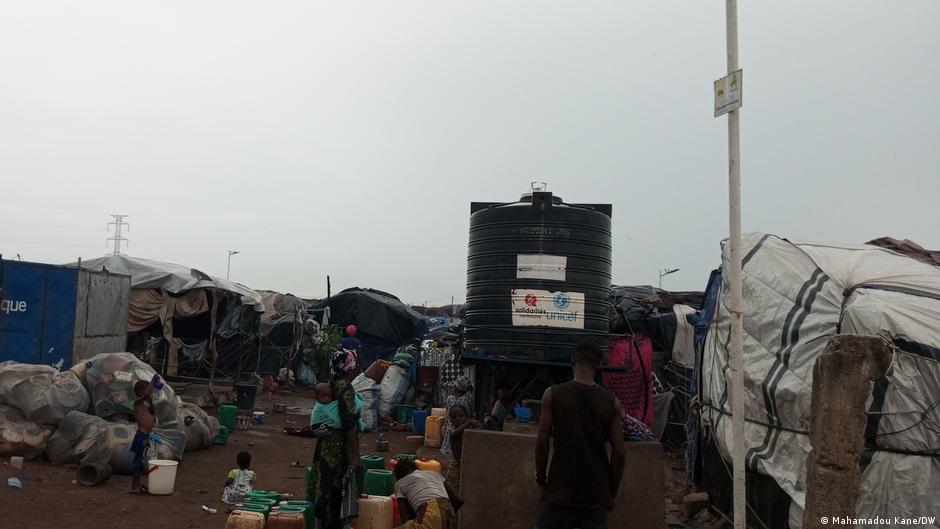
As the city of Bamako prepares for the Tabaski celebrations, displaced families from the former Faladiè camp are facing harsh conditions just days before the festival. Evacuated from their makeshift homes in April, these families now reside in the ruins of an informal settlement, where a children’s educational center has become an unexpected shelter.
Among them is Aminata, a mother of four who fled her home in the Bankass district of the Bandiagara region in 2019 after conflict forced her to leave behind everything. Now, she finds herself in a center that was never designed to accommodate anyone, struggling to meet basic needs in the run-up to Tabaski.
“The lack of a proper relocation site is taking its toll on us. Beyond healthcare, what we urgently need are food supplies—rice, oil, and even festive clothing for our children,” she explains, her voice heavy with concern.
Lost livelihoods and unmet expectations
Just a few hundred meters away, Fousseyni and Oumar, two young livestock handlers aged 14 and 15, watch as a butcher prepares a sheep for sacrifice. The boys had hoped to earn income by assisting with the purchase and sale of animals, a common practice during Tabaski. Last year, they managed to save money through these activities, but this year, their efforts have gone unrewarded.
“Last year at this time, we were selling sheep and transporting cattle for buyers. We earned enough to get by. This year, we’re left with nothing but empty hands. It’s unbearable, but we still come here every day, hoping for a chance to earn something—anything,” Fousseyni shares, his disappointment palpable.
Ongoing support amid uncertainty
Despite the challenges, local and international humanitarian organizations, including the National Directorate for Social Development, continue to monitor the situation at the children’s center in the former Faladiè camp. Over 300 families who once lived there remain in limbo, with no designated relocation site in sight.
The upcoming Tabaski festival, a time of joy and celebration, has instead become a stark reminder of the displaced families’ precarious living conditions in Bamako.