The green light is now official. Starlink, Elon Musk’s satellite internet service, has been granted authorization to operate in Côte d’Ivoire. The announcement was made on July 16 at the U.S. Embassy in Abidjan by Assistant Secretary of State for African Affairs Frank R. Garcia, during an official visit that culminated in several economic agreements.
Satellite technology to bridge the digital divide
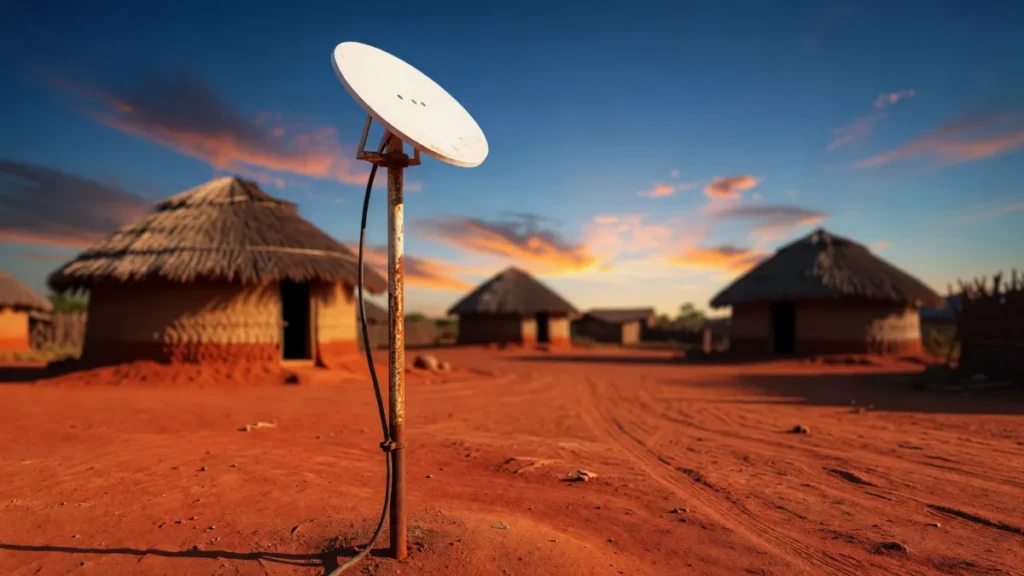
Starlink will leverage low-orbit satellite technology to extend high-speed internet access to rural and remote areas of Côte d’Ivoire, as confirmed by the Ivorian Press Agency. The local subsidiary had previously secured a provisional 12-month license from ARTCI, the national telecommunications regulator.
The service arrives at a pivotal moment for a country where fixed internet coverage remains uneven outside major urban centers. Unlike traditional infrastructure, Starlink’s satellite constellation delivers robust connectivity without requiring extensive ground installations.
A $170 million investment in sovereign data infrastructure
Starlink’s approval coincides with a significant U.S. financial commitment to Côte d’Ivoire’s digital sector. Cybastion, an American firm, has secured $170 million in financing guarantees from the U.S. Export-Import Bank to construct the nation’s first sovereign data center.
This project, named Cybastion, aims to modernize public services while ensuring sensitive data remains hosted exclusively within Ivorian borders—a critical step for digital sovereignty. The facility will serve as the foundation for future government and private sector digital transformation initiatives.
Three landmark agreements signed in Abidjan
The embassy meeting formalized three distinct partnerships. In addition to Starlink and Cybastion, a $293 million agreement was signed with ABD Group to fund priority infrastructure in health and education.
A third contract was awarded to NTELX for optimizing truck coordination at the Port of Abidjan, enhancing logistics efficiency—a vital artery for the Ivorian economy.
Côte d’Ivoire’s digital transformation push
As West Africa’s largest Francophone economy with over 29 million inhabitants, Côte d’Ivoire has prioritized digital growth. Recent years have seen ambitious projects like administrative service digitization and e-government expansion, though internet penetration remains uneven. Urban centers like Abidjan and Bouaké enjoy robust 4G and fiber coverage, while rural regions in the north and west lag behind. Starlink’s entry could significantly narrow this gap.
The U.S. stands as a key economic ally, particularly in energy, infrastructure, and agriculture. These new tech-focused agreements further solidify that partnership.
High-level discussions with Ivorian leadership
The same day, Frank R. Garcia met with Ivorian Vice President Tiémoko Meyliet Koné to assess the economic impact of the bilateral partnership. These developments unfold amid intensifying competition among global powers—China, France, and the U.S.—for influence in West Africa. For Côte d’Ivoire, diversifying partnerships strengthens its negotiating position. The next milestones will be Starlink’s full deployment and the progress of the Cybastion data center.