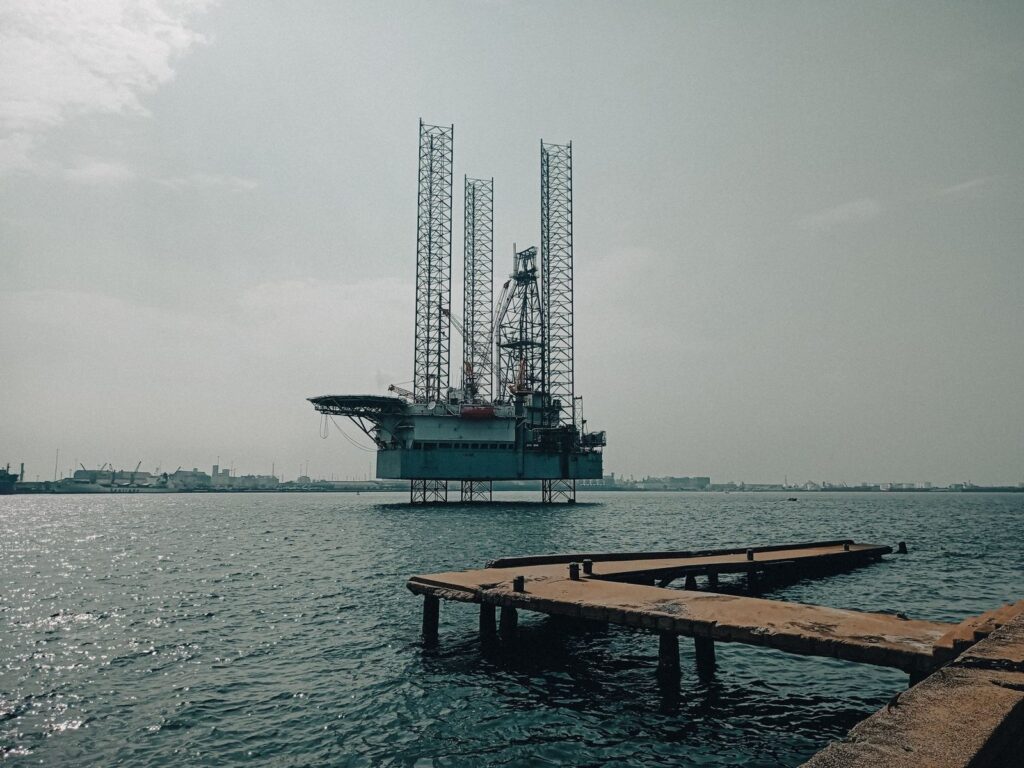
The return of Shell to Gabon marks a turning point for the country’s oil industry. A decade after exiting, the Anglo-Dutch major is set to reinvest in the Gabonese sedimentary basin, amid Libreville’s efforts to reverse its steady decline in hydrocarbon production. The announcement, made in the context of reforms initiated since the political transition, underscores the government’s determination to send a strong signal to international investors.
In 2016, Shell withdrew from Gabon by selling its onshore assets to Assala Energy, then controlled by the Carlyle Group. The deal, valued at several hundred million dollars, was part of a global portfolio rationalization as the company focused on more profitable ventures, particularly liquefied natural gas and deepwater projects. The departure left a symbolic void, as Gabon lost one of its historic operators.
A political signal for Gabon’s oil sector
The major’s return comes under the presidency of Brice Clotaire Oligui Nguema, who came to power during the transition of August 2023 and was later confirmed by elections. In recent months, Gabonese authorities have taken multiple steps to make the upstream framework more attractive: revising the hydrocarbons code, relaunching block licensing rounds, and opening bilateral discussions with several majors. The strategy aims to reverse a production trend that hovers around 200,000 barrels per day, far from the historic peak of the late 1990s.
For Shell, the decision to return is not trivial. The group, which had chosen to divest mature assets deemed less strategic, is now recalibrating its approach to the African continent. The scarcity of major onshore discoveries, rising costs of ultra-deepwater exploration, and the search for medium-term oil growth drivers are reshaping the choices of big oil companies. In this context, the Gabonese basin—with remaining prospects in deep offshore and pre-salt structures—is regaining some appeal.
Declining production Libreville aims to revive
Oil production remains Gabon’s primary source of foreign currency, traditionally accounting for over 40% of budget revenues and nearly 80% of exports. However, the gradual depletion of mature fields, coupled with cautious investment in recent years, has weakened this balance. The authorities are banking on the return of major industry names to boost exploration and extend the life of existing deposits.
Several international players have already shown renewed interest in the country. The national company, Gabon Oil Company (GOC), is increasing its role in asset governance as contracts expire or are renegotiated. In this scenario, Shell’s return could take place in partnership with other operators already active locally, such as Perenco, TotalEnergies, or BW Energy, whose positions on offshore blocks have strengthened.
A strategic return with details yet to be defined
The precise terms of the major’s redeployment remain to be clarified: the scope of the blocks involved, the timeline of commitments, the investment amounts, and the contractual model. The nature of the targeted permits—onshore or deepwater—will determine the scale of the return. A presence in deep offshore would involve commitments of several hundred million dollars, whereas a strategy focused on mature assets would require a more cautious approach, oriented toward production optimization.
Beyond the Shell case, the credibility of Gabon’s new oil policy is at stake. Libreville’s ability to turn announcements into effective investments—in a competitive environment where Nigeria, Angola, Namibia, and Senegal are vying to attract major oil company capital—will decide the sector’s trajectory over the coming decade. The return of the Anglo-Dutch company thus represents a real-world test for the new government.