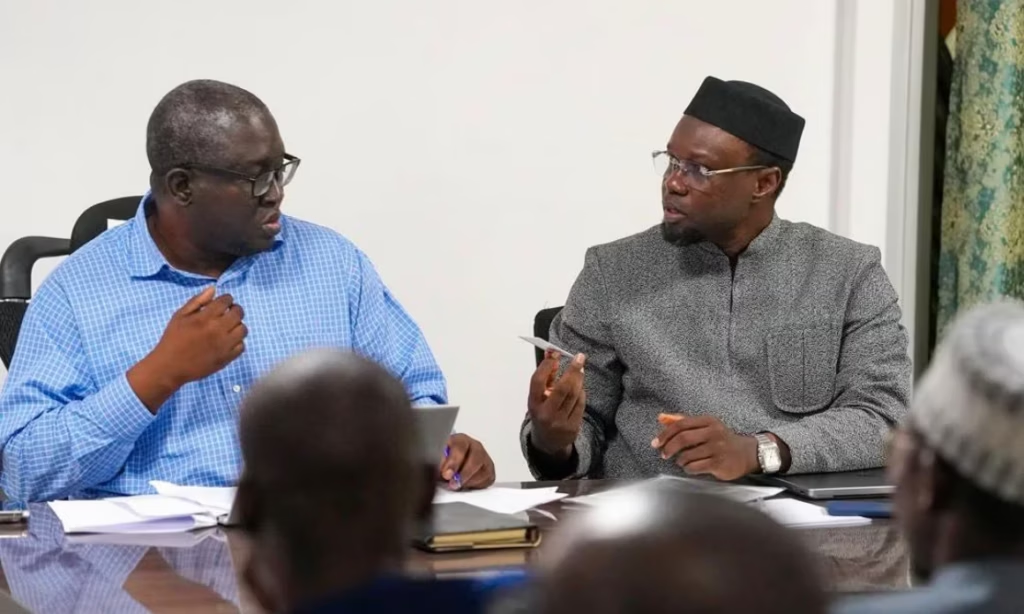
In Ziguinchor, the simmering internal conflict within Pastef has burst into the open, pitting Mayor Djibril Sonko against his deputy Bassirou Coly in a power struggle. As tensions escalate, the party’s future in this key region appears more uncertain than ever, exposing worrying fractures in its ranks.
The veneer of unity in Ziguinchor has shattered. What was once confined to whispers and muted rivalries has erupted into a very public political showdown within Pastef. At the heart of this internal crisis are two prominent local figures: Mayor Djibril Sonko and his deputy Bassirou Coly, now locked in a confrontation that has even reached party leadership circles.
In the historic stronghold of Pastef leader Ousmane Sonko, the situation resembles a ticking political time bomb. Beneath the rallying speeches, deepening divisions threaten the cohesion of a party aiming to solidify its influence in southern Senegal. The flashpoint came during a political meeting in Soucoupapaye, officially intended to re-energize militants and prepare for upcoming elections. But the gathering quickly spiralled beyond its original purpose.
With local and national officials present—including Toussaint Manga and Professor Alassane Diédhiou—speeches exposed a rivalry now openly acknowledged between opposing camps. On one side, the mayor’s supporters defend his record and institutional legitimacy. On the other, a faction led by Bassirou Coly pushes for an alternative, not ruling out a mayoral bid in the next local elections.
A fragile facade of unity
The tension crystallized around a central issue: the political control and recapture of the Ziguinchor mayor’s office. In exchanges, Coly made his ambitions clear, stating his intention to run for mayor while promising to abide by the party’s final decision.
In response, Mayor Djibril Sonko defended his municipal record and commitment, dismissing criticism and emphasizing his local roots. Without directly naming his opponents, he warned that internal debates must not undermine the development momentum in the commune.
These public stances acted as a catalyst. For months, muted tensions had been simmering within local party bodies. Now they are fully exposed, fuelled by personal rivalries and competing ambitions.
For many militants present, this episode marks a troubling turning point. As Pastef tries to cement its presence in its symbolic bastion, these internal divisions risk weakening the political momentum. Beyond the local case, the stakes extend far beyond the mayor’s office in Ziguinchor. This city holds deep symbolic significance in Ousmane Sonko’s political journey, serving as a barometer of party strength in the south.
Some local leaders are already warning about the political fallout of losing this strategic commune. A defeat in Ziguinchor would be seen as a negative signal ahead of the 2029 presidential election, for which the 2027 local polls represent a critical step. Amid rising tensions, voices call for discipline and the preservation of unity. But on the ground, rivalries persist, stoked by increasingly public confrontations.