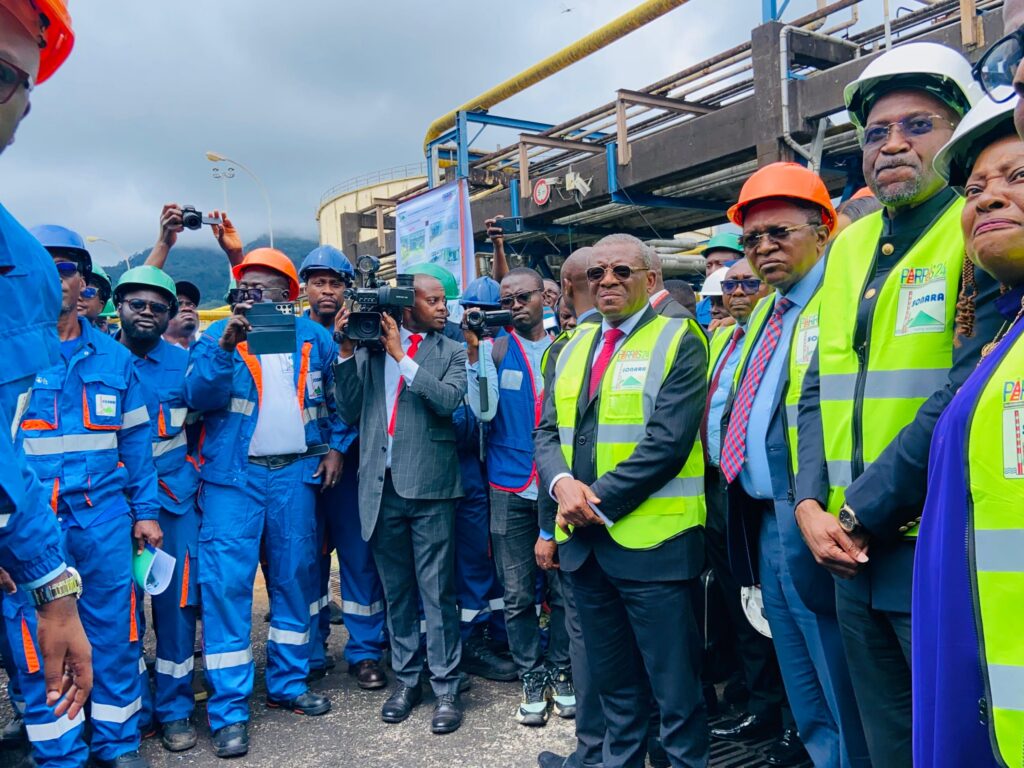
Seven years after the fire that destroyed Sonara, its CEO took the microphone and solemnly announced to the world’s media that the company would be reborn on Monday, 29 June 2026. Observers had expected at least a memorandum of understanding with a financial partner. Instead, the statement came after a meeting organised by four ministers to assess reconstruction costs and financing methods — before even approaching the market for potential partners.
The chosen financing model is Design-Build-Finance-Maintain (DBFM), which covers design, construction, financing and maintenance of the relevant infrastructure.
If it has taken seven years since the Sonara fire just to reach this stage, how much longer will it take to find a partner who, using familiar Cameroonian practices, will sign an agreement and then turn to banks for funding? This pattern is already seen with mining partners, unlike in other countries.
The shadow of SNH and Nathalie Moudiki
The timing is striking: this communication comes just days after the Cameroonian business community, through Gecam president Célestin Tawamba, publicly commended SNH for the new Kribi refinery under construction — a project skillfully led by Nathalie Moudiki.
Appointment stakes are set
In reality, yesterday’s event appears to be a simple communication designed to bluff the President of the Republic, precisely while he is in Switzerland reassessing the performance of those he appointed to assist him and serve the people.
In its statement, Sonara included mention of a hydrocracker unit that would refine Cameroonian crude oil — a project that was already underway before the fire and is already accounted for in the Kribi refinery.
The sabotage of the Kribi refinery
“When you see whistleblowers lurking in the shadows attacking individuals involved in projects, think twice.
Since yesterday, Boris Bertolt has been posting incendiary remarks against the SNH refinery project, with baseless claims aimed at tarnishing Nathalie Moudiki’s reputation. Why sabotage the Kribi refinery project on the same day Sonara makes its comeback? Yet within SNH, there is praise for Sonara’s historic role.
Regarding Sonara’s rehabilitation, in 2020 a large delegation from Russian giant Lukoil was received in Yaoundé to propose a reconstruction plan with modern equipment. The government did not give any favourable follow-up.
Regime insiders who favour imports through traders cite sovereignty reasons to justify rejecting potential partners. Yet Africa’s largest oil refinery, located in the continent’s second-largest oil producer, is privately owned. The Dangote refinery does not belong to the Nigerian state, yet it refines over 60% of the country’s crude oil.
Why is the SNH (gas) model not applied to Sonara (oil)?
The large Lobito refinery in Angola is built by China, the Copperbelt refinery in Zambia is also built by China. Uganda’s first oil refinery is being built by Russian companies, and another is planned in Congo.
Cameroonians, let us pray.