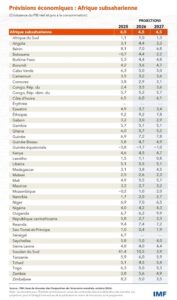
Senegal’s industrial sector continues to drive economic growth, with a remarkable 23.9% year-on-year increase in production for September 2025. This surge reinforces the country’s macroeconomic momentum, pushing the annual GDP growth rate to 4.2% over the past twelve months—a performance that places Senegal among the most dynamic economies in the West African Economic and Monetary Union (WAEMU).
The industrial rebound is not a one-off phenomenon but reflects a steady expansion of newly installed capacities, particularly in extractive and manufacturing industries. The operationalization of hydrocarbon projects, the strengthening of the agro-industrial sector, and the resilience of chemical industries are collectively reducing the economy’s reliance on the tertiary sector alone.
Hydrocarbons and extractive industries lead the charge
The extractive sector remains a cornerstone of Senegal’s industrial growth. The Sangomar oil field and the Grand Tortue Ahmeyim gas project—developed in partnership with Mauritania—are now contributing significantly to national accounts. These two major resources have reshaped Senegal’s export profile while providing fiscal leverage for the government, especially as Dakar seeks to rebuild its budgetary flexibility.
Manufacturing industries are also aligning with this upward trend. Sectors such as food processing, cement production, and mineral chemistry—particularly driven by Industries Chimiques du Sénégal (ICS)—are benefiting from strong domestic demand and a resurgence in regional orders. The ripple effect extends to associated services like transportation and logistics, broadening the foundation of economic expansion.
4.2% GDP growth redefines Senegal’s economic standing
The 4.2% annual GDP growth rate brings Senegal’s economy back to pre-pandemic growth levels after several quarters of downward revisions. While this figure falls short of the government’s initial projections—optimistic about the oil cycle’s impact—it signals a resilient recovery. Authorities attribute the gap to a less supportive global environment and investor caution amid ongoing fiscal adjustments.
For Prime Minister Ousmane Sonko’s administration, the challenge lies in translating this industrial momentum into sustainable job creation and long-term tax revenue. The Senegal 2050 economic roadmap prioritizes local transformation, aiming to curb import dependency and climb higher in global value chains. September’s data provides tangible support for this strategy, provided the trend holds through the fourth quarter.
Key challenges to monitor
Despite the positive indicators, several factors warrant caution. The double-digit industrial growth partly stems from a favorable base effect, as 2024 saw disruptions in multiple production units. Additionally, public debt sustainability remains a concern for creditors, following revelations about the true scale of financial commitments from the previous administration.
Yet, the September figures send a broadly optimistic signal. Senegal now boasts operational hydrocarbon production, a diversified industrial base, and resilient domestic consumption—contrasting with neighboring West African nations facing security or political instability. This stability could further strengthen Dakar’s appeal to regional investors, particularly Gulf-based entities increasingly eyeing Senegal’s energy and logistics sectors.
The coming weeks will be pivotal in validating this trend. The release of quarterly national accounts by the National Agency of Statistics and Demography (ANSD) will reveal whether this industrial acceleration is sustainable. Industry analysts describe September’s figures as the highest point observed so far in 2025.
Further reading
DRC: Public enterprises rack up 5.3 billion in losses · Ghana: COCOBOD fails to pay cocoa producers · Senegal records historic trade surplus of 183.8 billion in March 2026