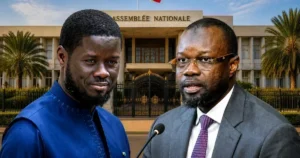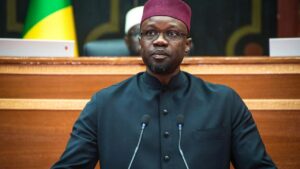
The official position from the highest echelons of the Senegalese state has been clearly articulated. El Malick Ndiaye, President of the National Assembly, utilized a meeting in Dakar on Monday to unequivocally reiterate the government’s firm rejection of any public debt restructuring process. The parliamentary leader advocates for what he terms a ‘sovereign approach,’ emphasizing internal arbitration and solutions over negotiations with a consortium of creditors. This stance aligns seamlessly with the executive’s discourse since the revelation in late 2024 that the actual national debt significantly surpassed previously reported official statistics.
A deliberate economic policy confronting creditors
For several months, the refusal to engage in debt restructuring has been a defining characteristic of the economic doctrine championed by the Diomaye Faye-Ousmane Sonko administration. Senegalese authorities believe that initiating renegotiations would be tantamount to acknowledging a form of default, thereby enduringly undermining the nation’s creditworthiness on international financial markets. El Malick Ndiaye has consistently supported this viewpoint, asserting that Senegal possesses the necessary internal mechanisms to honor its financial obligations. The Assembly President underscored the profound political dimension of this decision, arguing it extends beyond mere budgetary calculations.
This assertive posture contrasts sharply with the implicit recommendations from various multilateral partners. The International Monetary Fund (IMF), whose program with Dakar has been on hold since the revised debt figures came to light, has frequently stressed the imperative of restoring a sustainable fiscal trajectory. Concurrently, credit rating agencies have repeatedly downgraded Senegal’s sovereign rating over recent months, making any future return to international markets considerably more expensive.
Sovereign management: balancing ambition with constraints
In practical terms, the sovereign management strategy advocated by El Malick Ndiaye encompasses a range of measures already outlined by the government. These include broadening the tax base, streamlining public expenditures, undertaking targeted renegotiations of contracts deemed imbalanced, and intensifying the mobilization of hydrocarbon revenues. While the array of available tools is extensive, their short-term efficacy remains uncertain. Oil production from the Sangomar field and gas from Grand Tortue Ahmeyim are expected to gradually boost public coffers; however, these alone are unlikely to reverse the current debt trajectory.
Following a re-evaluation by the Court of Accounts, the public debt-to-gross domestic product ratio now surpasses the community thresholds established by the West African Economic and Monetary Union (UEMOA). Within this challenging environment, Dakar’s gamble is to generate fiscal headroom without severing ties with traditional lenders. This challenge is further compounded by the fact that debt servicing consumes an ever-increasing portion of domestic revenues, thereby constraining public investment capacity in vital social sectors and infrastructure.
A strategic political message to markets and citizens
The intervention by the President of the National Assembly addresses multiple audiences simultaneously. To investors, it aims to signal that Senegal remains a dependable debtor, committed to fulfilling its obligations without resorting to an organized default mechanism. To the domestic public, it reaffirms a key campaign promise: a departure from models of financial tutelage. Finally, to regional partners, it reinforces a declared stance of autonomy, particularly in a sub-region where economic sovereignty has emerged as a pivotal issue.
Nevertheless, the credibility of this strategy will hinge on the government’s ability to demonstrate tangible results in revenue mobilization and expenditure control in forthcoming finance laws. A return to an agreement with the IMF, currently set aside in its conventional form, remains an option closely monitored by markets. Several African economists suggest that a technical compromise, distinct from a formal restructuring, might eventually become necessary to regain access to concessional financing.
For El Malick Ndiaye, the stakes extend beyond mere public accounting; they involve testing the viability of an economic management model aligned with the sovereignist discourse championed since the Pastef party came to power. He emphasized the long-term perspective of Senegal’s position, rejecting any short-term or opportunistic interpretations.
For further reading
Congo seeks new financial program with the IMF · Crypto-assets: African central banks convene in Dakar · Eight UEMOA banks validate initial regional e-commerce tests