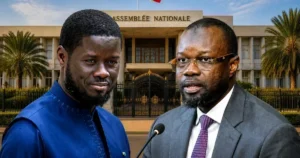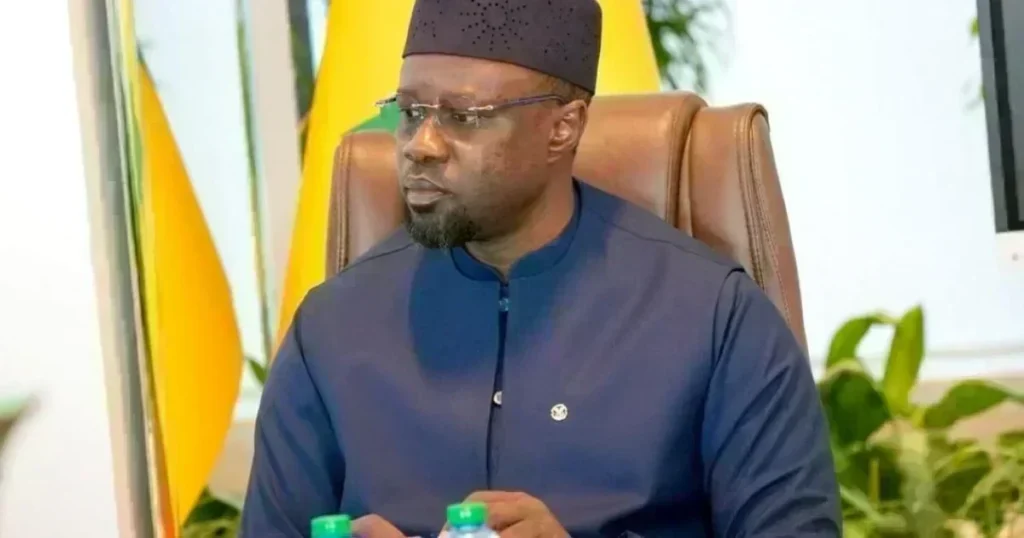
In a revealing session at the National Assembly, Senegalese Prime Minister Ousmane Sonko disclosed the existence of a 1.77 billion CFA francs political fund allocated to the Prime Minister’s Office. This disclosure has reignited a long-standing debate shrouded in opacity and controversy.
Political funds: a long-standing but rarely discussed practice
While public attention has intensified in recent weeks, the practice of political funds is not new in Senegal. Prime ministers have historically had access to such discretionary resources, though the amounts and conditions remained largely undocumented. Sonko’s revelation has thrust this opaque system into the spotlight, highlighting a tradition that dates back decades.
The funds, managed with significant latitude by the presidency, were allocated to the Prime Minister’s Office annually—typically around 1.7 billion CFA francs—compared to approximately 11 billion for the President. This system, which operated without public scrutiny for years, gained prominence only when Sonko chose to make it visible.
May 2026: a turning point in the debate
During a National Assembly session, Sonko admitted to possessing a 1.77 billion CFA francs political fund at the Prime Minister’s Office—a stark contrast to his earlier denials. Rather than advocating for its abolition, he justified its necessity for sensitive state missions while calling for stricter oversight. Sonko cited Western models where the head of government, rather than the president, manages such funds under the supervision of a dedicated commission.
His push for transparency was not spontaneous. The PASTEF party had long criticized the lack of control over these funds since 2014, and their reform was part of its 2019 manifesto.
Political fallout and public scrutiny
Sonko’s public disagreement with President Bassirou Diomaye Faye over the regulation of these funds had immediate political repercussions. By raising the issue in parliament, he forced the president to choose between granting the Prime Minister’s Office greater autonomy or reasserting hierarchical authority. The president’s decision to dismiss Sonko reshaped the political landscape forged by the 2024 transition.
Further developments unfolded in late July 2026 when the Minister of Petroleum and Energy, Abdourahmane Diouf, revealed that Sonko had requested an additional budget after depleting his annual allocation. The revelation reignited the controversy, though it remains unclear whether the request was granted. Civil society voices, including Moundiaye Cissé of the 3D NGO, are now demanding transparency, calling for the publication of fund utilization reports for the Prime Minister’s Office and the National Assembly over the past two years.