Pastef at a crossroads: between institutional power and charismatic leadership
Since President Bassirou Diomaye Faye’s rise to power in 2024, Pastef-Les Patriotes has faced an unprecedented internal crisis. The departure of high-ranking officials, strategic disagreements between the head of state and party leader Ousmane Sonko, and the imminent launch of a new political party led by the President have reshaped the political landscape of Senegal.
At first glance, these developments might suggest a weakening of Pastef. However, a deeper analysis reveals a more nuanced reality. While several ministers, advisors, directors, and members of the party’s national bureau have aligned with President Faye, the party retains its core strength: a grassroots base of thousands of militants who fund and sustain its presence across the country.
The clash of two forms of legitimacy
The crisis within Pastef highlights a fundamental tension between two types of political legitimacy. Bassirou Diomaye Faye derives his authority from the Constitution and his presidential mandate—a legal-rational legitimacy. In contrast, Ousmane Sonko draws his influence from a decade-long charismatic relationship with militants, rooted in his personal appeal and vision for the country.
Dissidents within the party argue that President Faye now embodies the “Project” that Pastef was founded to promote. They criticize what they describe as an excessive personalization of the party around Sonko, citing concerns over internal democracy, weak governance structures, and authoritarian tendencies. For these figures, loyalty to the Project must take precedence over loyalty to an individual.
Yet this interpretation overlooks a critical point: the dissidents’ political capital is largely institutional rather than electoral. Many of those leaving Pastef hold positions within the state apparatus, having gained visibility through the party but dependent on Sonko’s leadership for their influence. Few have established independent local roots or electoral bases comparable to traditional political figures in Senegal.
The resilience of Pastef’s grassroots movement
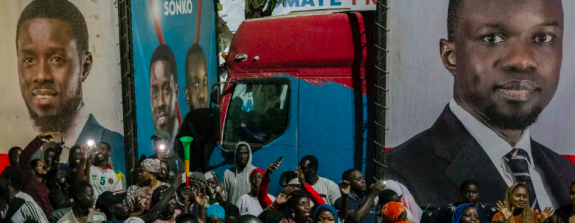
Despite the high-profile defections, Pastef remains a mass movement with a strong organizational foundation. The party’s ability to mobilize militants was evident during its June 6 Congress, where Ousmane Sonko was re-elected unanimously as party leader, and the June 7 rally at Dakar Arena, which drew massive crowds without the participation of dissidents. The July 4 launch of membership card sales further demonstrated the party’s continued vitality, with widespread engagement from activists across the country.
Moreover, Pastef’s recent merger with nearly 60 political parties and movements underscores its growing influence. These developments suggest that the party’s strength lies not in its institutional elites but in its militant base—a dynamic that mirrors the personalized political relationship once seen between Abdoulaye Wade and a segment of the electorate in the Sénégal.
Sonko’s charismatic leadership has propelled Pastef to historic electoral success, including the 2022 municipal elections and the 2024 presidential victory of Bassirou Diomaye Faye. The party’s dominance in the National Assembly, with 130 out of 165 seats, remains unparalleled in contemporary Senegalese politics.
The risks of fragmentation
While the dissidents’ impact may be limited today, their emergence poses long-term risks to Pastef’s cohesion and effectiveness. The creation of a rival presidential party could attract elected officials seeking to preserve their access to state resources—a phenomenon common in African political systems. The coexistence of two centers of legitimacy—one institutional (President Faye) and one partisan (Ousmane Sonko)—risks perpetuating tensions within the party and the broader political landscape.
The key question now is whether Ousmane Sonko’s charismatic appeal, often referred to as the “Joxogn” phenomenon, remains strong enough to sustain Pastef’s electoral dominance. Can he continue to mobilize voters to elect mayors, deputies, and future presidents? The answer will shape not only the future of Pastef but also the trajectory of Senegal’s political system in the years to come.
A test of political resilience
The current crisis is less about the collapse of Pastef than it is about a clash between two competing sources of legitimacy. The party’s ability to navigate this divide will determine its long-term viability. For now, its grassroots strength and Sonko’s enduring influence suggest that Pastef is far from broken—but the road ahead is fraught with challenges.