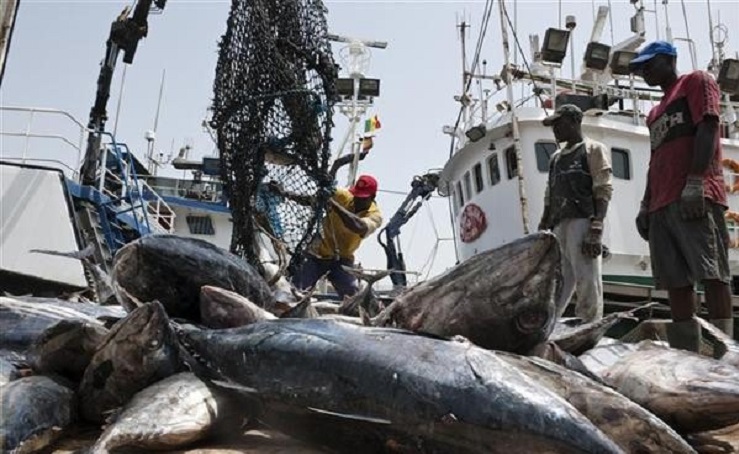
Skipjack and Yellowfin tuna from the Spanish purse seiner 'Iribar Zulaika' waiting to be exported.
The Ministry of Fisheries and Maritime Economy has unveiled a groundbreaking initiative to award four new demersal fishing licenses, marking a significant step toward securing the nation’s seafood supply and reinforcing food sovereignty. This move follows rigorous scientific assessments conducted by the Dakar-Thiaroye Oceanographic Research Centre, ensuring that the decision aligns with sustainable resource management.
In an official statement released this week, the ministry confirmed that the licenses, specifically targeting coastal demersal fishing for fish and cephalopods, were granted to a single Senegalese fishing company after a transparent selection process. The process, overseen by the Advisory Commission for Fishing License Allocation (CCALP) on May 12, 2026, adheres to the regulatory framework established by recent ministerial directives.
This strategic decision stems from the government’s broader commitment to enhancing domestic fish availability, as outlined during the November 26, 2025 Council of Ministers meeting. Authorities emphasize that the selection process was both inclusive and grounded in robust scientific evidence, with multiple fishing companies consulted last year to gauge their willingness to participate in this public-private partnership.
The selected company has pledged to channel its entire catch toward the national market, while also investing in critical infrastructure to strengthen the fisheries value chain. Plans include establishing new conservation and distribution facilities in remote regions to improve access to affordable, high-quality seafood across the country.
Scientific evaluations by the Dakar-Thiaroye centre confirmed that the coastal demersal fishery holds untapped potential, provided that access remains strictly controlled and incremental. This approach aims to balance economic development with the preservation of marine resources, addressing both food security concerns and rising seafood prices.
The ministry underscores that this initiative represents Senegal’s first formalized mechanism for industrial fishing dedicated solely to supplying the domestic market. By prioritizing sustainable and transparent resource management, the government seeks to safeguard marine ecosystems while meeting the nutritional needs of its population.