The Constitutional Council of Senegal has once again made headlines, but not for the reasons expected. On February 15, 2024, it boldly asserted its role as the guardian of constitutional supremacy and institutional stability. Yet, in a ruling dated June 17, 2026, the same body sidestepped a critical constitutional dispute by declaring itself incompetent to rule on the reinstatement of opposition leader Ousmane Sonko as a member of parliament.
From bold assertion to procedural retreat
In its 2024 decision, the Council demonstrated an expansive interpretation of its mandate, emphasizing its duty to uphold the Constitution and ensure the smooth functioning of public institutions. Fast-forward to June 2026, and the Council’s approach shifted dramatically. Rather than addressing the core constitutional questions raised by Sonko’s reinstatement, it focused narrowly on procedural technicalities.
The ruling hinged on the argument that the Council’s electoral jurisdiction ends with the final certification of election results—a point that, while legally sound, sidestepped the broader constitutional implications. The case, however, was never just about election rules. It touched on fundamental principles: the separation of powers, parliamentary and ministerial incompatibilities, and the legality of institutional decisions under the Assembly’s own regulations.
A jurisprudential U-turn
The petitioners had invoked not only the Constitution’s Article 92, paragraph 3—which defines the Council’s role as the judge of national election regularity—but also its organic law and two landmark precedents: Decision No. 08/2017 (July 26, 2017) and Decision No. 1/C/2024 (February 15, 2024). These referenced the Council’s historic commitment to intervene in institutional crises to preserve public order, stability, and constitutional continuity.
Yet the June 2026 ruling ignored these wider implications. By confining its reasoning to electoral jurisdiction, the Council reverted to a restrictive interpretation of its powers—one that critics had long decried as enabling institutional evasion. The irony is palpable: those who once demanded a more assertive constitutional judiciary now find themselves defending its retreat into procedural formalism.
The paradox of Sonko’s defense
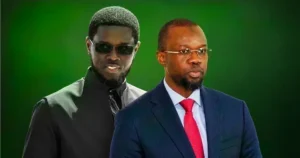
Ousmane Sonko, in his response, argued that the Council’s jurisdiction is strictly limited to cases explicitly outlined in the Constitution and organic laws. While his defense of his parliamentary reinstatement falls within acceptable legal debate, his stance on the Council’s powers raises troubling questions. For years, political figures, legal scholars, and civil society advocates—including some now in power—championed a more dynamic constitutional judiciary. They condemned past rulings that avoided scrutiny of acts threatening constitutional order. To see this logic now turned on its head is disconcerting.
The June 2026 decision does more than resolve a single dispute—it signals a retreat from the Council’s 2024 jurisprudential breakthrough. Where it once expanded its mandate to safeguard institutions, it now retreats behind procedural walls, leaving constitutional questions unanswered and institutional crises unresolved.
A moment of truth for Senegal’s constitutional justice
This case transcends the fate of one parliamentarian. It probes a fundamental question: when constitutional institutions falter in their duty, who ensures the supremacy of the Constitution? The Council’s refusal to engage with the substance of the dispute has left this question hanging. The June 2026 ruling may close a chapter in Ousmane Sonko’s political career, but it opens a deeper debate about the future of constitutional oversight in Senegal.
The Council took two steps forward in 2024. In 2026, it took two steps back. The question now is which path serves the rule of law—and the Constitution—more faithfully.