Romuald Wadagni officially assumes the presidency of Bénin this Sunday, May 24, in Cotonou, following his victory in the April 12 election. The former finance minister, long seen as the natural successor to Patrice Talon, takes over from the outgoing president after two terms marked by political tightening and accelerated economic transformation in Bénin. The handover ceremony is attended by around fifteen foreign delegations, amid a regional landscape undergoing significant shifts.
Political continuity at the heart of Bénin’s transition
As Minister of Economy and Finance since 2016, Romuald Wadagni has overseen the country’s budgetary strategy and public investment programs that defined Patrice Talon’s two terms. His ascent to the Marina Palace ensures the continuation of financial orthodoxy, which has underpinned Cotonou’s recent success in international markets. However, the new president inherits a politically tense environment following a presidential election that excluded major opposition parties.
Economically, the path ahead is clear. Bénin has recorded growth exceeding 6% for several years, pursued a strategy to localize cotton and soybean processing, and launched multiple sovereign bond issuances—including a eurobond operation that set a benchmark for UEMOA members. Wadagni has been central to these initiatives. His success will hinge on maintaining fiscal discipline while expanding the social dividend base.
A diplomatic overture to the Alliance of Sahel States
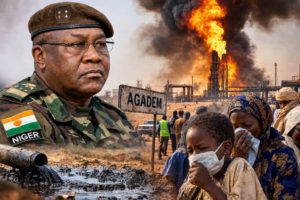
The diplomatic lineup at the inauguration has drawn particular interest. Alongside Bénin’s traditional partners, representatives from the three member states of the Alliance of Sahel States (AES)—Mali, Niger, and Burkina Faso—have arrived in Cotonou. This is no small gesture. Since the coup in Niamey last July, tensions along the Bénin-Niger border have escalated, particularly over the Nigerien oil pipeline passing through the port of Sèmè-Kpodji.
Extending this invitation and securing their attendance signals Bénin’s intent to de-escalate tensions. Cotonou seeks to restore dialogue with Sahelian juntas, especially as three Economic Community of West African States (ECOWAS) members have left the bloc to form their own confederation. For Romuald Wadagni, the stakes are twofold: securing the country’s northern flank, vulnerable to terrorist incursions in the W and Pendjari parks, and protecting logistical flows that supply the Sahel hinterland via the Cotonou port.
Security, public finances, and regional stability
The security dossier will be a top priority for the new administration. Since 2021, the Alibori and Atacora departments have faced growing jihadist incursions from the Sahel, forcing Bénin to bolster its military presence and expand recruitment in defense and security forces. Cooperation with Niamey, which has been suspended and partially restored, remains crucial for controlling the 260-kilometer border.
On the economic front, the president is expected to advance industrialization around the Glo-Djigbé Special Economic Zone, which aims to capture a larger share of West Africa’s textile processing sector. Maintaining Bénin’s credibility in international markets, implementing debt strategies, and consolidating the Presidency-Investment agency will test the continuity of the current model. Wadagni’s personal credibility and the techno-cratically driven political model he embodies hang in the balance.
The question of democratic space remains. Civil society, several Western chancelleries, and parts of the diaspora will be watching closely for signals of reconciliation—whether through the fate of exiled political figures or electoral framework reforms. The tone of Wadagni’s inaugural address, delivered this Sunday at the Cotonou Congress Palace, will be scrutinized for clues on how he intends to address these concerns.