Diomaye Faye’s gamble backfires as Sonko retreats to the National Assembly
The long-anticipated showdown between Bassirou Diomaye Faye and Ousmane Sonko has reached its climax in Senegal. Sonko, once the kingmaker, now finds himself confined to the National Assembly, a strategic retreat that may not last.
Ousmane Sonko’s political journey took a dramatic turn when President Bassirou Diomaye Faye dismissed him from office. Sonko, once a strong contender and influential figure, retreated to the National Assembly, a move that seemed calculated to bide time until the 2029 elections. His party, the Pastef, had secured a sweeping victory in the November 2024 legislative elections, giving him a powerful platform. Yet, his strategy to shadow Diomaye Faye—initially adopting a ceremonial role—proved unsustainable.
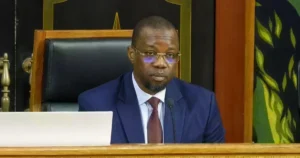
Sonko underestimated the constraints of Senegal’s presidential system, where the head of state holds unchallenged authority. A prime minister, no matter how influential, remains subordinate to the president. As tensions escalated, Sonko found himself increasingly sidelined. The Supreme Court’s July 1, 2025 decision to uphold his 2029 ineligibility further narrowed his options. With institutional pathways closing, Sonko turned to populist tactics, pushing boundaries and rallying supporters, even occupying the National Assembly—a move critics argue was legally dubious.
Diomaye Faye’s calculated silence
In the complex political landscape of Senegal, where historical figures like Lat Dior Diop once resisted colonial encroachment, today’s leaders navigate equally treacherous terrain. Diomaye Faye and Sonko represent two competing visions for the 2029 presidential election. Faye commands the state’s institutions and legal frameworks, while Sonko relies on his party’s grassroots strength and a willingness to challenge norms.
Sonko’s grip on the National Assembly offers him strategic leverage, though it is fragile. The threat of dissolution looms, and a constitutional challenge could strip him of his parliamentary seat. Meanwhile, Faye has chosen a cautious approach, prioritizing economic reforms with international financial institutions under the guidance of his new prime minister, Ahmadou Al Aminou Lô. He appears to be preparing for the inevitable confrontation with Sonko, assembling a team capable of defending his agenda.
The power dynamics at play
Sonko’s position in the National Assembly is precarious. The opposition, though weak, accuses him of overstepping boundaries. Only Faye holds the authority to challenge Sonko’s parliamentary occupancy through the Constitutional Council. For now, Faye remains silent—a decision that may be strategic.
The president’s restraint suggests a long-term strategy. By sidestepping immediate conflict, Faye aims to consolidate economic and institutional control before the 2029 showdown. His approach reflects a deep understanding of Senegal’s political rhythms, where patience often outweighs confrontation.