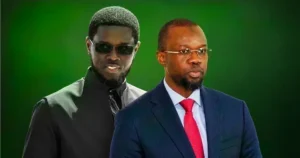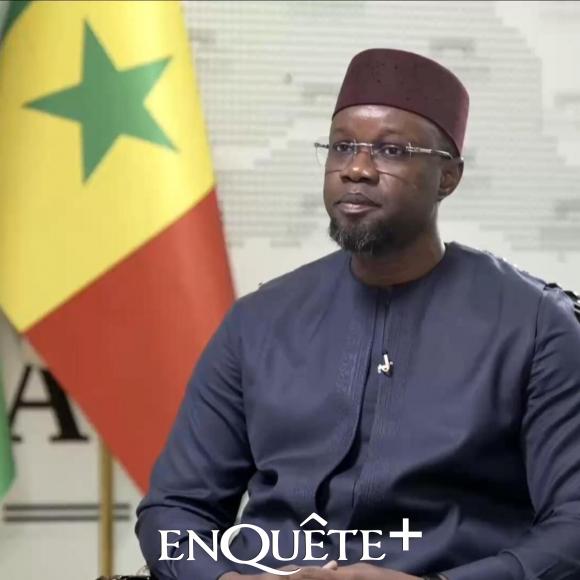
Since departing his role as Prime Minister, Ousmane Sonko has dramatically altered his public discourse. Where once his tone bristled with confrontation, today’s Sonko presents himself as a voice of moderation—carefully measured, strategically nuanced, and deliberately avoiding the inflammatory rhetoric that once defined his leadership.
From confrontation to calm: a calculated evolution
Speaking at the recent Pastef party congress in Diamniadio, Sonko urged his most ardent supporters to adopt a more disciplined approach in public spaces. Addressing an audience firmly behind him, he stressed the need for restraint: « We must refine our language. Our words carry weight—monitored by religious leaders, respected elders, and families across the nation. Insults and provocations only weaken our cause. » His message was clear: maturity must replace militancy.
Observers have noted Sonko’s transformation with interest. Once a fixture of Senegambian political rallies—where fiery speeches and uncompromising stances were his trademark—he now speaks with deliberate caution. Even in media interviews, the shift is unmistakable. Gone are the categorical declarations. In their place? A politician weighing each word, carefully calibrating his message for maximum impact.
Contradictions and evolving positions
Yet this newfound restraint does not erase past contradictions. In a recent interview, Sonko found himself revisiting long-held positions with surprising flexibility. On the issue of national debt restructuring—a topic that once sparked his most vehement opposition—he now adopts a more pragmatic tone. « We are not bound by absolute positions. Every decision must be examined with clarity and realism, » he explained, departing sharply from his earlier insistence on outright rejection.
When pressed on the idea of « odious debt »—a concept he had previously championed—Sonko’s responses revealed a more complex stance. He acknowledged the validity of the argument but framed it as a collective responsibility rather than a personal crusade. « This debt carries elements of injustice. Political courage will be required to address it. As a leader, I have voiced this conviction repeatedly. I trust the current administration will act with the necessary resolve, » he stated, though without detailing concrete steps he took during his own tenure.
Mixed signals on social issues
On matters of social policy, Sonko’s positions continue to evolve in ways that both surprise and provoke debate. Regarding homosexuality, he defended the legal framework, citing historical continuity: « The criminalization of this act predates Pastef. Arrests occurred before the recent law was enacted—and not solely for reasons of morality. Public health concerns, particularly the transmission of HIV, have played a role in enforcement. » His remarks, while consistent with existing law, contradict earlier rhetoric that framed enforcement purely as a moral imperative.
This ambiguity extends to his relationship with President Bassirou Diomaye Faye. Sonko now rejects the term « betrayal » to describe their political divergence, insisting their differences are purely ideological. « There is no personal feud—only a difference in approach. We are engaged in political debate, not a moral conflict, » he asserted, signaling a deliberate move toward conciliatory rhetoric.
A call for restraint and responsibility
Sonko’s recent public statements reflect a broader strategy: to reposition himself not as a revolutionary firebrand, but as a statesman capable of measured governance. At Diamniadio, he framed Pastef as a « mature party of ideas, science, and programmatic vision. » His plea to supporters was unambiguous: « Show the nation an intelligent, responsible youth movement—one that resists provocation. Do not fall into the trap set by those who seek to portray us as instigators of chaos. »