Military Regime’s Sudden Takeover of Arlit Uranium Concession Raises Serious Concerns
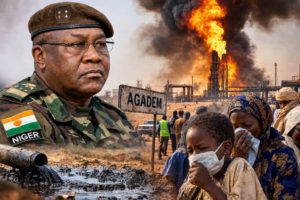
The Nigerien military leadership has taken a decisive step in its campaign to assert national control over the country’s uranium reserves, but analysts warn that the move threatens to destabilize both the mining sector and the local economy. By terminating the long-standing concession in Arlit—originally granted to France’s Commissariat à l’énergie atomique (CEA) in 1968—the ruling junta under General Abdourahamane Tiani has signaled its intent to sever ties with Western partners, framing the decision as a victory for sovereignty.
While the regime presents this move as a correction of colonial-era injustices, the abrupt termination of the contract reveals a troubling disconnect between political posturing and economic reality. The decision, announced without prior consultation or structured transition planning, risks leaving Niger’s uranium industry in disarray. Experts question whether Niamey possesses the technical expertise and financial resources to independently manage such a complex and hazardous sector.
Empty Sovereignty: The High Stakes of a Hasty Decision
The junta’s decision carries significant consequences that extend beyond political symbolism. The closure of the Arlit concession, a cornerstone of Niger’s mining sector, threatens to disrupt an industry that has long underpinned the national economy and local livelihoods. The mining operations in Arlit and surrounding areas, particularly in Agadez, have historically generated thousands of jobs, supported small businesses, and funded essential public services through tax revenues and royalties.
However, the military’s approach—characterized by unilateral decrees and nationalist rhetoric—has introduced new uncertainties. Investors, already wary of political instability, now face an even more unpredictable regulatory environment. The mining industry, which demands long-term capital commitments and stable governance, is particularly sensitive to such volatility. The junta’s actions risk deterring future foreign investment, further isolating Niger’s economy.
From Dependence to Dependence: The Geopolitical Gambit
In seeking to replace the French operator, the Nigerien regime has turned its attention to alternative partners, including Russian and Chinese entities. While this shift may reduce reliance on France, it does not necessarily guarantee improved terms or greater transparency. Critics argue that the junta’s pivot could merely exchange one form of dependency for another, potentially at the cost of environmental standards and fiscal accountability.
The environmental and technical challenges of uranium mining are not to be underestimated. The process requires advanced technology, strict radiation safety protocols, and rigorous environmental oversight. Without these safeguards, the risks of contamination and operational failure loom large. The junta’s failure to address these concerns raises doubts about its capacity to sustainably manage the sector.
A Looming Economic Crisis in the North
The immediate fallout from the concession’s termination is most acutely felt in the northern regions of Niger, where Arlit and Agadez have thrived for decades under the mining economy. The closure threatens to plunge local communities into economic hardship, disrupting supply chains, small businesses, and critical public services that depend on mining revenues. With Niger already grappling with economic sanctions and regional isolation, the loss of uranium-related income could exacerbate budgetary constraints and public discontent.
Economic analysts emphasize that true sovereignty is not achieved through abrupt policy shifts but through robust institutions, transparent governance, and long-term strategic planning. The junta’s decision, they argue, reflects a shortsighted populist agenda rather than a sustainable path to economic resilience.
The termination of the Arlit concession marks a pivotal moment for Niger, but it is one that could deepen the country’s industrial decline rather than pave the way for prosperity. By prioritizing political messaging over economic stability, the military leadership risks leaving Niger’s once-flourishing uranium sector—and the communities it supports—vulnerable to collapse.