Recent waves of school abductions, raids on entire villages, and the abduction of worshippers from both churches and mosques have thrust Nigéria back into the global spotlight. This cycle of brutality gained a fresh geopolitical dimension when the États-Unis launched Christmas Day airstrikes against jihadist strongholds in the north, a move Washington described as a mission to safeguard vulnerable Christian communities.
Against this backdrop, some American officials have begun using the term “Christian genocide” to describe the situation.
However, the United Nations suggests that these high-profile incidents and the narratives they generate only tell part of the story. The reality is a nation gripped by pervasive insecurity, fueling one of the most significant yet neglected humanitarian disasters in Africa.
“Security remains a primary hurdle for Nigéria,” explains Mohamed Malik Fall, the UN Resident and Humanitarian Coordinator in the country. “It is no longer confined to a single area; it has permeated almost every region.”
The evolution of a long-standing insurgency
The roots of the conflict lie in the north-east, where an armed rebellion led by Boko Haram—and later its offshoots like the Islamic State West Africa Province—has raged since 2009. Nearly two decades of fighting have left the country deeply scarred.
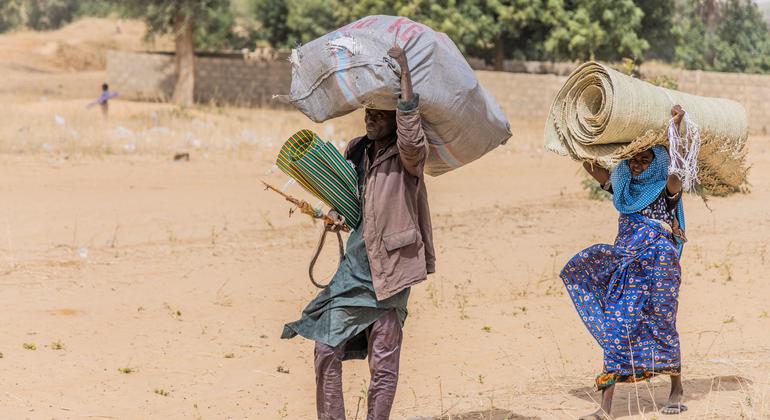
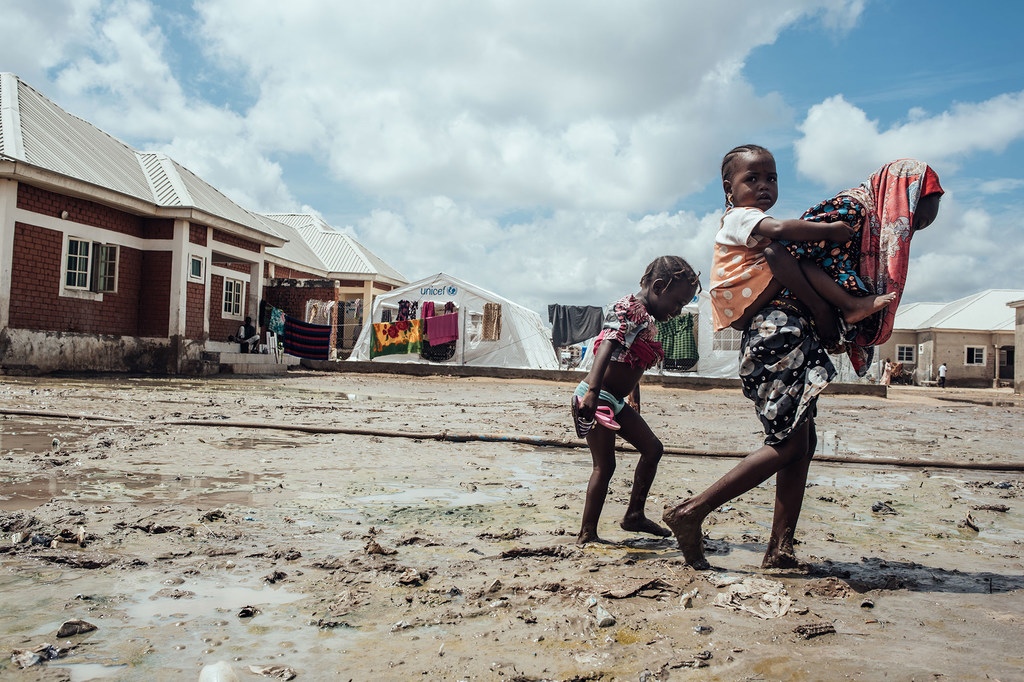
“Over two million individuals remain displaced, and this isn’t a short-term situation,” M. Fall points out. “An entire generation has been raised in displacement camps, knowing no other way of life.”
Reports indicate that more than 40,000 lives have been lost since the conflict began. Thousands of educational and medical facilities have been leveled, and vast agricultural zones are now death traps. Beyond the physical destruction, M. Fall emphasizes that “entire communities are severed from economic life, robbed of their ability to work and maintain their dignity.”
Widespread banditry and localized strife
Over the years, this protracted war has been joined by more fragmented forms of violence. In the north-west, states such as Zamfara, Katsina, and Sokoto are struggling with what officials term “banditry”—criminal militias that engage in looting, kidnapping, and extortion. “Many villages are now ghost towns. We are looking at roughly one million displaced people in the north-west alone,” says M. Fall.
In the Middle Belt, clashes between farmers and nomadic herders over land—intensified by population growth and climate change—have triggered further displacement. Meanwhile, the south faces ongoing unrest ranging from separatist movements to attacks on oil infrastructure.
Consequently, with approximately 3.5 million citizens having fled their homes, Nigéria accounts for nearly 10% of all internally displaced persons on the African continent.
Blind violence rather than targeted genocide
Recent strikes on Christian institutions have reignited a fierce debate. In January, over 160 people were seized during Sunday services in Kaduna State. Just days prior, attacks in the north-west left dozens dead, and students were again targeted near the Papiri Catholic school.
These events evoke the memory of the 2014 Chibok tragedy in Borno State, where Boko Haram kidnapped 276 schoolgirls, most of whom were Christian. While Washington uses the term “Christian genocide,” the United Nations is careful not to use such language, citing a lack of evidence for deliberate, singular targeting on the ground.
“I would not characterize this violence as the systematic persecution of one religious group,” M. Fall asserts. “The vast majority of the 40,000 victims of the insurgency have been Muslims, often killed while praying in mosques.”
He points to an attack in Maiduguri, the heart of the insurgency, which occurred on Christmas Eve between a mosque and a market, claiming the lives of Muslim worshippers. “Insecurity is an equal-opportunity threat; it affects everyone regardless of faith or ethnicity,” he notes, warning that biased narratives risk deepening social divides rather than fostering unity.
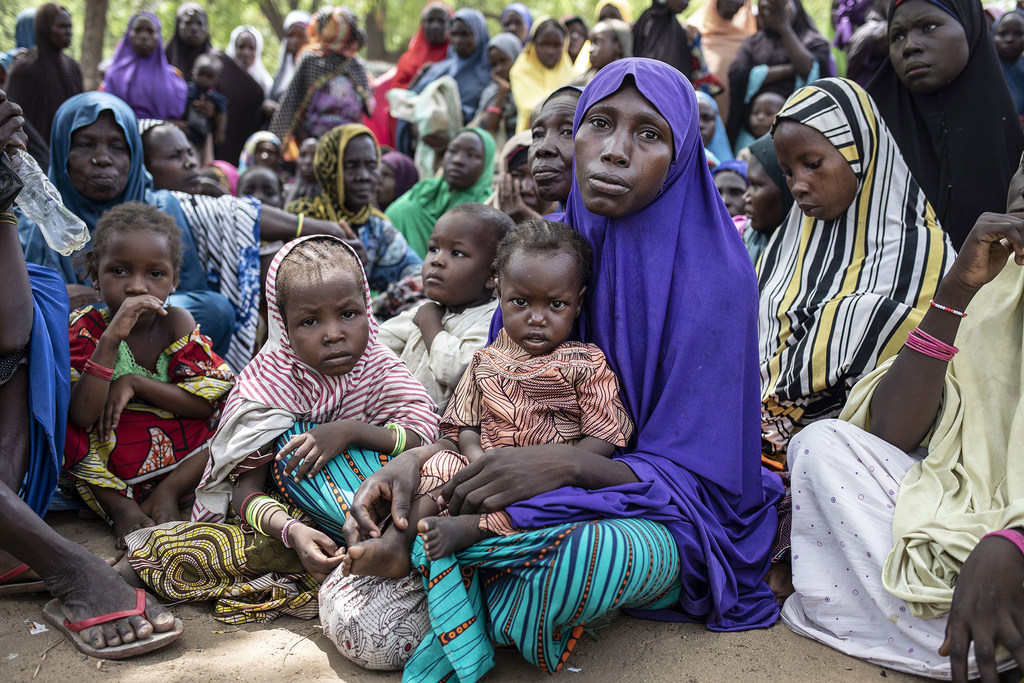
A massive, underfunded humanitarian emergency
Beneath the security headlines lies a staggering humanitarian crisis. In the north-eastern states alone, 7.2 million people require aid, with 6 million in desperate need of urgent intervention.
Food security has reached a breaking point. Forecasts suggest up to 36 million people could face severe hunger in the coming months. Among children under five, more than 3.5 million are at risk of acute malnutrition. “The impact isn’t just immediate,” M. Fall warns. “Malnutrition stunts cognitive growth and education, leaving permanent marks on a person’s adult life.”
These issues are compounded by climate shocks like floods and droughts, frequent outbreaks of cholera and meningitis, and a crumbling healthcare infrastructure. Despite this, international funding has plummeted. “A few years ago, the response plan was nearly $1 billion annually,” says the UN coordinator. “Last year we saw only $262 million, and this year we may struggle to even reach $200 million.”
An economic powerhouse must step up
The contradiction of Nigéria is that it remains one of Africa’s largest economies while hosting a massive humanitarian crisis. “Nigéria is not Soudan or Somalie,” M. Fall insists. “This is a country with wealth. The primary responsibility for managing this crisis rests with the national government.”
The UN’s goal is to transition the leadership of aid efforts to federal and state authorities while urging international donors not to abandon the country. “No one wants to live on handouts,” he concludes. “People want economic opportunities, not dependency. It is far better to teach a man to fish than to simply provide the fish.”