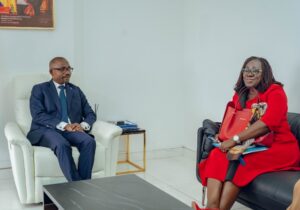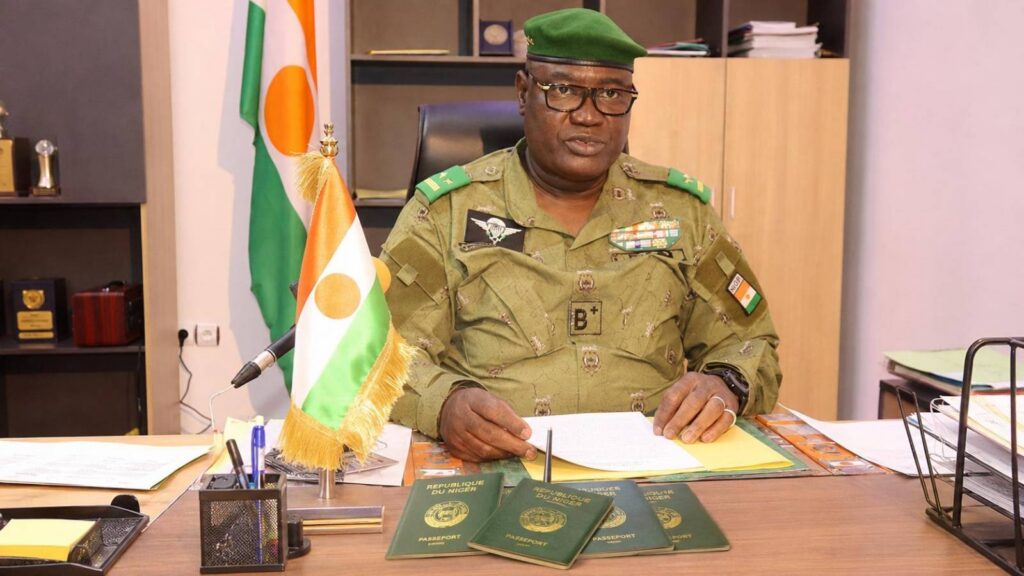
The Spanish Ministry of Foreign Affairs has taken a decisive step by revoking the appointment of its consul in Niamey, Niger. This bold move follows the dismantling of a sprawling Schengen visa trafficking network, where each fraudulent document was sold for over 2.5 million West African CFA francs. What began as a localized corruption scandal has now morphed into a full-blown diplomatic crisis, exposing deep-rooted graft within Niger’s highest echelons of power—particularly within the transitional government led by the National Council for the Safeguard of the Homeland (CNSP).
Diplomatic fallout: Spain cuts ties with Niamey
The abrupt dismissal of the Spanish consul in Niger sends a clear signal from Madrid: tolerance for corrupt practices within its diplomatic missions will not be tolerated. While Spanish authorities typically refrain from public statements on personnel changes, intelligence sources in Niamey confirm that the consul’s removal is directly tied to the ongoing visa fraud investigation. The diplomat stands accused of either actively facilitating or passively enabling the issuance of Schengen visas outside legal procedures—a violation that has now crossed international borders and tarnished Niger’s diplomatic standing.
A web of corruption woven into the heart of the junta
Beneath the surface of this diplomatic purge lies a far more disturbing reality: a systemic corruption network operating within Niger’s transitional government. Investigations conducted by the General Directorate of Documentation and External Security (DGDSE) have exposed a meticulously organized scheme, far removed from the actions of petty traffickers. Instead, this was a high-stakes operation orchestrated from the inner sanctums of power, where access to Europe’s Schengen zone was commodified for staggering sums.
At the epicenter of this scandal is the wife of General Mohamed Toumba, Niger’s Minister of the Interior and the third-ranking figure in the CNSP. Leveraging her husband’s influential position, she allegedly established a parallel visa distribution system, bypassing all official protocols. Each fraudulent visa or residency permit was priced at a staggering 2.5 million CFA francs—roughly 3,800 euros—targeting affluent traders and individuals seeking to emigrate. This arrangement transformed the diplomatic privileges of the military elite into a lucrative state-backed enterprise, further eroding public trust in the transitional leadership.
The DGDSE strikes back: a counter-espionage offensive
The dismantling of this network can be credited to Lieutenant-Colonel Souleymane Balla Arabé, head of Niger’s counter-intelligence agency. Through intercepted communications and meticulous evidence gathering, the DGDSE has dealt a severe blow to the fragile unity of the CNSP. The investigation has not only exposed the minister’s inner circle but has also thrust General Toumba into a defensive position, weakening his influence within a junta rife with internal power struggles.
For a figure tasked with upholding law and order, the association with transnational criminality poses a severe threat to his credibility—both within the military ranks and among his peers. The scandal has laid bare the stark contrast between the junta’s public pledges of reform and the reality of its leadership’s actions.
The deafening silence of President Tiani
As the scandal escalates and the Spanish consul’s dismissal amplifies the crisis internationally, all eyes are on General Abdourahamane Tiani, Niger’s transitional president. To date, he has maintained a resounding silence. No official statement, public address, or disciplinary action has been taken against General Toumba or his associates. This conspicuous inaction is being interpreted by many in Niamey as a deliberate political choice—one that borders on complicity.
The junta’s 2023 coup was framed as a promise to dismantle corruption and restore institutional integrity. Yet, the refusal to hold the third-ranking official accountable raises serious questions about the leadership’s commitment to its own stated principles. By shielding the inner circle of power, General Tiani risks undermining the very foundations of the transition and eroding the public’s faith in the promise of a new Niger.
A turning point for Niger’s transition
The Spanish visa scandal marks a pivotal moment for Niger, exposing the glaring contradiction of a regime that publicly rejects Western influence while privately profiting from access to the Schengen Zone. Madrid’s decision to purge its diplomatic ranks in Niger underscores the gravity of the situation. The question now looms: will General Tiani demonstrate the political courage to clean house within his own government, or will the protection of internal junta dynamics prevail over the promises of justice and reform made to the Nigerien people?