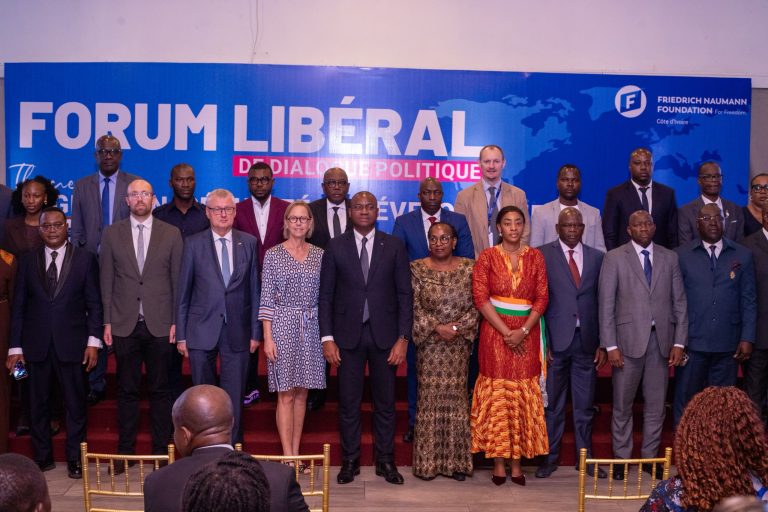
Abidjan hosted a pivotal dialogue this month as leaders called for a fresh perspective on Africa-Europe collaboration regarding migration. The event, held on July 15-16, 2026, brought together key figures to explore how shared freedom and responsibility could reshape policies that too often prioritize security over human dignity.
Migration framed as opportunity, not crisis
Sidi Touré, Vice President of the Liberal International and Côte d’Ivoire’s Minister of Animal and Fisheries Resources, opened the discussion by reframing migration from a perceived problem into a natural expression of human freedom. Citing United Nations data, he noted that migrants constitute just 3.7% of the global population, with over 96% of people living in their country of birth. “The world is not being overwhelmed by migration,” he emphasized, urging policymakers to move past fear-driven narratives.
Touré highlighted the largely internal nature of African migration, with 70% of movements occurring within the continent. He pointed to the daily flows at Adjamé bus station in Abidjan as a testament to this reality. “This is not a crisis—it is life,” he declared, underscoring Côte d’Ivoire’s long-standing tradition of hospitality embodied by the welcoming term Akwaba.
Regional solidarity tested by political shifts
The minister also expressed concern over recent political decisions in Mali, Burkina Faso, and Niger to withdraw from ECOWAS, warning that such moves threaten the principle of free movement across borders. “Regardless of political differences, our peoples are brothers and sisters, our economies are intertwined, and free circulation is a shared heritage we must preserve,” he stated. The forum aimed to produce actionable recommendations, culminating in a policy paper to guide future negotiations.
A call to dismantle fear, build bridges
Alexandra Heldt, Regional Director for West Africa at the Friedrich Naumann Foundation (FNF), expanded the conversation by condemning the rise of xenophobic rhetoric in both Africa and Europe. She referenced recurring violence against migrants in South Africa since 2008, arguing that blaming migrants for economic struggles only weakens long-term progress. “No nation can build its future by scapegoating those who move across borders,” she asserted.
Heldt also spotlighted Europe’s contradictory stance: while labor shortages persist, anti-immigration sentiment grows. “Migration is not a threat—it is a catalyst for exchange, innovation, and entrepreneurship,” she said. “It builds bridges between people more than it erects walls.” She advocated for a balanced Africa-Europe partnership rooted in mobility, shared accountability, and the values of liberty.
Echoing this vision, Touré concluded, “Hospitality is not a sign of weakness—it is a source of strength and a strategic policy choice.” He stressed the need to harness migration as a driver of inclusive development.
The forum continued with expert-led discussions on the legal, geopolitical, and human dimensions of migration, reinforcing the urgency of moving from rhetoric to meaningful action.