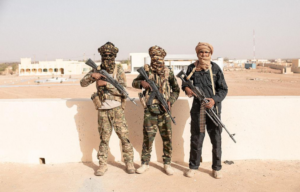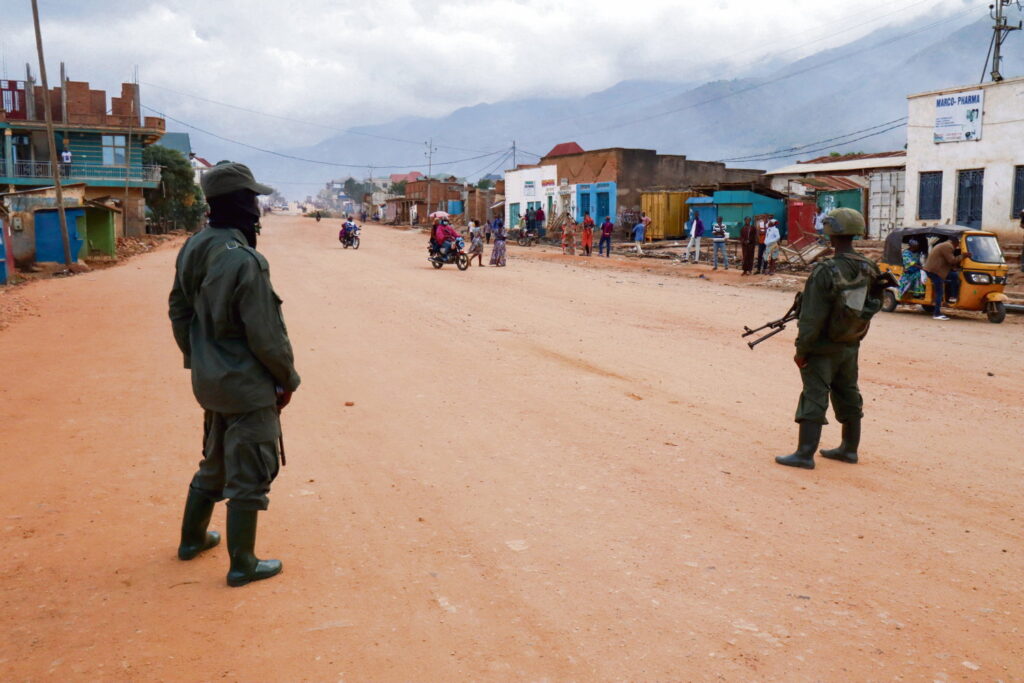
In eastern DR Congo's Uvira, war scars linger as calm cautiously returns. Members of the March 23 Movement (M23) stand guard in Uvira city, eastern Democratic Republic of the Congo (DRC), on December 12, 2025. Photo by Str /Xinhua/ABC/Andia.fr
The Washington-mediated peace accord between Democratic Republic of the Congo (DRC) and Rwanda faces mounting obstacles as fighting intensifies across North Kivu and South Kivu. Despite sanctions and international pressure, the United States’ diplomatic leverage appears exhausted, leaving peace prospects in tatters.
The July 15 deadline for the withdrawal of Rwandan troops from eastern DRC—as stipulated in the Washington Peace Agreement signed on June 27, 2025—has come and gone. The treaty, brokered under U.S. auspices, also mandated the disarmament of the Congolese politico-military group Alliance du Fleuve Congo/M23 (AFC/M23), which currently controls vast swaths of territory in both Kivu provinces. Yet, with no sign of compliance, violence has only escalated.
U.S. Secretary of State Marco Rubio had projected mid-July as the turning point for implementation. Instead, the region remains mired in deadlock, with clashes persisting and no clear path to resolution.
Military escalation defies diplomatic efforts
Rwanda’s continued military presence in eastern DRC was supposed to be temporary. The agreement’s failure to curb hostilities underscores the fragility of regional security frameworks. Meanwhile, M23 rebels, backed by Kigali, have expanded their operations, exacerbating the humanitarian crisis in Kivu.
International sanctions fall short of impact
Washington imposed targeted sanctions against Rwandan officials and entities linked to the conflict. However, these measures have done little to halt the violence or compel adherence to the accord. Observers warn that the current approach risks normalizing instability in one of Africa’s most volatile regions.
Humanitarian toll mounts as peace remains elusive
Civilian displacements have surged as communities bear the brunt of renewed fighting. Aid organizations report severe shortages of food, medicine, and shelter, with over 5 million internally displaced persons across DRC alone. The collapse of the peace process leaves millions in limbo, with no end to their suffering in sight.