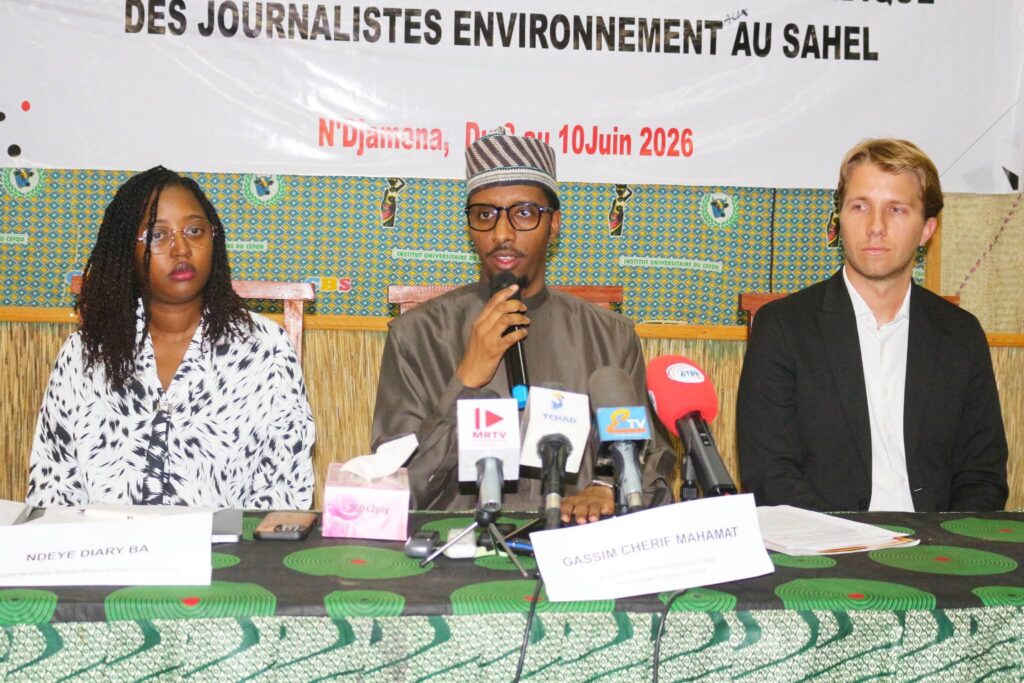
A regional workshop dedicated to the legal safeguarding of journalists specializing in ecological issues commenced this Monday, June 8, 2026, in N’Djamena. This three-day session is organized in partnership with the ministries of Communication and Environment to address the growing challenges faced by the press in the region.
The event brings together twenty media professionals from Chad, Burkina Faso, Mali, and Niger. This initiative is part of a strategic project aimed at supporting and protecting environmental journalism across the Sahel, focusing on improving the professional landscape for those documenting the region’s climate and nature-related stories.
Strengthening rights and professional safety
The central goal of this meeting is to enhance the participants’ knowledge regarding their legal rights and the various protection systems available to them. By identifying ways to prevent professional hazards, the workshop also aims to build a more robust network of cooperation between journalists, legal practitioners, and human rights advocates.
Organizers highlighted that the initiative is designed to equip reporters with the necessary expertise to work under safer conditions. Throughout the sessions, attendees will discuss sensitive reporting topics, evaluate national and regional legal frameworks, and sharpen their skills in digital security and risk management.
A vital role for the Sahelian press
During the opening, Gassim Cherif Mahamat, the Minister of Communication and Government Spokesperson, expressed his support for holding this regional gathering in Chad. He pointed out that countries within the Sahel face unique obstacles concerning the safety of the press and the preservation of media freedom.
“Media professionals play a fundamental role in educating the public on environmental crises, but they must be granted a framework that ensures their security,” the Minister remarked. He added that the training provides essential tools for risk analysis, understanding complex legal texts, and fighting against the spread of false information—all of which are vital components of contemporary journalism.
Over the next three days, these journalists will share their field experiences and strengthen their ability to inform the public about environmental threats while operating within a more secure professional environment.