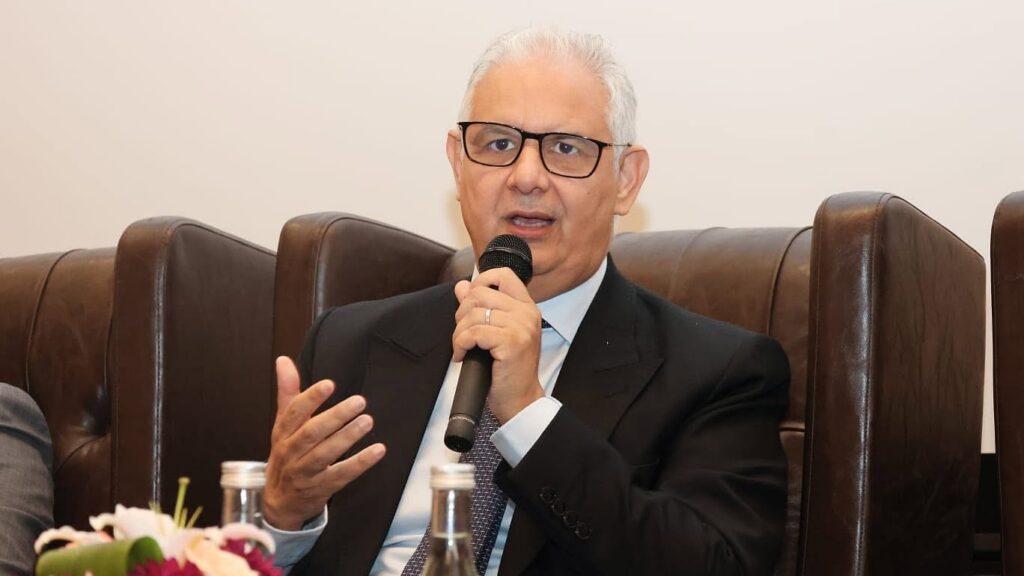
In a compelling address to the International Centrist Democratic movement, Nizar Baraka, Secretary-General of Morocco’s Istiqlal Party, called for a shift from passive dialogue to active diplomacy to address escalating international tensions. Speaking at a pivotal session, he emphasized the need for centrist parties to evolve into engines of pragmatic solutions rather than mere forums for discussion.
Baraka’s remarks, delivered during a high-level meeting of the Centrist Democratic International, underscored the urgency of adapting to a rapidly changing global landscape. He highlighted the pivotal role of youth and women in shaping Morocco’s future diplomatic engagements, stressing their inclusion as a cornerstone of effective foreign policy.
The Istiqlal leader also reaffirmed Morocco’s unwavering commitment to its African priorities, particularly the Sahara issue. He positioned the North African nation as a key player in fostering stability and development across the continent, while navigating complex international dynamics.
a call for bold and inclusive diplomacy
During his speech, Baraka outlined a vision for centrist parties to transcend traditional boundaries and adopt a more hands-on approach to global challenges. His proposals included strengthening partnerships with African nations, enhancing economic cooperation, and prioritizing sustainable development initiatives.
“The world is at a crossroads, and Morocco stands ready to lead with action, not just words,” Baraka declared. He pointed to the country’s recent diplomatic successes as evidence of its capacity to mediate and collaborate on pressing issues, from security to trade.
strengthening Morocco’s diplomatic influence
The Istiqlal Secretary-General’s intervention comes at a time when Morocco is seeking to consolidate its role as a regional leader. By advocating for a proactive and inclusive foreign policy, Baraka aims to position the country as a bridge between continents, fostering dialogue and cooperation amid geopolitical uncertainties.
His emphasis on youth and women aligns with broader societal trends in Morocco, where these groups are increasingly recognized as vital to the nation’s progress. Baraka’s call to action reflects a growing consensus that diplomacy must evolve to meet the demands of a 21st-century world.
As global tensions continue to rise, Morocco’s diplomatic strategy—championed by figures like Baraka—offers a model for how centrist movements can drive meaningful change through collaboration, innovation, and inclusivity.