The deployment of advanced weaponry by Mali’s armed forces proves ineffective without a strong doctrinal foundation in warfare. The protracted conflict near Kidal, despite Bamako’s intensified aerial campaigns, exposes a critical flaw: a poorly trained command structure turns high-tech military assets into wasted investments.
Modern military strategy demands more than just accumulating expensive equipment. Mali’s defense establishment has fallen into the trap of believing that drones, tactical bombers, and precision-guided munitions alone can secure operational superiority. Yet, the true measure of military power lies not in hardware but in the strategic acumen of those who deploy it. When Mali’s military leadership lacks fundamental education in military science, cutting-edge technology becomes little more than a political display—lacking real tactical impact on the ground.
Kidal: a stark example of Mali’s military failings
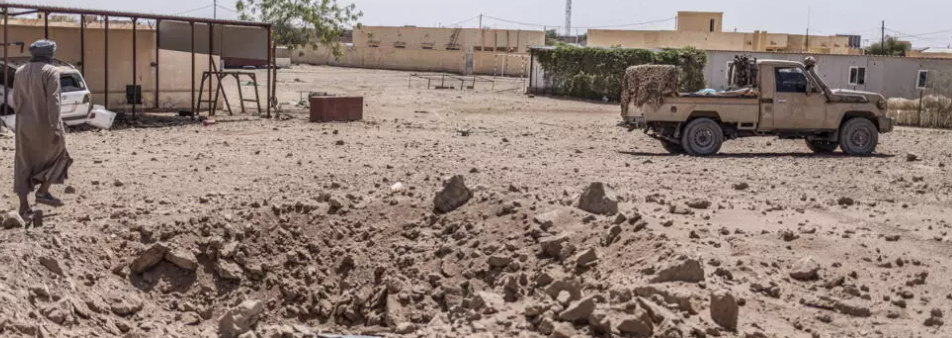
The security situation in northern Mali, particularly around the strategic city of Kidal, serves as a grim testament to this reality. For months, the Malian army has escalated its aerial bombardments, increased drone strikes, and launched heavy artillery barrages. Despite this overwhelming air superiority, the rebels of the Front de libération de l’Azawad (FLA) have maintained their positions, thwarting Bamako’s military strategy.
Why does Mali’s near-total air dominance fail to break the resistance of lightly armed groups? The answer lies in the Malian high command’s inability to integrate these strikes into a cohesive operational plan. Bombing without coordination between air and ground forces, without immediate follow-up by trained troops, and without a nuanced understanding of the local terrain is akin to firing into the void. Mali’s over-reliance on firepower cannot compensate for the strategic illiteracy crippling its command structure.
Strategic illiteracy in asymmetric warfare
Modern warfare in Mali, especially in its asymmetric and desert terrain, requires a level of intellectual agility far beyond conventional combat. Mali’s undereducated military leadership often resorts to rigid, brute-force tactics. The repetitive pattern of nighttime airstrikes around Kidal demonstrates a glaring lack of tactical innovation. In contrast, rebel forces exhibit remarkable cognitive adaptability—using dispersion, camouflage, local geography, and psychological resilience to outmaneuver Malian troops.
The consequences of this strategic illiteracy extend beyond failed operations. Mali’s command structure struggles to learn from experience. When the high command repeatedly repeats the same planning errors week after week, squandering valuable resources and perpetuating the deadlock, the issue transcends logistics. It is fundamentally a matter of mindset. Malian officers often treat advanced weaponry as a magical solution, expecting firepower alone to resolve security challenges. They overlook that defense is a complex human science demanding method, calculation, and strategic finesse.
In the end, events in northern Mali serve as a harsh reminder of the immutable laws of warfare. Financial resources poured into sophisticated aerial platforms yield no results when the minds orchestrating operations in Bamako lack even the most basic educational prerequisites. Until Mali’s strategic command stops being the weakest link in its military modernization, frontlines like Kidal will remain stagnant. For Mali, firepower without intelligence is nothing more than the ruin of armies.