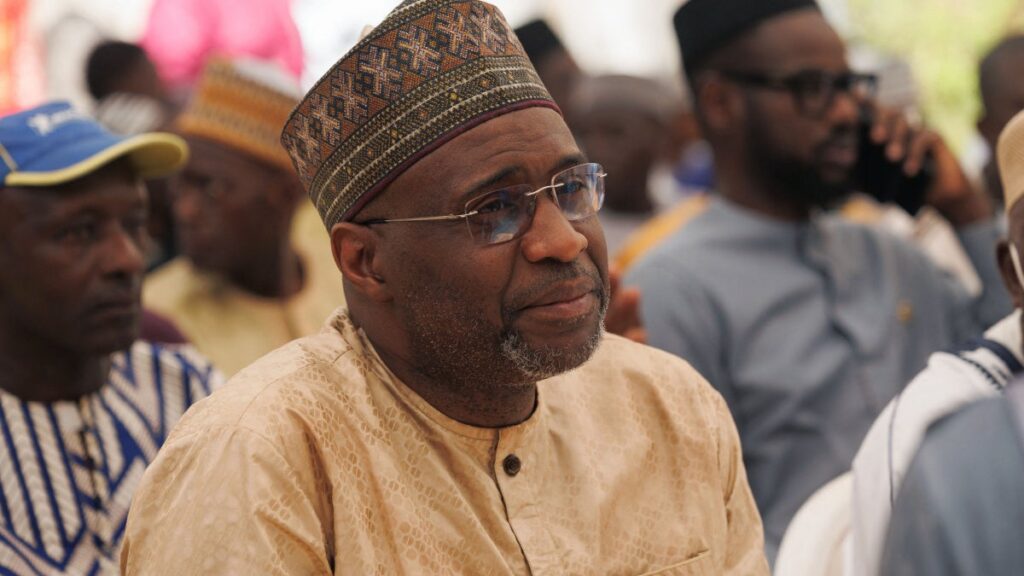
In Bamako, the capital of Mali, former Prime Minister Moussa Mara stood calmly before the court as judges denied his legal team’s request for provisional release. Instead, prosecutors pushed for a two-year prison sentence, highlighting the military junta’s relentless suppression of political opposition and dissenting voices.
Moussa Mara, who served as Mali’s Prime Minister for eight months between 2014 and 2015, was arrested on August 1st following a social media post. In the message, he expressed solidarity with imprisoned political figures and vowed to seek justice for them. Authorities swiftly accused him of undermining state credibility, opposing legitimate authority, inciting public disorder, and spreading false information.
The trial commenced on September 29th at a specialized cybercrime court, with a verdict expected on October 27th. Legal experts and activists, however, have raised serious concerns about the fairness of the proceedings. « These charges have no connection to the content of Moussa Mara’s post », argued one of his defense attorneys. « This is a direct attack on freedom of expression », emphasized Mounkaïla Yayé, another member of his legal team. « It sets a dangerous precedent for future cases. »
Escalating repression under military rule
Since seizing power in a 2021 coup, the junta led by General Assimi Goïta has systematically restricted political freedoms, civil society, and media in Mali. The government has banned opposition parties, intimidated journalists, and forcibly disappeared activists. General Goïta has further entrenched his authority by postponing elections, delaying the return to democratic civilian rule.
The junta has also ignored calls to hold security forces accountable for human rights violations, failing to meet international obligations to investigate abuses and prosecute perpetrators. In January, Mali, alongside Burkina Faso and Niger, officially withdrew from the Economic Community of West African States (ECOWAS), stripping citizens of access to regional justice mechanisms. In September, these three nations announced plans to exit the International Criminal Court treaty, further jeopardizing justice for victims of mass atrocities.
Silencing solidarity: a warning to dissenters
The arrest of Moussa Mara underscores a stark reality: expressing support for repressed individuals is now criminalized in Mali. It also reveals the junta’s intolerance for any form of dissent. Authorities must immediately drop all charges against Mara, release him, and end the arbitrary detention of others. Upholding freedom of expression is not just a legal obligation—it is essential for the country’s democratic future.