The Malian crisis deepens: how Assimi Goïta’s military gamble backfired
The Republic of Mali stands at a historic crossroads. Since seizing power in 2020 and reinforcing control through a second coup in 2021, transitional leader Assimi Goïta had pledged to restore security and national sovereignty. Yet six years later, his regime faces unprecedented fragility, its legitimacy eroded by battlefield setbacks and internal fractures.
Security crisis escalates: Bamako under threat
On April 25, coordinated assaults by the Group for Support of Islam and Muslims (JNIM), an Al-Qaeda affiliate, and the Azauad Liberation Front (FLA) targeted multiple military positions—some just kilometers from Bamako. The defense minister, Sadio Camara, was killed in the clashes, while key northern strongholds like Kidal slipped beyond the army’s grasp. These raids exposed fatal flaws in a strategy that had staked its reputation on territorial control.
The assaults revealed a paradox: a regime that once promised stability now presides over a nation where insecurity has spread farther and faster than ever before.
Sovereignty rhetoric vs. rising jihadist influence
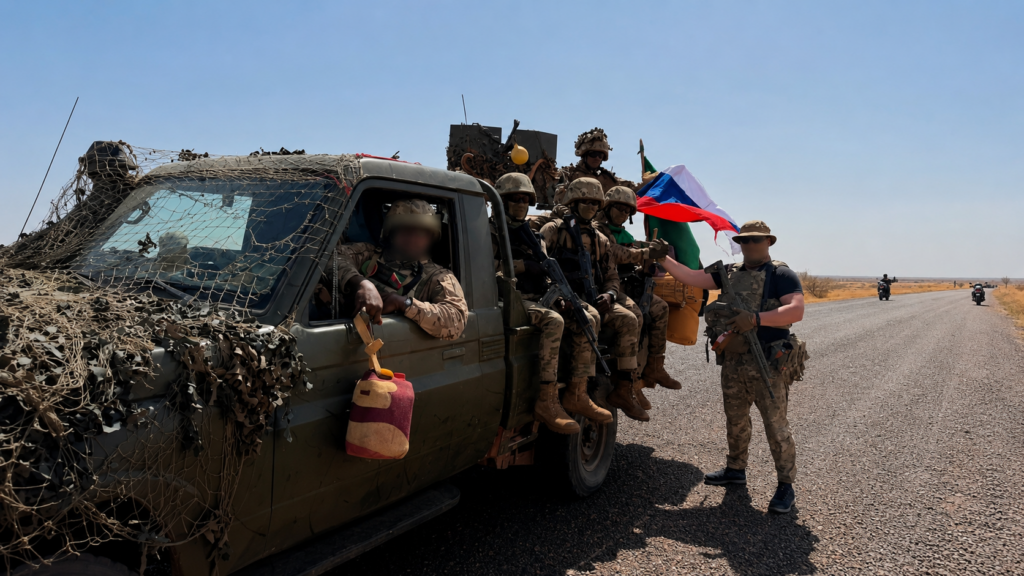
Goïta’s administration gambled on severing ties with France, expelling the UN peacekeeping force (MINUSMA), and embracing the Africa Corps mercenaries—promising a Mali free from foreign interference. Yet the cost has been steep. Jihadist factions and Tuareg rebels from the FLA continue their advance, while Bamako operates under persistent threat. Civilian populations bear the brunt, caught between militant groups and a government that has systematically crushed dissent.
The sovereignist narrative, once a rallying cry, now serves as a smokescreen for authoritarian consolidation. Political opposition has been silenced, media intimidated, and criticism equated with treason.
A regime besieged: military and political exhaustion
Mali finds itself trapped. Its military overextension has failed to curb insurgent advances, while internal power struggles within the junta deepen divisions. Externally, jihadist networks demonstrate relentless operational capacity; internally, public trust in the government has collapsed. Goïta’s vision of a restored, proud Mali now risks becoming a cautionary tale of how power, once seized, can slip through unchecked ambition.
By our correspondent in Bamako