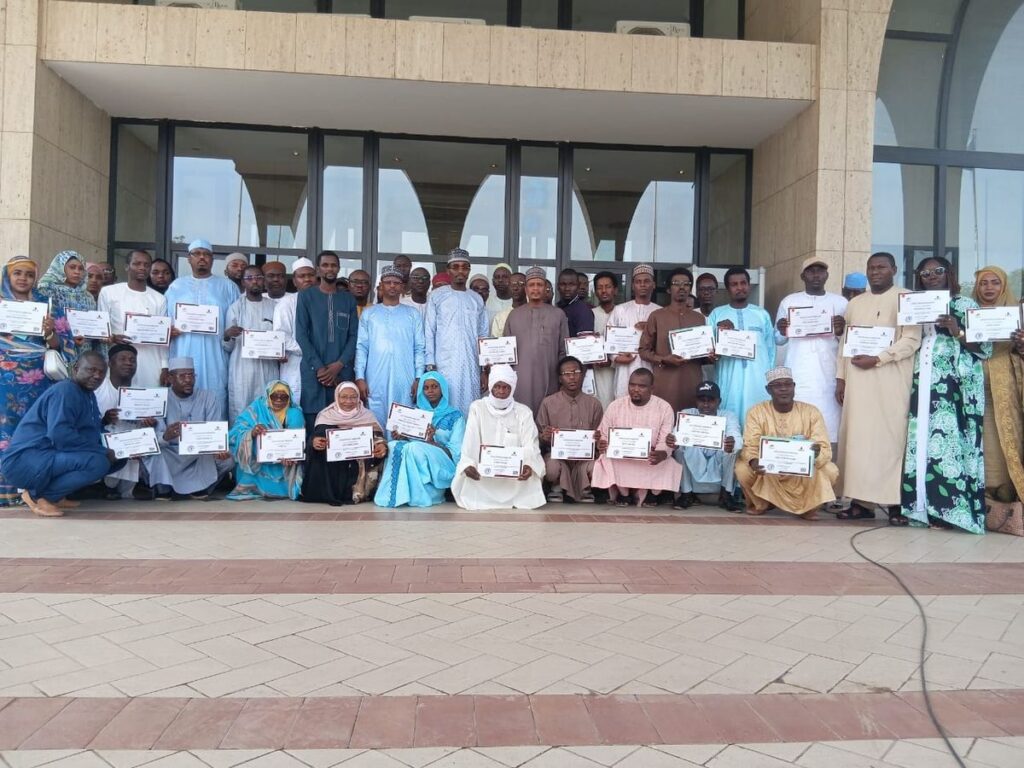
N’Djamena — Chad’s National Bureau of Land Freight (BNFT) has successfully concluded a landmark training program focused on digitalizing ground freight services. The three-day workshop, held at the Kempinski hotel in N’Djamena, brought together controllers and agents from across the country, including participants from N’Djamena and Mayo-Kebbi. The initiative aimed to equip professionals with cutting-edge digital tools designed to revolutionize Chad’s land transport sector.
During the closing ceremony, Brahim Mahamat Adoum, Chair of the steering committee, commended the participants’ active engagement throughout the program. He highlighted that the training covered essential modules, including digital interface navigation, freight declaration processes, transporter management, system configuration, and agency parameter settings. These innovations are expected to streamline administrative workflows and enhance real-time monitoring of ground transport operations.
The BNFT leadership emphasized that this reform aligns with Chad’s broader national strategy to modernize public services and accelerate the country’s digital transformation. They noted that the transition to digital systems is critical for managing mandatory documents like the Lettre de Voiture Obligatoire (LVO) and Taxe à l’Essieu (TAE), ensuring more effective oversight of transport activities. Technical partners, including TRADELINK SOLUTIONS and SERVOO, were recognized for their pivotal role in delivering expert guidance throughout the workshop. Participants were urged to apply their newly acquired skills to drive the digitalization of Chad’s land freight sector forward.
Saleh Youssouf Erda, Director General of the steering committee, reinforced that the workshop was dedicated to training agents, controllers, and emissaries on operating and managing the new e-BNFT digital platform. He described the initiative as a decisive shift from traditional paper-based processes to a fully digitalized institutional framework. The e-BNFT platform now enables instant issuance and verification of essential documents, including the LVO and TAE, while facilitating seamless, contactless processing of cargo transport paperwork via computers or mobile devices.
Erda also underscored the platform’s role in securing state revenue and generating reliable statistical data to strengthen national economic planning. He framed the digital transition as a cornerstone of the administration’s modernization agenda, in line with the vision of President Mahamat Idriss Déby Itno. Closing the workshop, he urged participants to integrate the platform into their daily workflows, master its features, and share their knowledge with colleagues to ensure widespread adoption. The event concluded on a note of optimism, with a renewed commitment to overcoming the challenges of digitalization in public administration and land transport.