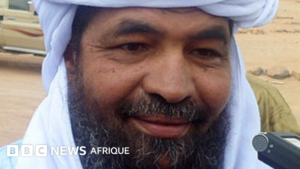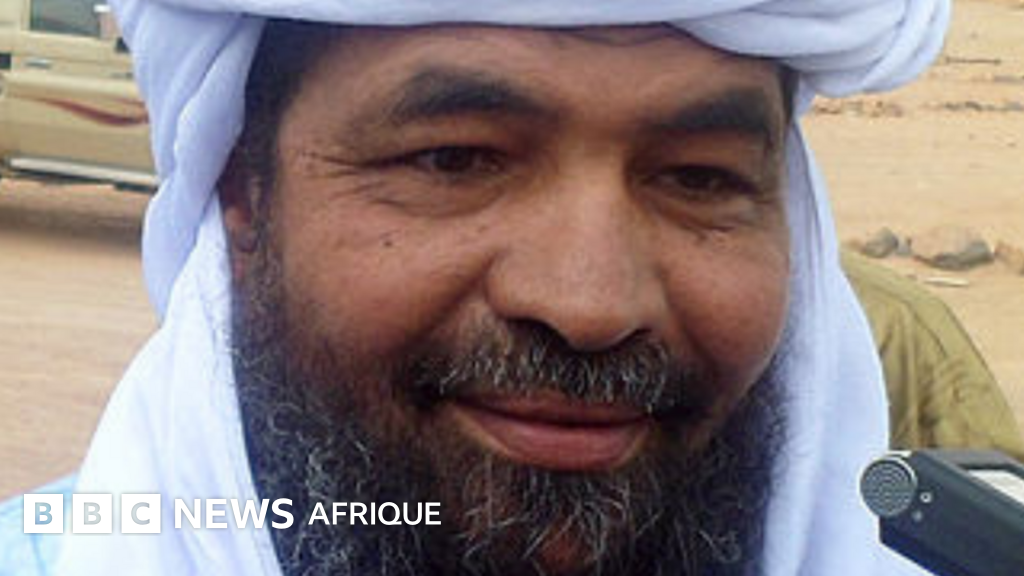
The Malian government has issued a sweeping call for action, placing bounties totaling up to 2 billion FCFA on the heads of high-profile figures linked to recent violent clashes across the country. Among those targeted is Iyad Ag Ghaly, a central figure in the Sahel’s jihadist landscape and leader of the Jama’at Nusrat al-Islam wal-Muslimin (JNIM), also known as the Group for the Support of Islam and Muslims (GSIM).
In a televised announcement, the Ministry of Security and Civil Protection, under the signature of General Daoud Aly Mouhammedine, urged citizens to assist national defense forces in identifying and locating seven individuals suspected of orchestrating acts of terror. These figures are accused of involvement in coordinated attacks that rocked Kidal and Kati just two months prior, resulting in significant loss of life and severe disruptions to public order.
Government response and reward structure
The authorities have outlined a tiered reward system to incentivize the capture or elimination of these militant leaders. At the top of the list is Iyad Ag Ghaly, with a bounty of 2 billion FCFA for his capture. Following him are Amadou Koufa and Abdoulaye Mohamed (alias Habib), both leaders within the Macina Katiba, each with a 1.5 billion FCFA reward. Algabas Ag Intallah, a key political and military figure within the Azawad Liberation Front (FLA), is sought for 1 billion FCFA. Three other FLA commanders—Ghita, Bilal Chérif, and Abderrahmane Al Banna—each carry a 500 million FCFA bounty.
These measures come in direct response to the April 25 coordinated assaults carried out by JNIM-affiliated jihadists and FLA separatists. The attacks claimed the life of Defense Minister Sadio Camara, sending shockwaves through Bamako and beyond. The government’s announcement signals an escalation in its counterterrorism strategy, emphasizing both military and civilian collaboration to dismantle these networks.
Who is Iyad Ag Ghaly?
Born in 1958 in Boghassa, within the Kidal region of northern Mali, Iyad Ag Ghaly’s journey spans decades of rebellion, jihadism, and regional instability. His early years were marked by involvement in the Libyan military under Muammar Gaddafi, where he fought in conflicts across Lebanon and Chad. Returning to Mali in the early 1990s, he became a prominent figure in the Tuareg uprising, founding the Popular Movement for the Liberation of Azawad (MPLA) and later the Azawad Popular Movement (MPA), which he led against the Malian state before negotiating a peace accord in 1992.
Over time, Ag Ghaly’s ideology shifted toward radical Islamism. By 2007, he had aligned himself with the Salafist Group for Preaching and Combat (GSPC), an Al-Qaeda affiliate that later evolved into Al-Qaeda in the Islamic Maghreb (AQIM). In 2012, he established Ansar Dine, merging his forces with AQIM to impose Sharia law in northern Mali. Five years later, he consolidated his influence by founding the Group for the Support of Islam and Muslims (JNIM), uniting several Malian jihadist factions under the banner of Al-Qaeda.
Analysts describe Ag Ghaly as a strategic mastermind whose tactics have evolved beyond direct confrontation. Rather than engaging in frontal battles, he now employs an economic blockade strategy, targeting critical infrastructure such as roads, power lines, and supply routes. By disrupting the flow of essential goods and services to Bamako, he aims to destabilize the government from within, creating conditions of hardship that weaken public confidence in the state.
The International Criminal Court (ICC) has issued an arrest warrant for Ag Ghaly, charging him with crimes against humanity and war crimes committed between 2012 and 2013. His JNIM group remains one of the most active and lethal jihadist organizations operating across Mali, Niger, and Burkina Faso, collectively forming the Alliance of Sahel States (AES).
With Mali’s security situation under unprecedented pressure, the government’s decision to put a price on Ag Ghaly’s head reflects both the urgency and gravity of the threat he poses. The call for collaboration extends beyond the military, seeking to rally communities in a unified front against terrorism.