- Top Story
- Politics
Mali opposition leader insists dialogue does not mean alliance
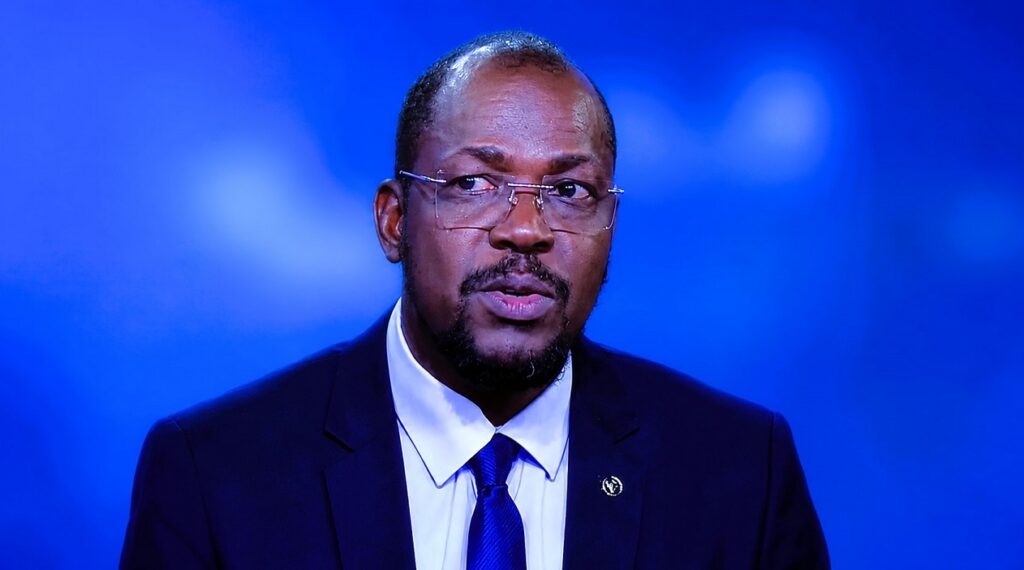
Should Mali engage in talks with the Group for the Support of Islam and Muslims (JNIM)? Can dialogue with armed movements in the north coexist with preserving Mali’s territorial integrity? What role could Imam Mahmoud Dicko play in a potential transition? These questions lie at the heart of Mali’s current crisis. Étienne Fakaba Sissoko, spokesperson for the Coalition of Forces for the Republic (CFR), outlines his movement’s vision for resolving the crisis, clarifies its red lines, and emphasizes a crucial distinction: “Dialogue does not mean alliance.”
Bamako’s growing insecurity and the failure of military-only solutions
Étienne Fakaba Sissoko: To say that the blockade “works” would imply that starving civilians, obstructing supply routes, and holding populations hostage could ever be considered a viable strategy. The reality is far more grim. This approach primarily breeds suffering, destabilizes Bamako’s fragile supply chains, and pushes families deeper into hardship. Mali’s landlocked position makes control over its supply corridors a matter of national sovereignty. The CFR rejects this tactic outright because it punishes the very people it claims to protect—the Malian people.
This impasse also lays bare the limitations of a purely military response. A sustainable exit from this crisis demands a political solution—one that shields civilians, secures vital corridors, and rebuilds the conditions for lasting peace.
Mali’s demand for peace and the CFR’s emerging role
“Malians are desperate for peace”
Since its formation in December 2025, the CFR has sought to channel the widespread yearning for stability across Mali. While still in its early stages, the movement has struck a chord with citizens seeking an alternative to the current deadlock. Unlike traditional political parties, the CFR positions itself as a national safeguard platform—uniting political, social, and international voices in favor of a structured, responsible Malian discourse.
The movement aims to break the cycle of prolonged military rule and national stagnation by offering a credible path forward. Its focus remains on restoring peace without surrendering Mali’s sovereignty or territorial integrity.
Dialogue with armed groups: a clear distinction
Some observers suggest the CFR maintains close ties with the Azawad Liberation Front (FLA). Étienne Fakaba Sissoko firmly rejects this notion. “Dialogue is not alliance,” he insists. The CFR engages with all stakeholders but refrains from coordinating military actions or forming alliances. As a civilian movement, it takes no part in armed activities.
The CFR’s core principles include rejecting any division of Mali while advocating for political solutions to territorial and governance challenges. The movement champions dialogue within a republican, transparent, and strictly political framework—not through force. Its method is negotiation, not war.
No automatic legitimacy for armed groups
“Violence does not grant political rights”
Following the JNIM’s large-scale offensive in April 2026, questions arose about the CFR’s readiness to step into a power vacuum. Étienne Fakaba Sissoko responds with clarity: the CFR does not build its strategy on the violent collapse of the state or the military victory of armed factions. While the offensive underscored Mali’s deepening political peril, it does not confer automatic legitimacy upon armed groups to dictate the nation’s future.
The CFR has indeed prepared a civilian transition plan. Its mandate would include restoring public freedoms, protecting civilians, initiating national dialogue, drafting a new constitution, and organizing elections. Crucially, the presidential vote would mark the conclusion of this process—not its starting point. Without minimal security or national consensus, history risks repeating itself.
Imam Dicko’s potential role in a transition
The CFR cautions against viewing Imam Mahmoud Dicko as a political substitute. Instead, he could serve as a moral authority—helping to ease tensions, facilitate dialogue, and rebuild trust among Mali’s diverse communities. However, executive responsibilities must remain with legitimate civilian institutions. Political legitimacy must flow from the people and the ballot box, not from unelected figures.
Dialogue with JNIM: limits and red lines
“No surrender, no rewards”
The CFR advocates dialogue with the JNIM, but not as a form of capitulation or reward. Its goal is to end the war and protect civilians. The movement’s primary obstacle remains the JNIM’s affiliation with Al-Qaeda, which conflicts with a national peace process. The CFR’s red lines are non-negotiable: preserving Mali’s unity, upholding the republican state, protecting fundamental freedoms, severing ties with transnational armed agendas, halting attacks on civilians, and ensuring accountability for grave crimes.
Regarding Iyad Ag Ghali, the CFR refuses to base its strategy on assumptions about individuals. The movement demands verifiable actions: an end to attacks, protection of civilians, humanitarian access, a definitive break from Al-Qaeda, and acceptance of Mali’s unity. Neighboring countries’ experiences with the JNIM highlight the broader threat posed by transnational agendas. Any peace process must prioritize tangible proof over empty promises. The CFR does not negotiate away the Malian state; it seeks conditions to end the war while safeguarding the Republic.
Beyond the charia debate: governance and decentralization
“A stronger republic, not a theocracy”
The CFR advocates for deep decentralization—not to impose Islamic law but to address the collapse of local governance. In many regions, state institutions are absent, justice is inaccessible, and essential services are failing. Communities often turn to customary leaders, religious figures, or local mediators for solutions. The CFR does not endorse the imposition of charia. Instead, it proposes a Malian Republic that integrates local mediation within a strictly constitutional framework. Principles include respect for the Constitution, equality before the law, protection of women and children, and access to national justice.
The debate on decentralization must focus on governance and state effectiveness—not on distorted caricatures of federalism.
The division of powers and resources
The CFR envisions a united, sovereign, and indivisible Mali with enhanced regionalization. Local authorities should assume greater responsibilities and resources, while the state retains its core regulatory functions. Centralizing power in Bamako has proven inefficient. A balanced approach would ensure national unity while empowering territories to manage their own affairs effectively.
A transition plan for Mali’s reconstruction
“Rebuilding a functional state”
The CFR has developed a structured transition program aimed at restoring a “functional state.” Its priorities include reopening schools, strengthening the judiciary, protecting populations, and reviving the economy. The movement advocates for an independent judiciary, support for teachers, enhanced security forces, and the securing of key economic corridors. The humanitarian crisis demands urgent action: restoring access to education, justice, security, energy, and food must precede any broader reconstruction effort.
Regional convergence: the Alliance of Sahel Democrats
The Alliance of Sahel Democrats (ADS) emerged shortly after the CFR’s creation. This civic and democratic convergence unites Malian, Burkinabè, and Nigerien citizens who share a common diagnosis: the Sahel’s crisis is both institutional and democratic. The ADS is neither a military structure nor a unified political command. The CFR remains a Malian initiative addressing Mali’s specific challenges, while the ADS coordinates advocacy, defends public freedoms, and fosters solidarity among Sahelian democrats facing shrinking political spaces.
The CFR rejects revenge, division, theocracy, and a return to the past. Instead, it champions a transition grounded in civilian leadership, structured national dialogue, territorial refounding, a republican army, and the restoration of popular choice. The movement’s conviction is simple: Mali will not be saved by a strongman. It will be saved by a strong national pact.