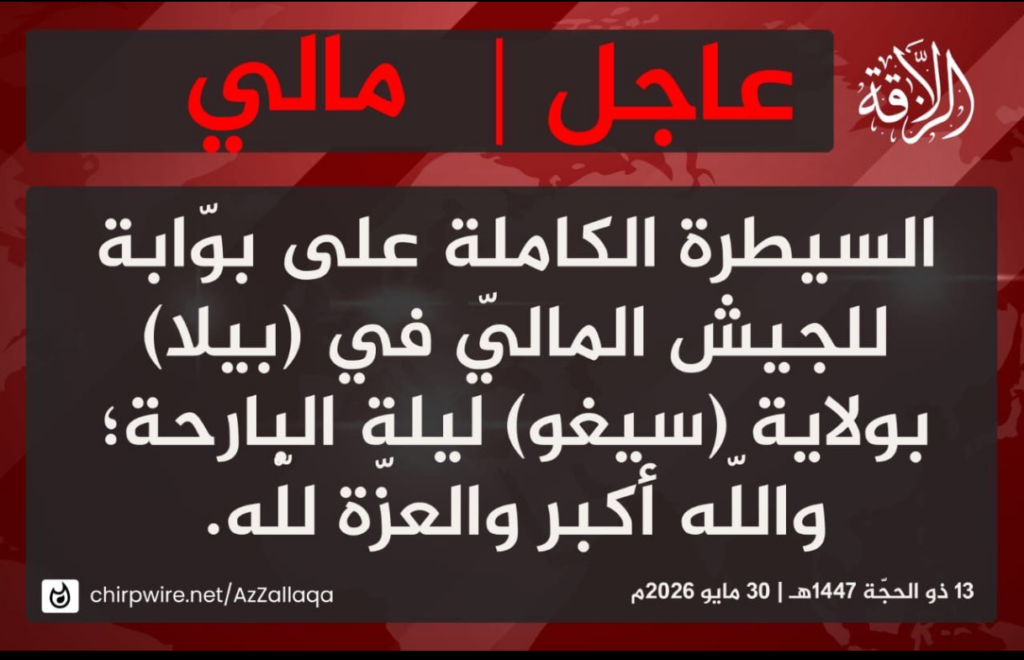
Jihadist assault exposes Mali’s fragile security grip in Ségou
In a bold pre-dawn operation, the Group for the Support of Islam and Muslims (JNIM)—an al-Qaeda-affiliated coalition—claimed to have overrun a Malian military outpost in the Ségou region during the night of May 29-30. The attack, which saw heavy fighting and substantial casualties, underscores the mounting challenges faced by the Bamako junta in maintaining control over its territory.
While the jihadist group boasts of seizing weapons and ammunition, independent verification remains elusive. Local reports confirm intense clashes, but the full extent of human losses and material damage is still being assessed. This latest strike in central Mali reaffirms the enduring threat posed by armed factions, capable of penetrating even well-defended zones.
A security strategy in tatters
The assault on Ségou highlights the stark limitations of Bamako’s current military approach. Since the junta’s rise to power, officials have vowed to reclaim all national territory, pivoting from Western partnerships to a heavy reliance on Russian military support. Yet the results have fallen far short of expectations.
The Russian military advisory mission, which includes Wagner Group elements, has focused on airstrikes and large-scale clearance operations. However, these tactics have proven ineffective against JNIM’s mobile and decentralized warfare. The jihadists continue to exploit gaps in security, demonstrating that Mali’s transitional authorities are struggling to curb the insurgency. Far from stabilizing, the security situation is deteriorating, with no end in sight.
From violence to hunger: a crisis deepens
The jihadist offensive is not just a military concern—it is accelerating a humanitarian catastrophe. Ségou, once a vital agricultural hub thanks to the fertile Niger River basin, is now gripped by food insecurity. Militants have systematically disrupted farming by seizing farmland, looting markets, and planting improvised explosives along key routes.
Farmers dare not till their fields, traders cannot transport goods, and supply chains to major cities have collapsed. The JNIM is weaponizing hunger, depriving communities of sustenance as a tactic of war. With state institutions overwhelmed by the security crisis, humanitarian aid is woefully inadequate, leaving families in dire straits.
Displaced by fear and famine
As violence escalates and hunger spreads, civilians are fleeing their homes in record numbers. Entire villages in the Ségou region have been abandoned, with residents seeking refuge in urban centers or Bamako. These internally displaced persons (IDPs) are pouring into overcrowded, under-resourced camps with little access to clean water, healthcare, or sanitation.
Women and children bear the brunt of this displacement, facing heightened risks of malnutrition and disease. With the state’s focus locked on military operations, social services have collapsed, leaving displaced families at the mercy of underfunded local NGOs. The humanitarian toll of this crisis is mounting, threatening to tear apart the social fabric of central Mali.
Can Bamako reverse the tide?
The JNIM’s latest victory in Ségou serves as a stark reminder: Mali’s official narrative of military progress rings hollow in the face of reality. The junta’s rigid focus on a security-first strategy—bolstered by an underperforming Russian partnership—has failed to restore stability. Without a holistic approach that prioritizes civilian protection, restores public services, and addresses the famine gripping the region, Mali risks irreversible social collapse.