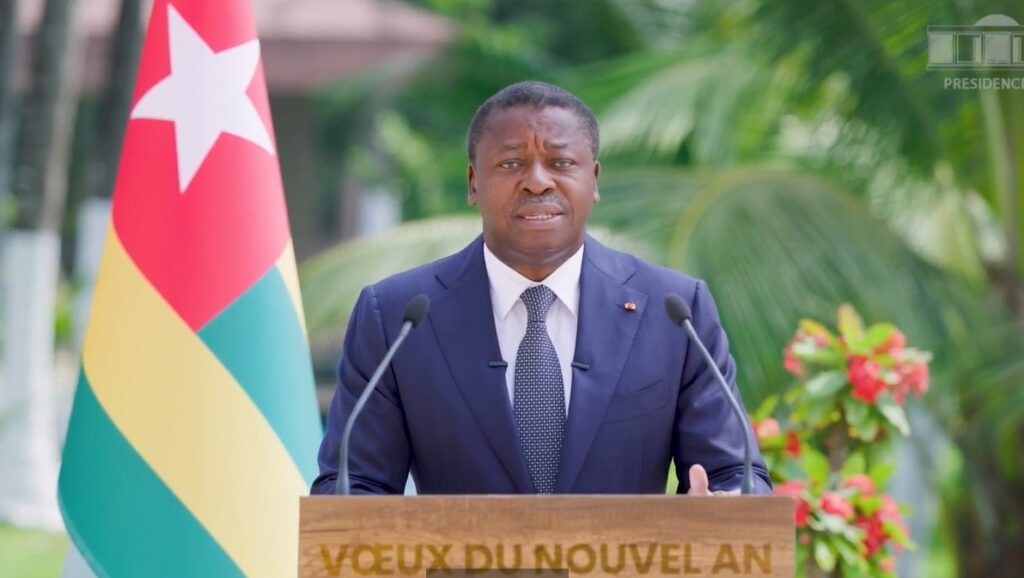
The Togolese capital, Lomé, has quietly emerged as the latest battleground in an intense geopolitical rivalry between France and Russia. In this strategic hub of the Gulf of Guinea, the two global powers are vying for influence through diplomacy, security agreements, and soft power tactics.
Diplomatic maneuvering in the corridors of power
Within the polished halls of Lomé’s presidency, a delicate balancing act is underway. Once hailed as a steadfast and discreet French ally in West Africa, Togo now finds itself at the center of a high-stakes contest for influence. With France’s traditional stronghold in the Sahel eroding—marked by strained relations with Mali, Burkina Faso, and Niger—the European power is pivoting to secure its foothold along the Gulf of Guinea’s coast. Meanwhile, Russia, emboldened by its recent advances in neighboring Sahelian states, is aggressively expanding its presence in Lomé.
Paris’s delayed response
The urgency of the situation appears to have finally reached Paris. In April 2026, France’s foreign minister made an official visit to Lomé—a milestone that marked the first such trip by a French diplomatic chief in over two decades.
Recognizing that moral appeals no longer suffice to retain its historical allies, France has shifted its strategy toward tangible, socially impactful investments. To counter the growing anti-French sentiment sweeping the region, Paris is positioning itself as a forward-thinking partner for Togo’s youth and emerging elite. Key projects include funding a new university hospital and establishing a state-of-the-art artificial intelligence center in Lomé, signaling a commitment to modernization and human development.
Moscow’s strategic edge in security
On the security front, however, Russia seems to have gained the upper hand. Facing an escalating jihadist threat in its northern Savanes region, Togo is urgently seeking solutions—unencumbered by the political constraints often associated with French military cooperation.
In 2025, Lomé and Moscow formalized a military cooperation agreement, paving the way for the deployment of Russia’s Africa Corps—the state-backed successor to the Wagner Group. For the Togolese government, the objective is clear: secure operational support and military equipment to safeguard the country’s northern borders, where French military frameworks are perceived as overly rigid or politically conditional.
Beyond weapons: infrastructure and economic influence
Russia’s ambitions extend far beyond military cooperation. The Kremlin has set its sights on Lomé’s deep-water port, the region’s most critical logistical asset. Moscow envisions transforming the port into a gateway to the Sahelian hinterland, with sweeping infrastructure projects already under discussion. These include a railway and pipeline linking Lomé to Burkina Faso, establishing a critical corridor stretching from the Gulf of Guinea to the Sahel’s military-led regimes.
The Russian strategy also encompasses a robust soft power campaign designed to win over public opinion and civil society:
- Education: A surge in university scholarships for Togolese students to study in Russia.
- Culture: The establishment of Russian language centers and the organization of cultural events, including concerts in Lomé.
- Information warfare: The dissemination of sovereignist and anti-Western narratives, resonating with segments of the local population.
Faure Gnassingbé: master of strategic pragmatism
Amid this geopolitical tug-of-war, Togolese President Faure Gnassingbé has demonstrated remarkable political acumen. Rather than aligning with one side, he has skillfully exploited the rivalry to maximize benefits for his nation. While actively engaging in France-Africa summits to nurture ties with the West, Gnassingbé is also preparing for the upcoming Russia-Africa summit in October, ensuring Togo remains a key player in both camps.
« The risk of this approach is that Togo’s national interests may become collateral damage in a larger, global confrontation, » warns a regional political analyst.
By positioning itself at the crossroads of these two contrasting worldviews—Moscow’s security-first pragmatism and anti-colonial rhetoric, and Paris’s developmental aid and historical ties—Togo has become a testing ground for Africa’s evolving power dynamics. The success or failure of this delicate balancing act will determine the long-term cost of the country’s strategic dependency.