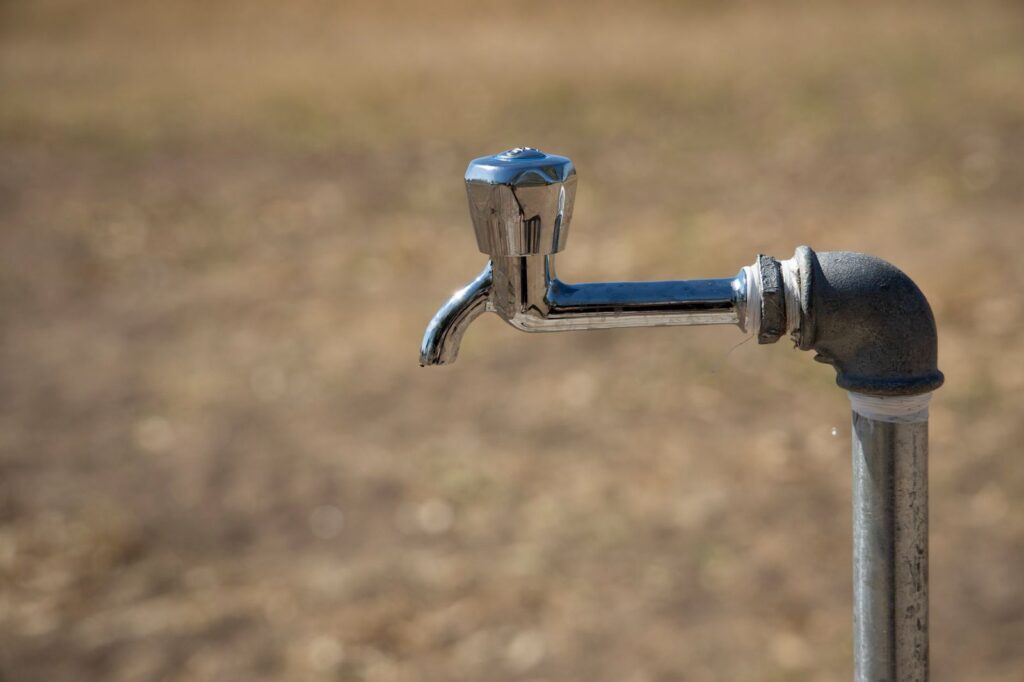
Libreville is grappling with an unprecedented water scarcity crisis, forcing the Gabonese government to declare a hydric emergency across the capital and its surrounding areas. Residents endure dry faucets for days on end, long queues form around the few remaining distribution points, and the price of resold water in plastic containers has skyrocketed in working-class neighborhoods. Locals compare the water shortage to the scarcity of a 10,000 CFA franc bill, a stark reflection of the population’s growing frustration over a crisis that has become part of daily life.
The severity of the situation stems from two converging issues. First, an unusually weak rainy season has drastically reduced water levels in dams and reservoirs that supply the urban area. Second, the aging infrastructure, inherited from decades of deferred maintenance, suffers from significant leakage in pipelines and underperforming treatment plants. These weaknesses have pushed the entire water supply system to its limits, leaving it vulnerable to even minor disruptions.
An outdated network threatening Gabon’s water sovereignty
The water crisis in Libreville underscores the flaws in Gabon’s long-standing approach to managing essential public services. Historically managed by the Société d’énergie et d’eau du Gabon (SEEG), the water distribution system has seen repeated contract disputes and state takeovers without a clear, long-term investment strategy. While the capital’s population, including its outskirts, now exceeds 700,000, production capacity has failed to keep pace. As a result, severe water shortages now trigger hydric load shedding, disproportionately affecting outlying neighborhoods.
The ongoing political transition in Gabon, sparked by the regime change in August 2023, has placed this issue at the forefront of national priorities. The current administration faces a critical window to demonstrate tangible progress in addressing the crisis. The declaration of a hydric emergency enables faster mobilization of public funds, equipment requisition, and cross-ministerial coordination to tackle the problem. However, lasting improvements will depend on a credible multi-year investment program to modernize the sector.
Social tensions rise as Libreville struggles with water shortages
On the ground, residents are improvising solutions. Authorities have deployed water tankers, set up temporary distribution points in local municipal offices, and encouraged private drilling, while residents resell water in plastic containers at inflated prices. The crisis is also taking an economic toll on businesses, hotels, and hospitals, where operational disruptions are widespread. Hospitals, in particular, face heightened risks as water shortages compromise hygiene standards and increase the threat of waterborne diseases.
In response, officials have announced short-term measures, including accelerated repairs to treatment plants, the importation of high-capacity pumping equipment, and the exploitation of underground water reserves. However, financing these solutions remains a major challenge. Multilateral lenders such as the African Development Bank and the World Bank have previously funded water infrastructure projects in Greater Libreville, but renewed support will require greater transparency in sector governance and a clearer role for the legacy operator, SEEG.
Libreville’s crisis mirrors a broader regional water challenge
The Gabonese water crisis is part of a growing trend affecting several central and West African capitals, including Kinshasa, Brazzaville, Douala, and Abidjan. These cities face recurring water supply challenges driven by rapid urban population growth, underinvestment, and the increasing unpredictability of weather patterns. For Gabon, a country long perceived as water-rich due to its vast rainforests, this crisis serves as a sobering reality check.
Resolving the situation will require three key actions: rehabilitating existing infrastructure, diversifying water sources, and reforming the institutional framework governing public water services. With the political transition timeline pressing forward, swift execution is critical to prevent social unrest from destabilizing the upcoming electoral process. The combination of below-average rainfall and deteriorating facilities has created an unprecedented challenge for Gabon’s capital.