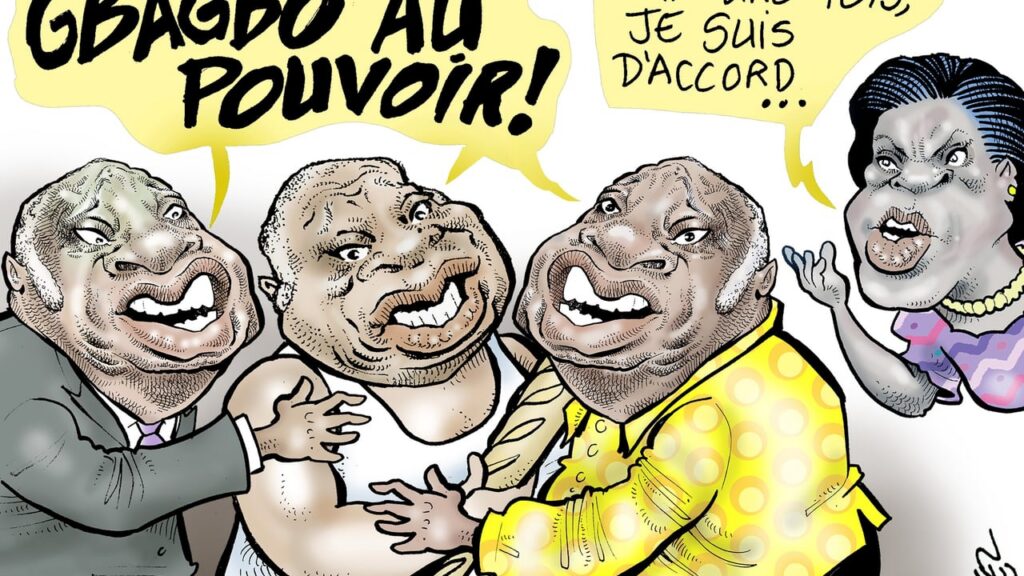
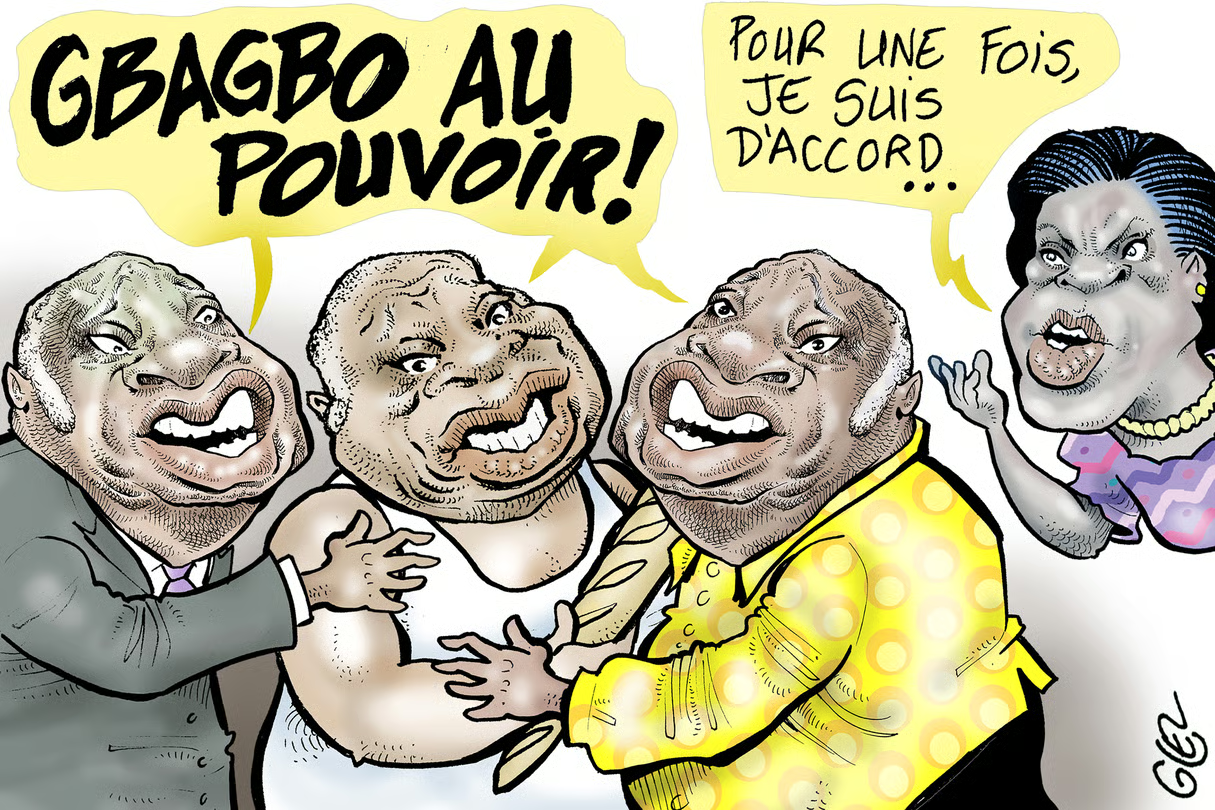
Despite having hinted at a political retirement and being barred from the recent Ivorian presidential election due to a distinction between “grace” and “amnesty,” the octogenarian Laurent Gbagbo has decided to remain at the forefront of Côte d’Ivoire’s political landscape.
Speculation abounds regarding his decision: perhaps it’s a response to his “foremost adversary,” Alassane Ouattara, extending his tenure in the highest office. Or perhaps the nascent Parti des peuples africains-Côte d’Ivoire (PPA-CI)’s current struggles necessitate a final stand from its founder, following the protracted divisions within the Front populaire ivoirien (FPI). Regardless, “Woody of Mama” has officially recommitted, reportedly swayed by widespread “popular fervor” urging him to continue leading the “struggling Ivorian people.”
During the inaugural ordinary congress of the political movement, held on May 14 and 15 at the Palais de la Culture in Treichville, the former head of state was re-elected, even in his absence, to lead the party he champions. The stated goals for this leadership, appearing somewhat paradoxical, are both to ensure continuity and to inject new dynamism into the party’s operations. Notably, the **Laurent Gbagbo PPA-CI** did not participate in the most recent presidential election nor the 2025 legislative polls.
Unity forged after internal cleansing
While the atmosphere of acclamation—the founder’s re-election by unanimous consent—and the palpable enthusiasm among the 3,000 delegates conveyed an impression of desirable unity, the congress was also a critical moment to consolidate ranks. This became essential after certain PPA-CI members pursued independent strategies, notably former executive vice-president Ahoua Don Mello, who ran as an unsuccessful solitary candidate in the October presidential election.
The central committee took decisive action, expelling three dissenting members and suspending 62 others for periods ranging from three to eighteen months. Among those subjected to this internal “purging” were prominent figures such as Prince Arthur Dalli, the mayor of Lakota; Stéphane Kipré, now an independent deputy; and Professor Georges Armand Ouégnin.
Dissidents faced consequences for disobedience
These individuals had advocated for a significant overhaul of the party’s structures and a redistribution of responsibilities. Their “disobedience” to the party’s call for an election boycott led to their exclusion from the pivotal congress at the Palais de la Culture.
While leading a political party might seem a nominal role, especially for someone nicknamed “the baker,” it is understood that Laurent Gbagbo may not intend to oversee the party’s daily operations. A series of proposals had previously suggested this, prior to the former head of state’s public address to the delegates on Friday, May 15, and the “Renaissance festival” held the following day in the Ivorian village of Songon. However, old habits, as they say, die hard.