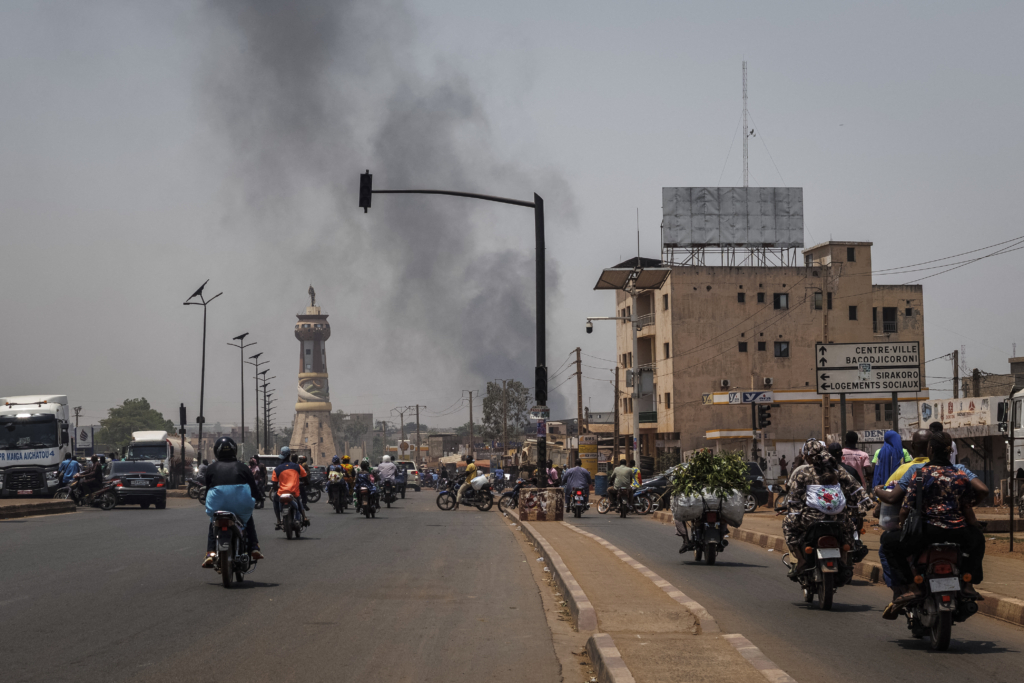
The ongoing blockade of Bamako is inflicting unacceptable hardship on civilians, threatening their access to food, healthcare, and safety. The Groupe de soutien à l’islam et aux musulmans (GSIM), an Al-Qaïda-affiliated armed group, must immediately comply with international humanitarian law to protect civilian lives and ensure their basic rights, experts warn.
Since April 28, three of the six major routes into Bamako have been cut off by GSIM militants, halting critical supplies. On May 6, the group targeted a civilian truck convoy carrying fruits from Bougouni to the capital, despite no military escort or cargo. This violates international law, which prohibits attacks on civilian vehicles and infrastructure essential for survival.
Marceau Sivieude, Regional Director for West and Central Africa at Amnesty International, emphasized the urgency: “Civilian attacks are illegal. Under international humanitarian law, all parties in a conflict must distinguish between combatants and civilians. Targeting civilians or civilian goods—including vehicles and vital infrastructure—is strictly forbidden.”
“Blockades must not trample on civilians’ economic and social rights. The GSIM must uphold international humanitarian law and ensure Bamako’s population has uninterrupted access to food, water, and essential goods.”
Marceau Sivieude, Regional Director, Amnesty International
How the blockade violates wartime rules
The GSIM’s blockade, announced on April 28, differs from its earlier September 2025 action, which only targeted fuel tankers. This time, all commercial trucks entering Bamako face disruption, with food, medical, and supply shortages already driving up prices.
By May 15, at least three key routes from regional ports were blocked, severing Bamako’s lifelines. The United Nations High Commissioner for Human Rights (UNHCHR) has condemned the blockade, urging all parties to protect civilians and civilian infrastructure.
On May 6, the GSIM claimed to ease restrictions, allowing medical transport into Bamako. However, independent verification remains impossible.
Survivor recounts deadly GSIM attack on civilian fuel convoy
In January 2026, a truck driver survived an ambush between Diboli and Kayes, where GSIM militants executed unarmed civilians. The driver, speaking anonymously, described the horrors: “Over 200 jihadists on motorcycles raided our convoy. Military reinforcements arrived but were ambushed; soldiers were killed, and their trucks burned.”
“At least 12 drivers were captured. They forced us to dig graves for dead militants before slaughtering us. Only three of us escaped.”
Amnesty International demands an end to such atrocities: “The GSIM must halt attacks on civilians immediately. Malian authorities must investigate potential war crimes, ensuring victims receive justice and reparations.”
Escalating violence and civilian toll
The blockade follows a surge in GSIM attacks across Mali. On April 25, simultaneous assaults in Bamako, Kati, Mopti, Sévaré, Gao, and Kidal targeted military camps and political figures. In Kati, Defense Minister Sadio Camara was killed when his home was struck by a car bomb.
On May 6, GSIM militants attacked Kori Kori and Gomassagou villages, killing at least 40 people and leaving others missing, according to regional authorities.