The JNIM’s rapid territorial expansion raises fears of a total takeover in Mali
The Group for the Support of Islam and Muslims (JNIM), an Al-Qaeda-affiliated militant organization, continues to escalate its operations across Mali despite sustained military efforts by Bamako and its international partners. From targeted ambushes on military convoys to coordinated attacks on strategic outposts, the group’s operational capacity has expanded significantly in recent weeks. Regional observers warn that this development signals a dangerous shift in the security landscape of the Sahel.

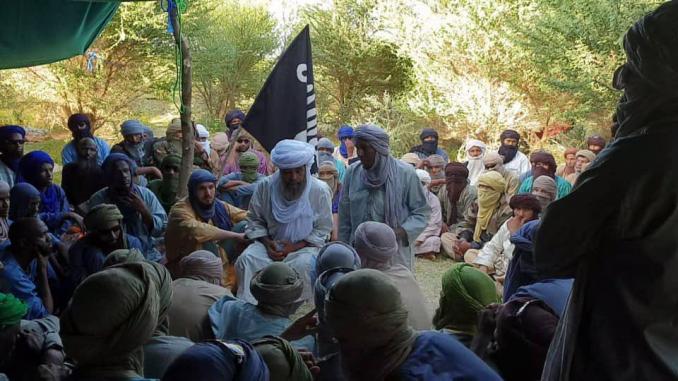
Iyad Ag Ghali, leader of the JNIM, remains a central figure in the group’s expanding operations
From sporadic attacks to systematic territorial control
Recent intelligence from central Mali reveals a troubling pattern. On May 21, 2026, five villages in the Bandiagara region fell under coordinated assault. While casualty figures remain unverified, the JNIM’s claim of responsibility underscores a disturbing trend: the group is no longer content with hit-and-run tactics. Instead, it is methodically establishing itself as a de facto authority in areas where state presence has weakened.
The JNIM’s strategy hinges on exploiting local grievances, communal tensions, and the absence of basic services. In some rural communities, the group has begun imposing its own judicial systems, regulating movement, and levying informal taxes. Where government institutions fail, the JNIM offers an alternative order—one that increasingly appeals to populations desperate for stability, however fragile.
Mali’s security dilemma: military solutions vs. lasting stability
Since the withdrawal of French forces and the increased reliance on Russian security partnerships, Bamako has prioritized military sovereignty. The transitional government presents this approach as a break from Western dependence, yet security challenges persist. Analysts note that while military operations may temporarily reclaim territory, they rarely restore the administrative, judicial, or economic structures needed for sustainable peace.
International organizations have documented allegations of human rights abuses involving Malian armed forces and allied Russian groups. Bamako consistently denies these claims, framing them as part of a broader campaign to destabilize the country. This polarization further constrains diplomatic solutions, leaving little room for negotiation with armed factions.
The Sahel’s widening security vacuum
The crisis in Mali is not isolated. The JNIM’s influence now extends beyond national borders, with spillover effects across the Sahel. Regional powers, including Russia, Turkey, and Gulf states, are jockeying for influence, while jihadist groups capitalize on the fragmentation of state authority and the collapse of regional cooperation.
A critical question looms: How far will the JNIM go? With the Africa Corps mercenary support gradually receding from conflict zones, the junta in Bamako faces a precarious situation. The withdrawal of these forces could leave vast areas vulnerable, potentially accelerating the group’s territorial ambitions.