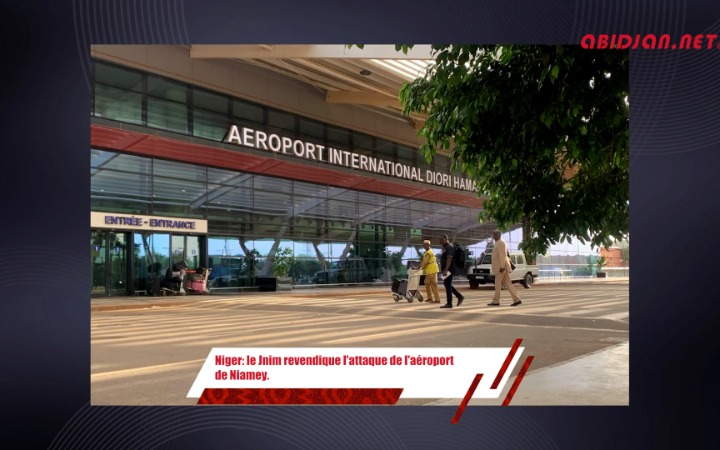
JNIM claims responsibility for Niamey airport attack in Niger
The Group for the Support of Islam and Muslims (JNIM) has officially claimed responsibility for the recent assault on the Niamey International Airport in Niger, marking another escalation in regional security concerns.
According to security sources monitoring the situation, the attack unfolded in the early hours of June 22, 2026, resulting in significant damage to airport infrastructure and heightened alert levels across the capital. While authorities have yet to release detailed casualty figures, preliminary reports indicate disruptions to air traffic and emergency response protocols.
Implications for regional stability
The claim by JNIM underscores the persistent threat posed by militant groups operating in the Sahel region. Niger, already grappling with internal security challenges, now faces renewed scrutiny over its capacity to safeguard critical infrastructure amid evolving threats.
Analysts suggest that the timing of the attack—amid ongoing counterterrorism operations—could signal a strategic shift by JNIM to disrupt government efforts and undermine public confidence in state institutions. The group, affiliated with Al-Qaeda, has been active in Niger since 2017, targeting military outposts, diplomatic missions, and civilian areas.
Government response and public reaction
In the aftermath of the incident, Nigerien officials have reiterated their commitment to restoring security and protecting key assets. Enhanced surveillance measures and coordinated patrols with international partners have been deployed to reinforce vulnerable locations.
Citizens in Niamey expressed a mix of concern and resilience, with many calling for stronger measures to prevent future attacks. Social media platforms have become a hub for real-time updates, though officials have urged caution against unverified claims circulating online.
Broader context of Sahel security
The incident at Niamey airport is part of a larger pattern of instability affecting the Sahel, where militant factions continue to exploit security vacuums. Neighboring countries, including Burkina Faso and Mali, have also faced repeated attacks, prompting regional collaborations to address the crisis.
International observers highlight the need for sustained investment in intelligence-sharing and community-based initiatives to counter radicalization. The evolving tactics of groups like JNIM demand adaptive strategies from governments and their allies.
The attack serves as a stark reminder of the ongoing challenges in maintaining peace and security in the Sahel, where the interplay of local grievances and transnational jihadist movements complicates efforts to restore stability.