Unveiled in Abidjan in April 2026, the «Pleins Feux» initiative is a cornerstone of Ivory Coast‘s bold educational transformation strategy, championed by President Alassane Ouattara. With robust support from global partners, this project aims to optimize educational governance and boost the impact of public policies, ensuring sustainable improvements in student learning outcomes.
Each year, Ivory Coast welcomes hundreds of thousands of additional students into its classrooms. With a population exceeding 30 million and a predominantly young demographic, the demand on the education system has intensified, particularly in rural regions. In this landscape, improving education has become a strategic priority for President Ouattara, aligning with the United Nations Sustainable Development Goal 4 (SDG4) and the 2030 Agenda. For over a decade, national leaders have implemented sweeping reforms to expand access and elevate teaching standards across the country.

hiring surge and infrastructure growth: scaling ivory coast’s education system
Under President Ouattara‘s leadership, Ivory Coast has significantly expanded its teaching workforce. Since 2011, over 69,000 primary school teachers and 30,000 secondary educators have been recruited. The latest push targets critical STEM fields, with 1,800 new mathematics and physics teachers deployed to meet labor market demands and drive economic growth.
Parallel efforts focus on school infrastructure, especially in rural areas, to bring education closer to students, minimize dropout rates, and bridge educational gaps. New schools have been built nationwide, expanding access to quality learning opportunities. The recent opening of the Boundiali Teacher Training College in northern Ivory Coast exemplifies this commitment. The 2026 teacher recruitment exams attracted nearly 68,000 applicants for 7,000 openings, underscoring the scale of investment in building a sustainable, high-performing teaching corps.
inclusive learning environments and climate: pillars of educational quality
Improving school conditions is now central to Ivory Coast‘s education strategy. Teaching salaries have risen by over 30% for primary educators and up to 15% for secondary teachers since 2011, enhancing career appeal and fostering stable teaching teams. This commitment extends to creating safer, more supportive learning environments.
The integration of adapted teaching materials for students with disabilities marks a major step toward inclusivity, ensuring education reaches every learner. Complementary safety measures, including campaigns to prevent school-related pregnancies, aim to reduce disruptions and keep students on track for academic success.
‘full focus’ initiative: sharpening education governance
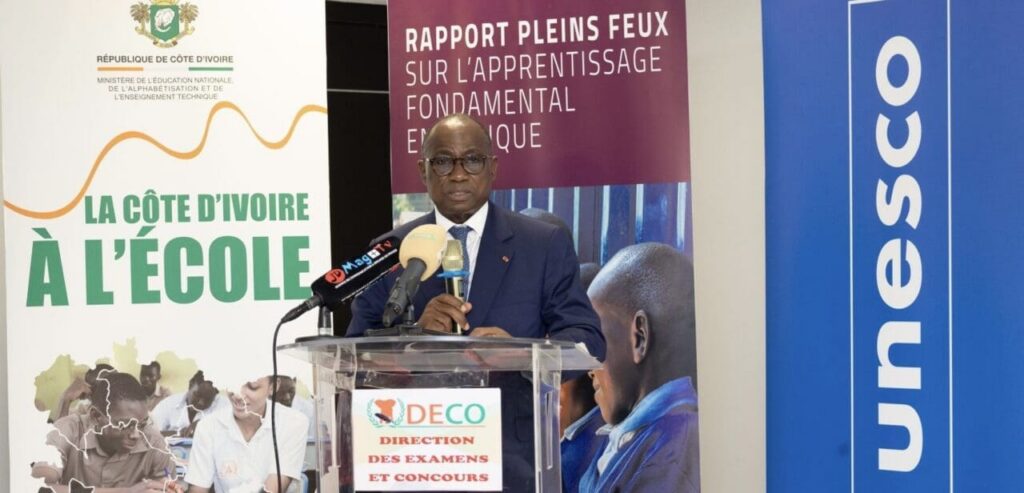
Launched in Abidjan on April 12, 2026, the «Pleins Feux» project shifts the focus from infrastructure and staffing to the effectiveness of educational governance. Rather than building new schools or hiring more teachers, this initiative targets the systems and processes that deliver results on the ground.
Developed in collaboration with UNESCO, the African Union, and the Global Education Monitoring Report (GEM), the program builds on two years of pilot work in Ivory Coast, Ghana, and Ethiopia. It strengthens decision-making and teaching leadership capacities to enhance educational outcomes across the region.
As international partners highlight Ivory Coast‘s progress in foundational learning, national authorities continue to leverage diverse partnerships—global, regional, and private—to sustain the momentum of educational transformation.